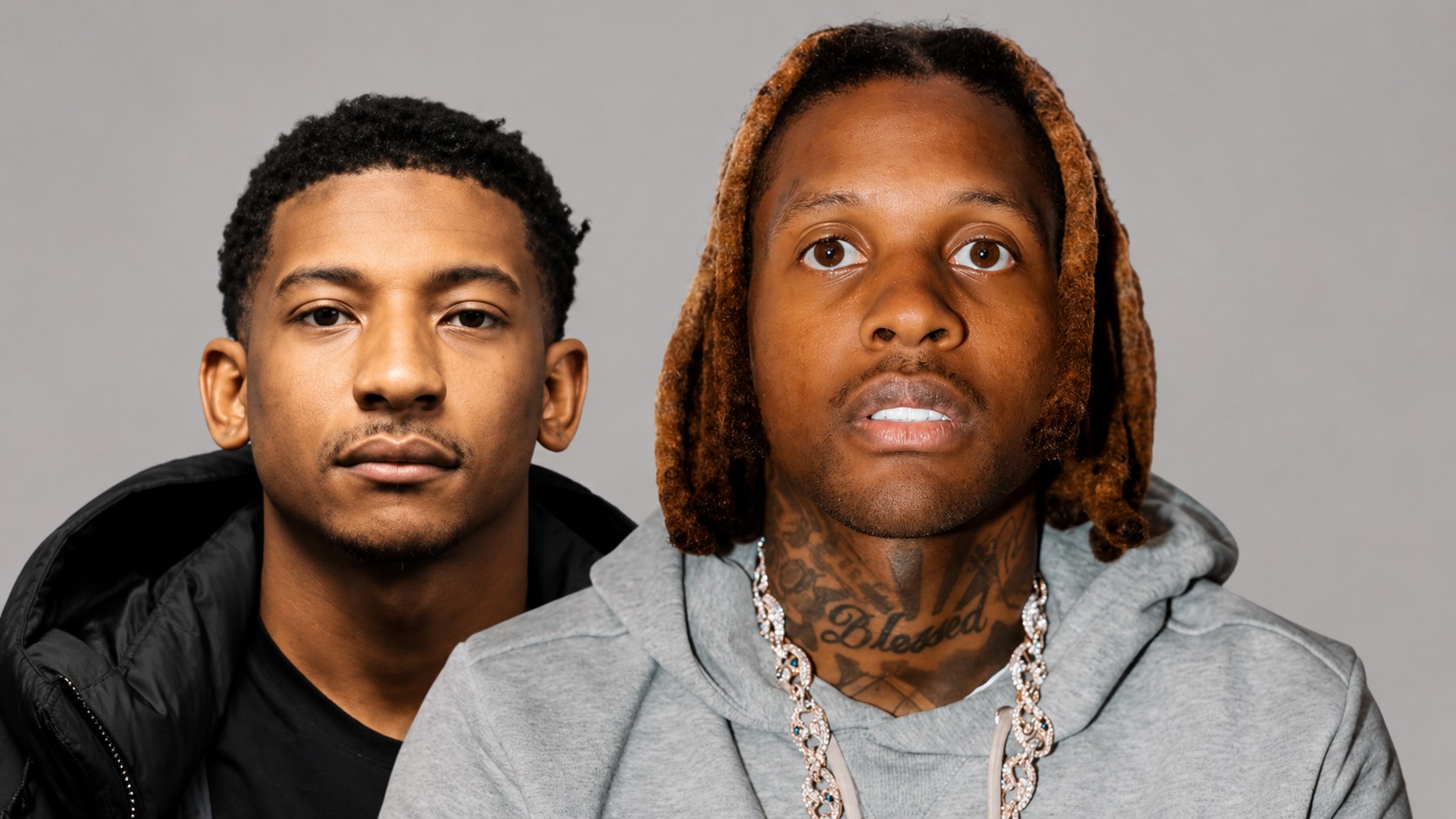
Lil Durk’s defense claims that Kavon Grant was the mastermind behind the murder-for-hire plot, alleging that he framed Durk as the “big fish”
Lil Durk’s attorneys commenced his federal murder for hire trial by directly implicating Kavon Grant, contending that Grant orchestrated the lethal ambush in Los Angeles and subsequently presented Durk to investigators as the more significant target that prosecutors sought.
Lil Durk’s defense is asserting to jurors that they have misidentified the individual at the heart of the case. As opening statements commenced on Monday in Los Angeles, the attorneys representing the Chicago rapper contended that Kavon Grant was initially perceived as the individual “in charge” of the purported murder plot, only to shift the focus of investigators onto Durk when his liberty was at stake.
As reported by Rolling Stone from the courtroom, defense attorney Marissa Goldberg informed jurors that Grant emerged as a crucial government witness following his confrontation with authorities in October 2024. The defense theory in the Lil Durk trial posits that Grant recognized investigators were seeking a more prominent individual and concluded that Durk, whose real name is Durk Banks, could serve as his path to a more favorable outcome.
“They were pressing him about a big fish, and he thought, ‘Oh man… “I have an insurance policy,” Goldberg informed the jurors, as reported by Rolling Stone. The defense argues that Grant attempted to “minimize his involvement” by depicting Durk as the individual who led the group.
That argument places Grant’s credibility at the heart of a case where prosecutors are offering an entirely different narrative.
Grant has entered a guilty plea regarding the alleged scheme and is anticipated to provide testimony for the government, as reported by Rolling Stone. Goldberg contended that Grant, employed by Durk at the music management firm Astronaut Soundz, had access to a company credit card and was directly involved in significant aspects of the operation currently being used to implicate Durk.
The defense claims that Grant coordinated plane tickets, secured hotel accommodations and vehicles, purchased black ski masks, and organized the group alleged to have traveled to Los Angeles to target rapper Quando Rondo, whose legal name is Tyquian Bowman. Prosecutors acknowledge that Grant managed various logistics, yet they assert that he was executing Durk’s directives.
That distinction may emerge as one of the most significant questions in the Lil Durk trial: Does Grant’s involvement indicate he was adhering to instructions, or does it bolster the defense’s assertion that he was orchestrating the operation himself?
Mr. Banks was not involved in any way. He was absent. “He had nothing to do with it,” Goldberg told the jury, as reported by Rolling Stone.
The defense presented jurors with an alternative motive for Grant that does not rely on Durk’s direction.
Goldberg mentioned that Grant shared a particularly strong bond with King Von, whose real name was Dayvon Bennett. As reported by Rolling Stone, Grant took personal charge of managing Von in Atlanta, with a familial connection that has endured for decades. Grant was the individual who hurried Von to the hospital following the November 2020 shooting that ultimately claimed the rapper’s life.
Goldberg portrayed Grant as profoundly affected by Von’s death, suggesting that he felt compelled to seek vengeance. Durk, the defense argued, managed his anger in a unique way by directing it into “his artwork.”
Federal prosecutors are asking jurors to reach a different conclusion.
“This case involves themes of revenge, stalking, and premeditated murder,” Assistant U.S. Attorney Daniel Weiner informed the jury during the government’s opening statement, as reported by Rolling Stone.
According to Billboard’s coverage of the opening statements, prosecutors claim that Durk became fixated on seeking revenge following Von’s death and eventually placed a bounty on Bowman. The government asserts that Durk employed members and associates of his Only The Family organization to execute the plan.
The shooting incident occurred on August 19, 2022, in the vicinity of the Beverly Center in Los Angeles. Prosecutors from the U.S. Attorney’s Office for the Central District of California assert that members of the group monitored Bowman for several hours prior to gunmen firing at his vehicle at a gas station.
Federal authorities report that various firearms, including a machine gun, discharged a minimum of 18 rounds. Bowman survived; however, his cousin Saviay’a Robinson, known as Lul Pab, tragically lost her life to a fatal shooting. The Justice Department has consistently emphasized that the allegations outlined in the indictments are merely accusations and that defendants are presumed innocent until proven guilty.
Grant’s role has consistently been present in the government’s own description of the case. The Justice Department previously claimed that Grant flew to California on a private jet with Durk, purchased ski masks for the alleged shooters, and utilized a credit card in Durk’s name to cover the cost of a hotel room.
The defense in the Lil Durk trial is questioning the government’s rationale for Grant’s actions.
Prosecutors assert that Durk was in a position of authority, providing guidance. Durk’s attorneys assert that Grant was operating independently and subsequently exploited his access to Durk’s business resources to fabricate a narrative that would portray Durk as accountable.
One message is anticipated to garner considerable attention from both parties. Prosecutors allege that on August 18, 2022, Durk sent a text to Grant stating, “Don’t book any flights under any names involved with me.” The government contends that the message illustrates Durk’s awareness of the operation. The defense contests the wider interpretation of the communications and asserts that Grant misrepresented Durk’s instruction regarding the travel booking.
Prosecutors intend to utilize additional cooperating witnesses in addition to Grant. Rolling Stone reported that Kacey “OTF Jam” Hester and Keith Jones have entered into plea agreements and are collaborating with the government. Weiner informed the jurors that Jones was among the shooters at the gas station.
The government also emphasized a subsequent message linked to Durk regarding Hester: “Jam just ready to snitch … He will tell you soon. Another message stated, “As long as we don’t break, they can tell them whatever.” Prosecutors are introducing the texts as evidence indicating that Durk was aware of the group’s purported criminal activities and had concerns regarding cooperation with law enforcement. Durk’s defense will have the chance to contest that interpretation as the testimony progresses.
The ongoing proceedings have unfolded over nearly two years, marked by motions, superseding indictments, and debates regarding the evidence that jurors should be permitted to consider. City News Service via MyNewsLA reported that Banks has entered a not guilty plea to the federal charges against him and could potentially face life imprisonment if found guilty of all relevant counts.
The judge has allowed prosecutors to present certain lyrics from Lil Durk as evidence, a practice that has faced years of criticism from artists, legal scholars, and advocates. They argue that fictional or exaggerated rap lyrics can lose their artistic context in criminal courtrooms.
However, the defense’s initial approach indicates that this Lil Durk trial might focus more on Grant and the narrative jurors perceive regarding his involvement, rather than on the music itself.
The government aims for the jury to observe a subordinate executing directives from a prominent artist. Durk’s lawyers seek to meet the alleged organizer, who has been apprehended by federal authorities and now holds what the defense refers to as an “insurance policy”: the chance to provide investigators with the “big fish” they desire.