Australia has prohibited fully AI-generated songs from appearing on music charts
Australia has prohibited fully AI-generated songs from its official charts following a backlash regarding a Madonna cover, sparking renewed discussions about the intersection of human creativity and technology.
Australia has prohibited music generated solely by artificial intelligence from its official charts and annual music awards in response to a backlash regarding an AI-driven cover of Madonna’s “Like a Prayer.”
The Australian Recording Industry Association (ARIA) announced the changes on Tuesday, stating that wholly AI-generated tracks would no longer be eligible for its charts starting Friday.
However, songs that utilize AI solely in a supporting capacity will continue to be eligible, as the industry aims to differentiate technology-assisted music from recordings predominantly generated by artificial intelligence.
ARIA announced that it would implement a new labeling system introduced by music industry organizations last month to assess the extent of AI involvement in a recording.
Under the system, music is categorized as “AI-Generated” when artificial intelligence produces the entirety or the main portion of the recording’s creative elements, whereas “AI-Assisted” refers to instances where AI contributes to only some expressive elements.
ARIA chief executive Annabelle Herd stated that the charts ought to evolve in response to genuine technological advancements, but they should not grant recognition to music created solely by AI that utilizes material sourced from the work of other artists.
“These changes demonstrate our commitment to staying adaptable and fostering the human essence of artistry in what is undeniably a fast-evolving landscape,” Herd stated.
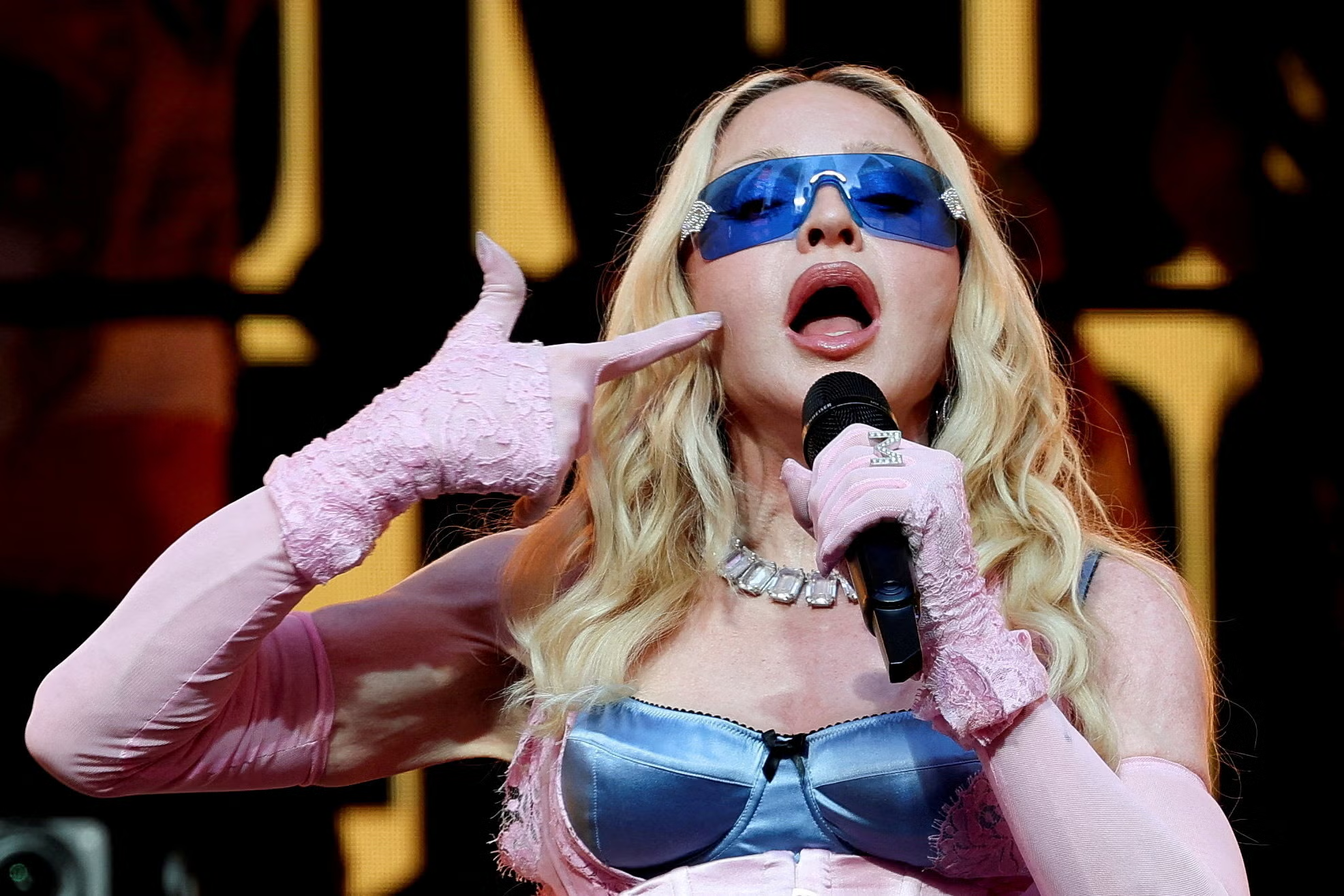
The decision came after a dispute regarding a rendition of Madonna’s 1989 hit “Like a Prayer” by Brisbane-based DJ Josh Fawaz.
The track, featuring AI-generated vocals and drums, reached the top of ARIA’s Top 20 Australian Dance Singles Chart, even as music fans and producers express increasing concerns regarding the level of artificial intelligence involved in its production.
Fawaz admitted to utilizing AI in the recording last month after initially encountering inquiries regarding whether the song had been created solely by humans.
The cover has now garnered over 48.5 million streams on Spotify and continues to hold the top position on the Australian dance chart.
Fawaz, an advocate for AI as a creative tool, expressed his approval of ARIA’s decision, calling the new rules “a gfantasticmove.”
“I recognize that AI in music may not appeal to everyone, and that’s perfectly okay.” It’s great to witness Australian artists thriving on the global stage!” he expressed on social media.
The debate has grown more intense as music organizations and artists confront issues surrounding copyright, ownership, and the utilization of human-created music for training AI systems.
Oliver Bown, an associate professor at the University of New South Wales who researches technology and art, emphasized the need for immediate examination of the increasing integration of AI in music. “Numerous large commercial AI music generation companies have taken it for granted that they can collect training data without consent and, as a result, may be exploiting artists.”
He recognized that artists might utilize AI in a responsible manner, yet cautioned that the technology could also be misused to create music mainly for streaming and financial gain. Numerous organizations have established guidelines regarding the use of AI, and a growing number recognize the necessity of prohibiting fully AI-generated works. I believe this is the correct course of action.
Ivan Zavada, a senior lecturer in composition and music technology at the University of Sydney, characterized ARIA’s decision as an essential step to safeguard human creativity and performance.
“Additional efforts are required regarding legal and intellectual property matters to foster greater trust and clarity in these tools,” Zavada stated.
He mentioned that AI is expected to play a more significant role in music production, characterizing the industry as being in a thrilling yet worrisome phase of technological change.
ARIA, with members such as Sony Music Entertainment Australia and Universal Music Australia, releases over two dozen weekly charts, featuring the nation’s top 50 singles and albums.