US Launches ‘Operation Economic Outcast’ to Sever Iran’s Economic Ties
The US has announced “Operation Economic Outcast,” aimed at Iran’s oil, technology, shipping, and financial networks to increase economic pressure.
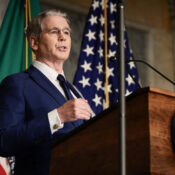
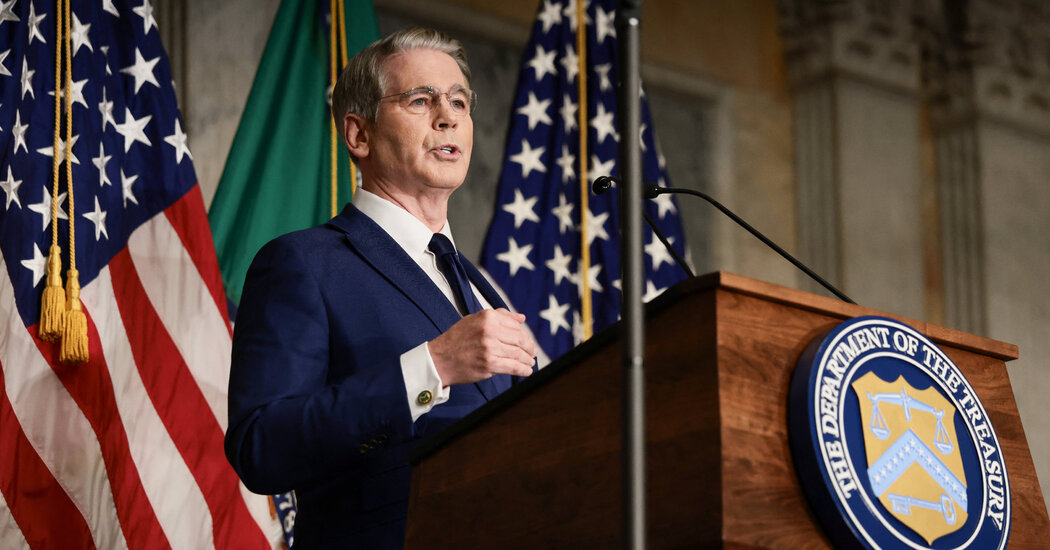
US Treasury Secretary Scott Bessent has unveiled an extensive economic pressure campaign aimed at Iran, pledging to focus on Tehran’s financial interests and revenue sources globally.
Bessent stated on Monday that the United States would aim to target all of Iran’s revenue streams, including oil, to deter countries and companies from engaging in business with Tehran.
“Across the world, we aim to cut off every economic connection that supports this oppressive regime until we isolate Tehran.”
He cautioned nations and corporations that they must decide between engaging in commerce with the US or Iran, emphasizing that trade partners of Tehran could encounter secondary sanctions.
Bessent emphasized that “no one is above the reach of US sanctions.”
“If they enable transactions and play a role in the system that converts Iranian oil into funds for repression, the US will pursue them.”
The campaign, referred to as “Operation Economic Outcast,” was characterized by Bessent as “economic D-Day,” alluding to the Allied landing in France during World War II.
When questioned about Washington’s approach of warning Iran’s business partners instead of imposing immediate penalties, Bessent explained that the US was providing them with a chance to alter their conduct.
“We are providing everyone with the chance to correct inappropriate behavior.” “Why would I want to destroy the global financial system?” he inquired.
The remarks highlight the broader risks associated with secondary US sanctions, which may impact companies and nations that have commercial relationships with Tehran.
The US Treasury has announced new sanctions aimed at five of Iran’s most crucial economic lifelines: digital assets, technology, gold, aviation, and shipping.
The department sanctioned 60 entities, vessels, and individuals globally, including those in the United Arab Emirates, Hong Kong, China, Singapore, and Switzerland, accusing them of facilitating the Iranian government.
Bessent stated that US President Donald Trump had engaged in discussions with world leaders, making “specific requests to cease their interaction with the regime.”
“Those who align themselves with the United States will benefit from the advantages of our collaboration. “Those who align themselves with the Iranian regime should anticipate experiencing the same isolation,” he stated.
The economic campaign emerges almost six months into the conflict involving Iran, the US, and Israel, amidst ongoing tensions regarding Tehran’s nuclear program and the disruption of shipping in the Strait of Hormuz.
The conflict has led to missile and drone attacks throughout the region, and Iran’s dominance over the strategic waterway has caused disruptions in global energy markets.
Numerous rounds of conflict and negotiation have yet to bring a resolution to the crisis.
Washington’s recent sanctions initiative seeks to compel Tehran to make significant concessions, such as relinquishing its nuclear program and ceasing attacks on vessels navigating the Strait of Hormuz.
The US had previously declared a blockade of Iranian ports; however, the pressure has not succeeded in compelling Tehran to surrender.
Sina Toossi, a fellow at the Center for International Policy, informed reporters that the blockade had adversely affected Iran, especially its oil exports, yet had not accomplished Washington’s intended political objectives. “Iran has not surrendered.”
He noted that the turmoil surrounding Hormuz and the increasing economic burdens indicated that the new “economic D-Day” initiative was an effort to escalate pressure following the military campaign’s inability to yield a conclusive result.
Iranian Foreign Minister Abbas Araghchi rejected the recent US actions on Sunday, stating that sanctions were an outdated tactic that had consistently failed to compel Tehran to comply. “They are unable to conceive of any alternative approach when facing the formidable Iranian people, leading them to continuously propose the same outdated strategies.”
Pentagon chief Pete Hegseth stated that Iran would struggle to endure the heightened economic pressure and would eventually have “no choice” but to re-engage in negotiations regarding its nuclear program.
The US and Israel initiated military action against Iran in February during the ongoing nuclear negotiations.
The Trump administration is currently intensifying its use of economic penalties amid a pause in hostilities, though Hegseth cautioned that additional military action could still be on the table.
“If we must employ kinetic strikes, we will do so.” If Iran miscalculates or provokes the American military, we will take necessary actions. However, we understand that economic pressure is currently the most effective means of impacting them.