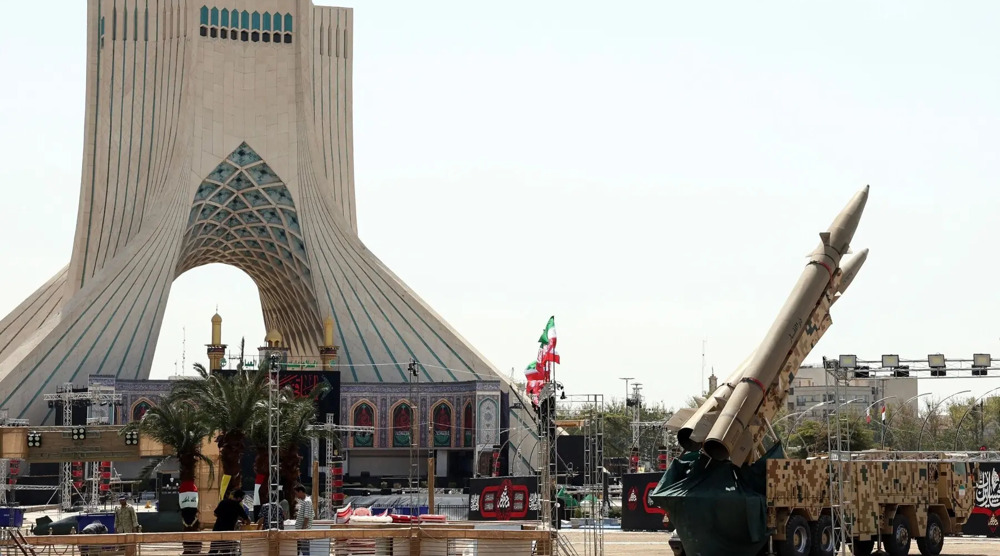
Iran has announced that it will continue its missile production, while Pakistan has reported advancements in efforts to restore the US-Iran agreement, despite new American sanctions aimed at Tehran.
Iran asserts that its missile production and capabilities are unaffected by the ongoing war, while Pakistan has indicated advancements in reinstating a prior memorandum of understanding between Washington and Tehran.
Pakistan’s interior minister announced that substantial advancements had been achieved in discussions with Iranian President Masoud Pezeshkian, as Islamabad aims to rejuvenate a previous US-Iran agreement intended to alleviate tensions.
The development followed the announcement by the United States of a new set of sanctions aimed at Iran’s military and economic networks.
The US State Department stated that the measures focus on Iranian military officials and weapons procurement networks, along with shippers and brokers engaged in transporting Iranian petroleum through nations such as China and the United Arab Emirates.
The sanctions additionally focus on cyber actors alleged to have executed attacks on critical infrastructure.
US Treasury Secretary Scott Bessent stated that Washington is aiming to eliminate financial support for Tehran and called on US allies to support these measures.
Iranian government spokeswoman Fatemeh Mohajerani recognized the economic challenges, stating that the country’s leadership would navigate Iran through the hardships brought on by the recent sanctions.
Sardar Mohebbi, spokesperson for the Iranian Revolutionary Guard Corps, stated that the war has refuted assertions that Tehran would swiftly deplete its missile stockpiles. This idea did not materialize, as Iran’s missile capability and production persist.
Mohebbi stated that the conflict had, in fact, exerted pressure on the strategic weapons reserves of Iran’s adversaries. “The erosion and reduction of strategic weapons reserves, created for the enemy, is regarded as one of the achievements and honors of this war.”
He further asserted that Iran’s military response had compelled the United States to reevaluate certain elements of its military strategy.
Mohebbi contended that Washington’s military doctrine was founded on its capacity to engage in multiple fronts at once, yet he noted that the conflict had tested that premise. “However, in this conflict, we established circumstances that caused them to be concerned about their capacity to handle multiple fronts.”
The comments emerged as diplomatic efforts persist amid rising economic pressure, with Pakistan aiming to close the gap between Tehran and Washington.
The reported progress in restoring the previous memorandum may offer a potential diplomatic opening, despite the ongoing sanctions imposed by the United States and Iran’s assertion that its military capabilities are still operational.