Trump tells the Pentagon to cut back on drills between the US and South Korea, citing costs and Seoul’s stance on Iran
Trump has directed the Pentagon to scale back joint military exercises with South Korea, referencing financial considerations, Seoul’s position on Iran, and its diplomatic relationship with Kim.
US President Donald Trump has directed the Pentagon to significantly cut back on joint military exercises with South Korea, pointing to the expenses associated with the drills and Seoul’s unwillingness to engage in US operations against Iran.
Trump announced on Sunday, just hours before the annual Ulchi Freedom Shield exercises were set to commence, expressing his dissatisfaction with the US’s decision to participate.
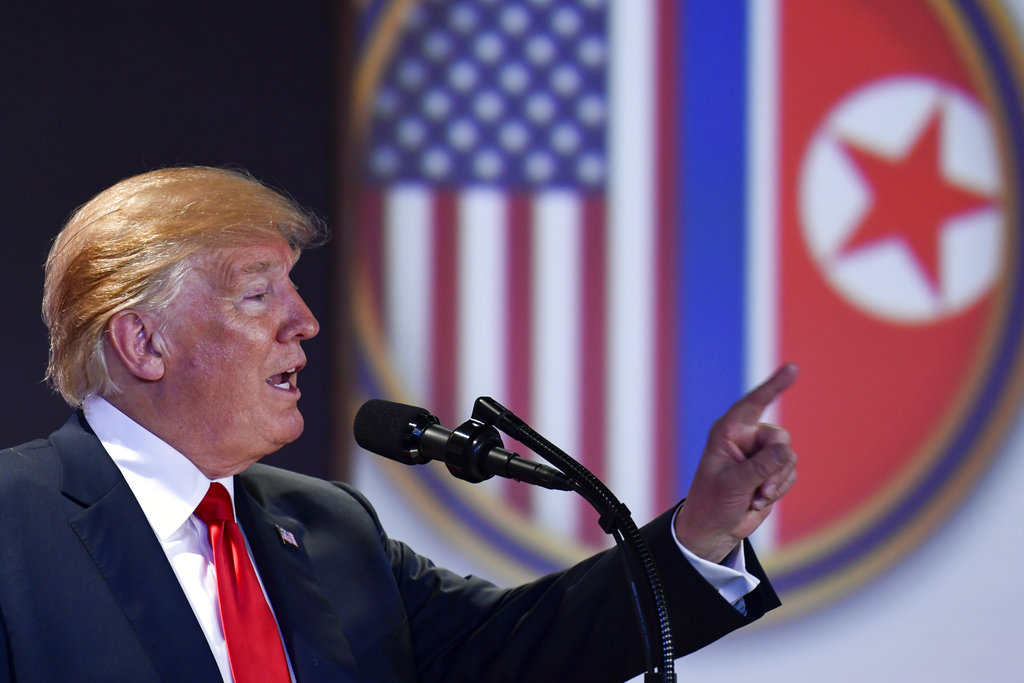
In a post on his Truth Social platform, Trump highlighted his “excellent relationship” with North Korean leader Kim Jong Un, contending that the exercises convey an inappropriate and hostile message to Pyongyang.
“These exercises are not only expensive… but also convey a message that is entirely inappropriate and antagonistic to a country that, during Donald J. Trump’s presidency, has remained non-threatening and respectful,” Trump wrote.
The annual exercises are set to continue until August 27, involving approximately 18,000 South Korean military personnel.
South Korea’s Joint Chiefs of Staff announced that the drills commenced on Monday as planned, while the presidential Blue House indicated it was assessing Trump’s comments.
The Blue House expressed that Seoul anticipated Trump’s relationship with Kim could foster an opportunity for significant dialog and promote peace and stability on the Korean Peninsula.
It was stated that the US and South Korea would maintain their coordination regarding their combined defense posture and military exercises.
Trump has consistently aimed to diminish or eliminate US-South Korean military exercises while also urging Seoul to increase its financial contribution for the upkeep of approximately 28,500 American troops stationed in South Korea.
North Korea, still in a state of war with South Korea, consistently denounces the joint military exercises as practice for an invasion.
Pyongyang has persisted in its missile operations, launching a ballistic missile from its eastern coast toward the Sea of Japan last week, shortly after another short-range ballistic missile was fired.
Jenny Town, head of the Stimson Center’s 38 North program, indicated that Trump’s decision might be part of a larger strategy to establish a diplomatic opening with Pyongyang.
However, she stated that the “haphazard nature” of the move was unlikely to leave a significant impact in North Korea.
It is still uncertain how the exercises will be scaled back, even as the drills have progressively moved away from extensive live-fire operations to focus more on computer-simulated missile and cyberattack scenarios.
Victor Cha, who leads the Korea program at the Center for Strategic and International Studies, indicated that Trump might be aiming for increased influence over North Korea as Pyongyang strengthens its military ties with Russia.
“Another perspective is that Trump aims to engage Kim to hinder the relationship between Russia and North Korea,” Cha stated.
US officials have indicated that North Korean troops stationed with Russian forces in Ukraine have acquired battlefield experience from the ongoing conflict.
Last week, Ukraine reported that a Russian ballistic missile strike on a steel plant in Zaporizhzhia used missiles manufactured in North Korea.
Meanwhile, Lieutenant General Joseph Jarrard, a senior official from US Northern Command, cautioned last week that North Korea had successfully tested intercontinental ballistic missiles capable of delivering a nuclear payload to any location in North America.
Trump’s relationship with Kim has varied significantly over the years.
The US president once issued a warning to North Korea, describing a potential response as “fire and fury” and referring to Kim as “little rocket man.” Trump then held three summits with the North Korean leader.
Trump later stated that the two had “fallen in love” after exchanging letters, although their diplomatic efforts did not result in an agreement to stop North Korea’s nuclear weapons and ballistic missile programs.
Trump’s recent action occurs alongside broader tensions between Washington and Seoul regarding defense spending and economic obligations.
While Trump has consistently urged South Korea to take on a larger portion of defense costs, a senior US official earlier this year referred to Seoul as a “model ally” dedicated to boosting defense spending in accordance with US regional strategy.
A former official from the Trump administration informed Reuters that Trump expressed frustration regarding what he perceived as the South Korean government’s hesitance to tackle wider economic issues.
The two countries entered into a trade agreement last year, wherein South Korea pledged to invest $350 billion in the US in return for reduced US tariffs on South Korean automobiles.
However, Seoul has not yet revealed specific plans for the investment.
The allies are currently involved in a dispute concerning the US-listed e-commerce company Coupang, which is under investigation by South Korean authorities due to a significant data breach.
Trump’s call to reduce military exercises introduces an additional dimension to the already intricate security, diplomatic, and economic tensions between Washington and Seoul.