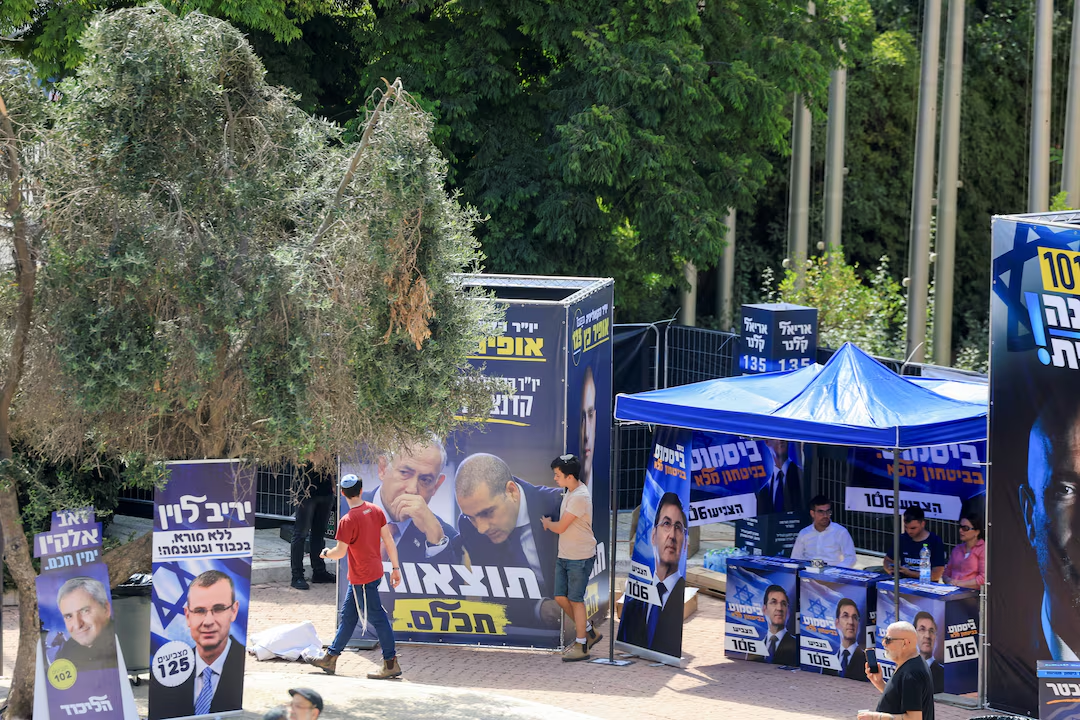
Benjamin Netanyahu’s Likud party is set to select its candidates for the upcoming October elections on Monday. Analysts suggest that a potential shift further to the right among many members could jeopardize the Israeli leader’s prospects for victory.
The contenders who emerge from Monday’s primaries are already facing a challenging race—polls indicate that Likud’s popularity has significantly declined since the October 7, 2023, Hamas attack on Israel, and the party may lose a third of its seats.
Researchers indicated that Likud may face an even more challenging battle if its 140,000 registered members opt for a lineup of populist, hard-right candidates, especially as surveys reveal that a greater number of its traditional voters are inclined to move toward the political center.
The divide between Likud party members and its voters, as well as the general public, has widened significantly, which could profoundly impact Netanyahu’s chances of victory,” stated analyst Nimrod Nir from the Hebrew University’s Agam Labs.
Netanyahu is seeking to engage with moderate factions.
An Agam Labs survey published on August 11 revealed that over half of Likud voters—54.9%—preferred a more centrist government compared to Netanyahu’s current coalition, which comprises ultra-Orthodox Jewish and nationalist parties.
However, the survey indicates that only a third of the party members who will select the candidates on Monday desire a center-right government.
Two thirds desired a coalition akin to the one that was in place following Netanyahu’s election victory in 2022.
The current government comprises National Security Minister Itamar Ben-Gvir’s ultranationalist Jewish Power party and Finance Minister Bezalel Smotrich’s Religious Zionism, both of which have promoted the idea of depopulating Gaza and resettling it.
Netanyahu has been actively working to enlist more moderate candidates to counterbalance the populists who have been gaining traction in the primary race.
As Prime Minister of Israel, I aim to strengthen the unity among us,” Netanyahu stated in a video message released on July 22. “Thus, I will strive to create a comprehensive national government, a stable administration that will guarantee our security and future.”
One senior former Likud member with insight into the party’s strategy indicated that those efforts are currently facing challenges. “If (Netanyahu) enhances the list and includes more qualified individuals, then perhaps he will find success, but he’s not heading in the right direction,” the former party member remarked, choosing not to elaborate further.
Four former and current senior members of Likud, speaking on condition of anonymity, indicated that the party is working diligently to regain voters who have moved away since the last election.
A representative for the Likud party did not provide a response to a request for comment.
One-fifth of the electorate remains undecided.
In the Agam Labs survey, which gathered responses from approximately 1,000 Likud members and over 1,000 voters, the divisions became more pronounced as it examined specific issues.
The current coalition has made concessions to the ultra-Orthodox leaders within its ranks who have been advocating for exemptions from service in Israel’s conscript military.
The issue has become especially contentious during the Gaza war, with non-Orthodox Jewish Israelis questioning why they should bear a greater share of the burden in Israel’s longest conflict.
According to data from Agam Labs, over 80% of Likud voters support an increase in the number of ultra-Orthodox conscripts, compared to only 65% among Likud members.
Such divisive topics could play a crucial role in a vote where approximately 20% of the overall electorate identifies as undecided. According to pollsters and researchers, many of those individuals are disillusioned members of Likud that the party aims to win back. “These are the people who are going to decide what’s going to happen with the election,” stated Gayil Talshir, a political scientist at the Hebrew University.