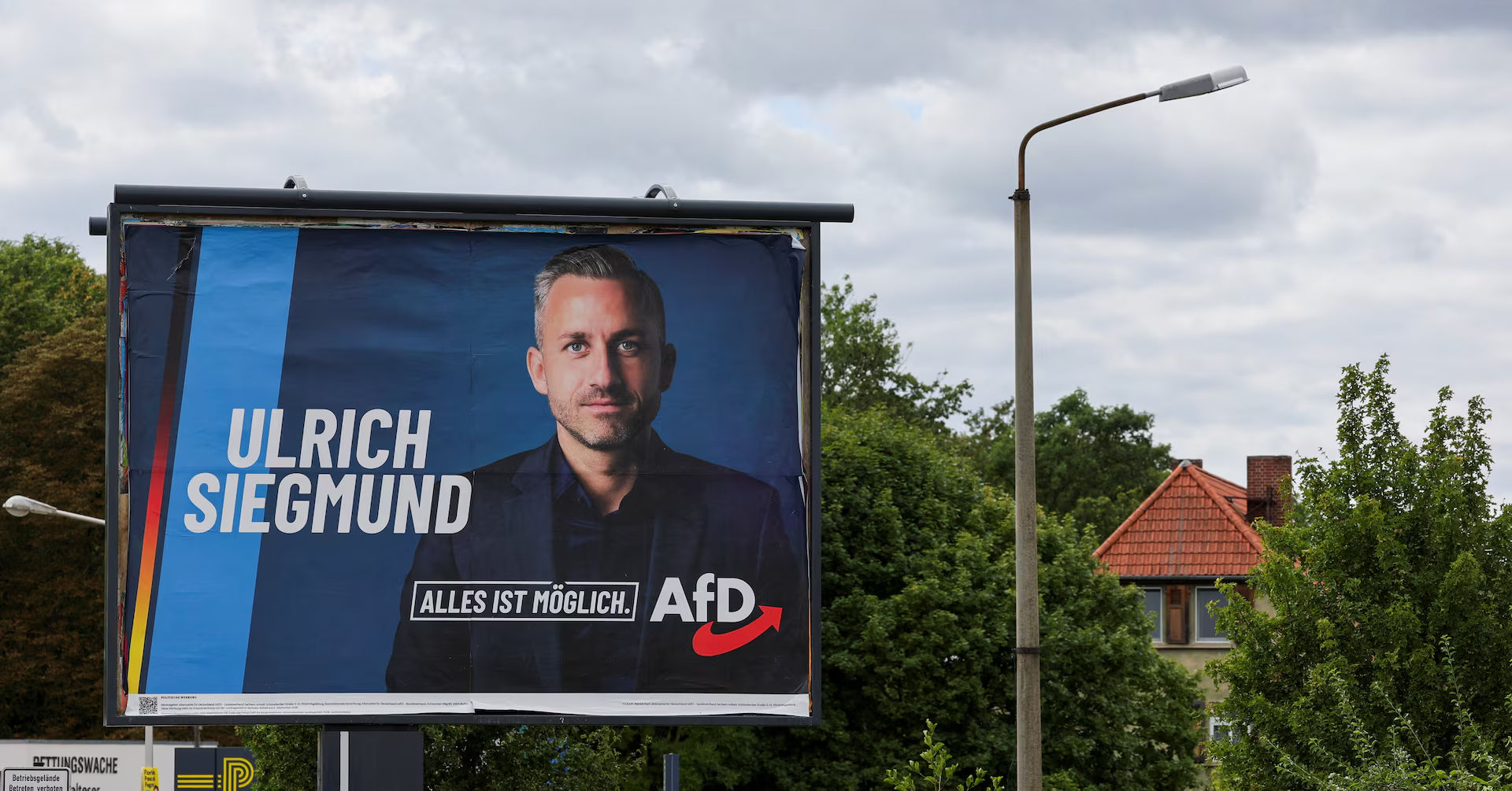
Ulrich Siegmund, the optimistic representative of the AfD, seeks to gain influence in the upcoming German state election
More than ten years ago, Ulrich Siegmund learned something about messages that has helped him in his quest to become the first member of the far-right AfD party to lead a German state government.
He is 35 years old and from the eastern state of Saxony-Anhalt. He has been the party’s most visible representative, which has been polling at about 41% before the election on September 6. This gives him a real chance of becoming the next governor of the state.
Siegmund joined the Alternative for Germany (AfD) party in its early stages more than ten years ago. He said that his business class taught him how important it is to appeal to people’s basic senses to make them feel at ease.
Statistics indicate that when something smells good, people stay longer and interact with it more, no matter what it is, he told Ben Berndt, a German podcast host who some see as the country’s Joe Rogan.
He started a business selling systems that spread smells that make people feel better to places like shops and old people’s homes. He has used the same ability to make people feel good to sell his party’s message to voters.
Der Spiegel, a weekly news magazine, called Siegmund “Germany’s most dangerous man” because he could make a party that the Saxony-Anhalt office of Germany’s domestic intelligence agency sees as extremist far-right and against Germany’s basic democratic order look like it was friendly.
FOR MONTHS ON THE VOTE TRAIL
“Ulli” Siegmund has been on the campaign trail for months, wooing voters in town halls and village halls and constantly updating his hundreds of thousands of social media followers. He looks particularly sharp in slim-fit suits and has a trendy haircut and beard.
He has been less at ease when he has talked to major reporters. But because he is friendly and easy to talk to, many people have come to his campaign meetings. He also supports a local party organization that has avoided the nasty fights that happened in other AfD branches. “There’s a great mood of renewal in Saxony-Anhalt that we see in every village and dialog that we have, talking to people everywhere,” he told Reuters in an interview.
Some of his coworkers use harsh language, like Bjoern Hoecke, who leads the AfD in the neighboring state of Thuringia and has been twice convicted of using a banned Nazi slogan. He also doesn’t show disrespect for people who disagree with Alice Weidel, the party leader.
He doesn’t like the word “far-right,” though, because it shows how the political establishment is trying to stop other voices from becoming more popular, which he sees as anti-democratic. People haven’t paid attention to it, he says.
AfD did well in some regional elections in the past, but it has not yet been elected to a state or federal government because all of the major parties have refused to work with it. This approach is called the “firewall” policy in Germany.
NATIONALIST GOALS
Ulrich Siegmund spent his childhood in the charming town of Tangermuende, located along the Elbe River in the northern part of the state. He described it as “a town straight out of a picture book, as if you’d opened a book and everything had stood still,” he shared with Berndt.
His party’s program is infused with a vision of Germany facing threats from adversaries that include the disconnected “old parties” and their media allies, as well as foreign criminals benefiting from insufficient policing and a cohort of leftists from the 1968 student revolts advocating for gender ideology.
He critiques Germany’s asylum policies and green energy initiatives, which he claims have led to increased prices. He also argues that Chancellor Friedrich Merz’s backing of Ukraine has unnecessarily positioned Germany against Russia, resulting in higher oil and gas costs.
Critics from opposing parties charge the AfD with promoting nationalist policies reminiscent of Germany’s Nazi history and inciting animosity toward immigrants and those deemed contrary to its vision of the nation.
It is suggested that the goal of drawing politically aligned specialists to serve in a future AfD-led Saxony-Anhalt government indicates intentions for significant alterations to public administration. Observers note that the party has demonstrated a willingness to suppress opposition should it gain power.
Saxony-Anhalt state premier Sven Schulze has charged his opponent with intending to execute a “political purge” should he gain power, while also criticizing him for relying on simplistic slogans that overlook pressing issues such as the shortage of qualified workers and the need to enhance schools and universities.
Siegmund himself rejects the accusations, asserting that the party has presented a comprehensive list of policies grounded in practical ideas aimed at preserving Germany’s identity, which are backed by a wide base of voters.
During the campaign, he has been very clear about that theme, and so far, many voters have heard it.
If successful, he states that the campaign in Saxony-Anhalt will serve as the initial step toward achieving power at the national level in the upcoming elections scheduled for 2029.