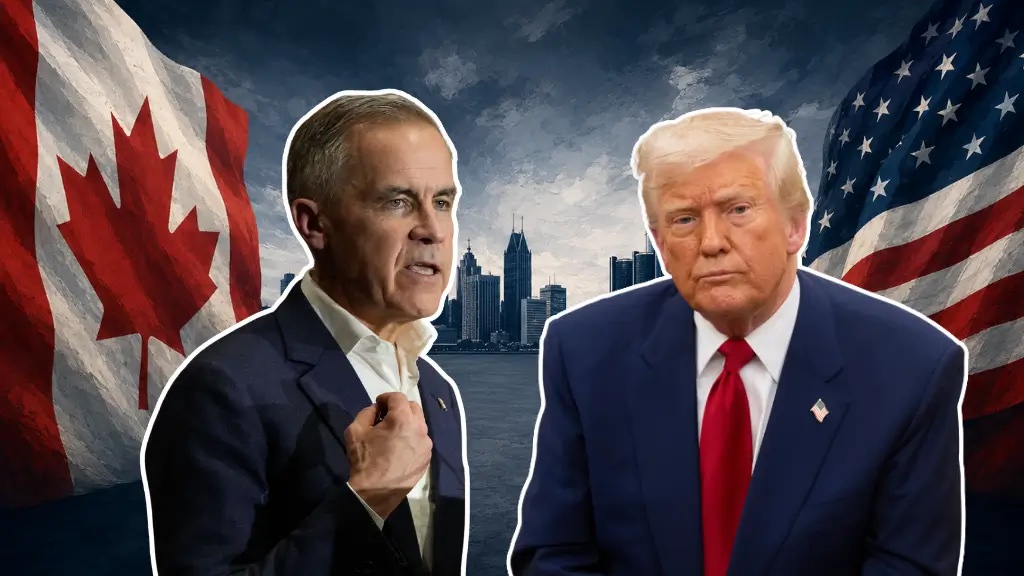
Canada imposes dollar-for-dollar tariffs on the US in response to Trump’s 50% levies
Canada has declared retaliatory tariffs on US goods amounting to C$28 billion, matching the dollar-for-dollar approach, following Washington’s implementation of new 50% levies on Canadian imports.
Canada has declared retaliatory tariffs reaching as high as 50% on various US goods, responding to the recent imposition of levies by President Donald Trump on Canadian imports.
Canadian officials announced on Tuesday that the counter-tariffs will encompass nearly C$28 billion ($20 billion; £15 billion) worth of American products, which include steel, furniture, fresh tuna, and cotton T-shirts.
The tariffs, aimed at aligning with the Canadian goods specified by the US, will be implemented on September 8.
The recent escalation comes after the breakdown of US-Canada trade discussions late last week, with both parties blaming one another for imposing unreasonable last-minute demands.
Canada’s Finance Minister, François-Philippe Champagne, stated that the measures were a reaction to the 50% tariffs imposed by the Trump administration on various Canadian goods following the breakdown of negotiations on Friday.
“Those tariffs will significantly impact Canadian workers, businesses, and communities throughout our nation,” he stated. “Canada needs to take action.”
Champagne characterized Canada’s response as “proportionate” and “strategic.”
He also announced an extra C$7.5 billion in support programs for businesses and workers impacted by the US tariffs, designed to minimize job losses and assist companies in staying operational.
The ongoing trade dispute is anticipated to raise costs for both sides of the border, leading to potentially higher prices for businesses and consumers alike.
Supply chains developed over many years between the two countries may encounter higher trading costs as the new tariffs are implemented.
Polls show that most Canadians back the government’s choice to remain resolute against the US.
Nonetheless, uncertainties persist regarding the reasons behind the failure of the most recent trade negotiations. Canada’s Conservative opposition has demanded the complete text of the draft agreement with Washington be made public.
Businesses have expressed concerns regarding the possible repercussions of an extended trade war with Canada’s primary trading partner.
In response to Canada’s announcement, the White House stated that the US was ready to provide Canada with “the most preferential market access of any country on Earth” during the recent negotiations.
“Rather than pursuing a partnership, Canada opted for unreasonable demands, retractions, and outright rejection,” it stated.
On Tuesday, Trump took to Truth Social to accuse Canada of having “ripped off” the US for decades, while also criticizing its tariffs imposed on American farmers.
“I engage with numerous nations, and Canada stands out as the most challenging and irrational,” Trump wrote. “They believe they have rights, but they are not a state, and those rights will be revoked!”
Trump also proposed renaming Lake Ontario, one of the Great Lakes along the US-Canada border, to Lake America.
“We do not anticipate engaging in significant business with Ontario moving forward.”
He issued a distinct warning about increasing US tariffs on Canadian automobiles to 50% starting January 1.
Canadian Prime Minister Mark Carney charged Trump with attempting to “destroy” Canadian industries, such as automobile manufacturing and the steel and aluminum sectors.
Tensions between the two countries reached a peak on Monday; however, officials on Tuesday adopted a more diplomatic tone, fostering hopes that negotiations could resume.
Ontario Premier Doug Ford, who referred to Trump as a “loser” during a news conference on Monday, later admitted in an interview with CNN that “things got a little heated.”
“But I want to reach an agreement—a beneficial agreement for the American people, a beneficial agreement for Canadians,” Ford stated.
The escalating dispute has raised questions regarding the future of the United States-Mexico-Canada Agreement (USMCA), the free trade pact connecting the three nations.
Mexican President Claudia Sheinbaum has dispatched her economy secretary, Marcelo Ebrard, to Washington for urgent discussions after the collapse of negotiations between Canada and the US.