Jurors listened as Keffe D stated that he provided the firearm that resulted in Tupac’s death
A retired LAPD detective testified that during the 2008 session, investigators did not inquire about Tupac with Duane Davis, and that he provided the entire account voluntarily.
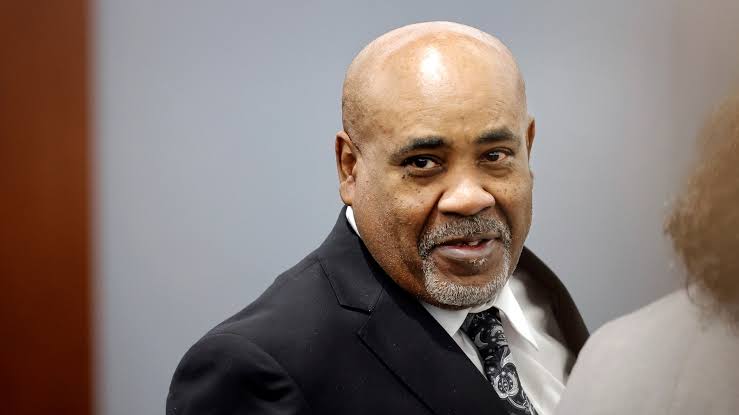
Jurors at the Keffe D trial have now listened to the defendant’s statement to investigators in 2008, in which he claimed to have handed over the gun that was used to kill Tupac Shakur. Duane “Keffe D” Davis, 63, stands as the first and only individual ever charged in relation to the drive-by shooting that claimed Shakur’s life on the Las Vegas Strip on September 7, 1996. He is charged with one count of murder involving a deadly weapon, accompanied by a gang enhancement. This indicates that prosecutors allege the murder was committed to benefit a street gang, which increases the potential penalty. He has entered a plea of not guilty and could face a life sentence without the possibility of parole if found guilty.
The focal point of the state’s case is a recorded interview that Davis provided to a federal task force nearly two decades ago. During opening statements, prosecutors presented segments of it to the jury, while retired LAPD Robbery Homicide Detective Daryn Dupree guided jurors through the remainder from the witness stand this week.
Comprehending the reason behind the existence of that recording requires a moment of reflection. In 2008, Davis was not under investigation for Tupac’s death. He was under scrutiny regarding the 1997 murder of Christopher Wallace, known as the Notorious B.I.G., in part due to the fact that he drove a Chevy Impala, the same model as the vehicle used by the shooter in that incident. Investigators brought him in for what attorneys refer to as a proffer session. An off-the-record conversation occurs when a suspect shares information with authorities, typically while seeking a reduced charge, under the assurance that their statements will not be utilized for prosecution. Davis had served as a federal informant for approximately ten years by that time.
Dupree testified that the task force did not pose a single question to Davis regarding Tupac. Davis denied any involvement in Wallace’s death, then offered that the crew had handled the other incident. Dupree informed the jurors that the revelation surprised them.
From that point, Davis detailed the evening. Hours prior to the shooting, his nephew Orlando “Baby Lane” Anderson was assaulted in a fight at the MGM Grand by Suge Knight and individuals associated with Death Row Records. Later that night, a white Cadillac, containing Davis and three others, pulled up next to the BMW driven by Knight, with Shakur seated in the passenger side. Davis stated that he handed a gun to Deandrae “Dre” Smith in the back seat, but Smith was too frightened to use it, prompting Anderson to fire instead. Shakur was struck four times and passed away six days later at the age of 25. Knight endured.
Dupree informed the jury that he found the account credible for a particular reason, stating that he did not think Davis would put the gun in his own nephew’s hands and implicate him unless it had truly occurred. Anderson consistently denied any involvement during his lifetime and was never charged. He lost his life in an unrelated shooting in Compton in 1998 at the age of 23. Smith passed away in 2004. That leaves Davis as the sole living individual the state claims was inside that Cadillac, which is exactly why his own statements hold significant importance and why prosecutors exerted considerable effort to present this recording to the jury.
The defense has a clear counter, and the trial testimony provided it to them. Retired FBI agent Wade Lee testified that he had interviewed Davis off the record on two occasions prior, including a proffer session in 1998. During these interviews, Davis denied any involvement in both killings and claimed he did not know who was responsible for Shakur’s death. In the previous version, Davis mentioned that following the beating, he, Anderson, and their girlfriends returned to their room at the Excalibur and remained there for the remainder of the night. Ten years apart, the same individual provided investigators with two entirely distinct narratives.
Davis has stated that the 2008 interview was intended to remain confidential. His attorney, Michael Sanft, contended that Davis spoke under the assurance that his words would not be used against him. In his opening statement, he informed the jurors that the state is presenting fiction as fact. Davis asserts that he was in Los Angeles that night and has alibi witnesses ready to testify. Judge Carli Kierny allowed the recording to be admitted. Her reasoning was that Davis relinquished any expectation of confidentiality when he shared the same story publicly, initially in a documentary and subsequently in detail in his 2019 memoir “Compton Street Legend.” His attorneys contended that the book was fictionalized and co-authored, rendering it impossible to determine which sections were his. An appeal to the Nevada Supreme Court regarding the confidentiality issue was unsuccessful, allowing both the memoir and the recording to proceed to trial.
There is an additional thread from the 2008 session that the jury has been presented with. Davis informed investigators that Sean Combs proposed a sum of $1 million to have Shakur and Knight eliminated and that he never received his portion. In the recording, Davis referenced a statement from Combs regarding his desire to eliminate them, stating, “I want to get rid of those dudes.” Dupree testified that pursuing that money and establishing Combs’ involvement was a key aspect of the task force’s efforts. Combs has refuted any involvement in Tupac’s death, labeling the allegation as fictional, and has never faced charges related to the shooting. Davis has since distanced himself from the matter, stating to a Las Vegas news station this month that he does not think Combs was involved in the murder.
The trial commenced with jury selection on August 10 and is anticipated to last approximately four weeks. Shakur’s family members have been present in the courtroom at all times. Even if Davis is found guilty, the case is unlikely to clearly determine who actually fired the weapon.