Trump Issues Warning of ‘Most Crushing’ Economic Action Against Iran
Trump warns of unprecedented economic warfare against Iran, stating that countries and businesses supporting Tehran will encounter significant financial repercussions.
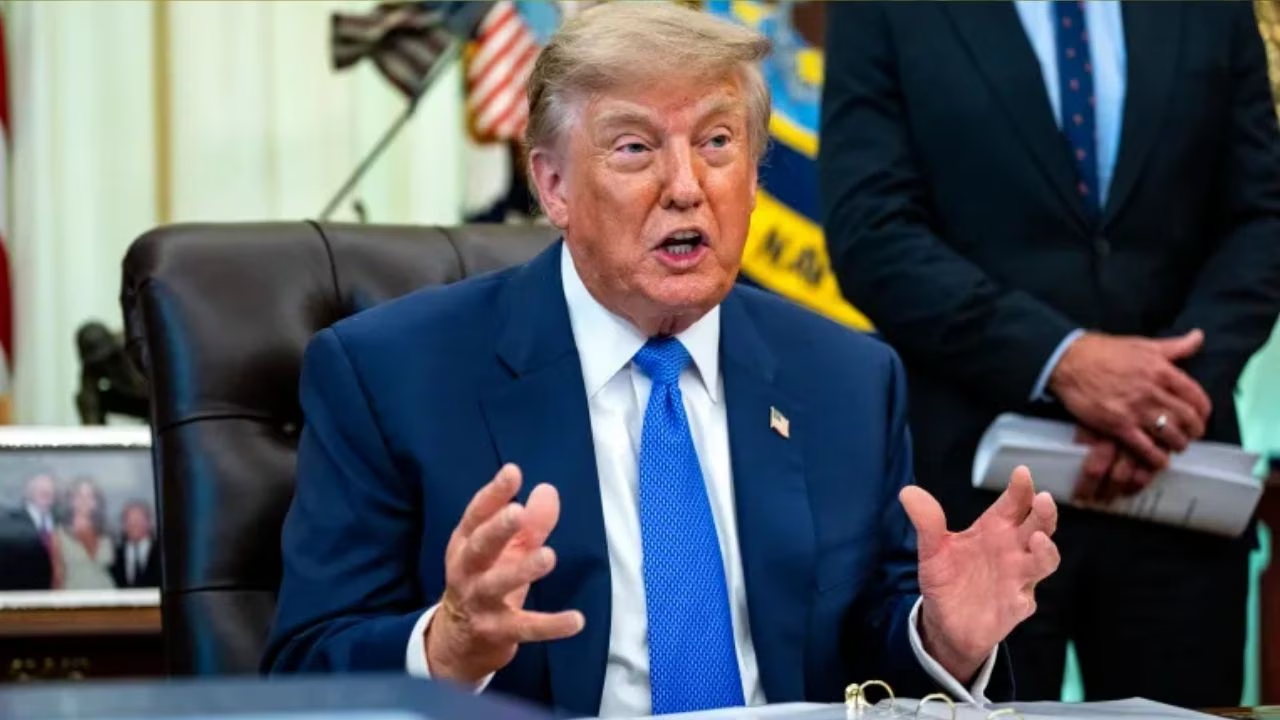
US President Donald Trump has warned of implementing what he termed the “most crushing economic operation ever taken against any country” on Iran, cautioning nations and businesses that assist Tehran in evading sanctions of serious financial repercussions.
In a post on Truth Social on Thursday, Trump stated that the campaign would result in “economic warfare and isolation on an unprecedented scale,” as his administration ramps up efforts to sever Iran’s access to international finance and trade.
“No one has provided the Islamic Republic of Iran with a better chance to reach an agreement than I have,” Trump stated, noting that “TRAGICALLY, for them, they missed it.”
Trump asserted that Iran’s navy, air force, and military production facilities had been obliterated, and he contended that the nation’s currency had lost all value, claiming that the Iranian regime was in a precarious position.
He cautioned that any nation whose financial institutions, businesses, airports, or government entities offer Iran what he termed a “lifeline” would encounter “tremendous economic consequences” of their own.
Trump issued a direct order for an immediate crackdown on various channels, including oil smuggling, currency swap lines, cash transfers, exchange houses, ship registries, and front companies. He emphasized that Iran would never be permitted to obtain a nuclear weapon.
The action broadens a pressure initiative initiated by the Trump administration in April, known as Operation Economic Fury, aimed at what Washington identifies as Iran’s global terrorism financing networks and revenue sources.
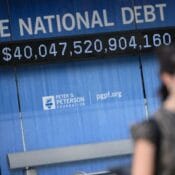
Iranian Foreign Minister Seyed Abbas Araghchi dismissed Trump’s warning of what he termed “Economic D-Day,” alleging that Washington is leveraging pressure on Tehran to distract from its own economic difficulties, such as increasing debt and escalating interest expenses.
“Doubling down on failed policies will only lead to further defeat—and increased animosity from Iranians,” Araghchi stated in a post on X on Thursday.
He further accused the United States of engaging in what he termed “economic terrorism,” cautioning that such a campaign could jeopardize the wider global economy and the sovereignty of nations beyond Iran.
Araghchi has previously accused Washington of consistently escalating sanctions after earlier measures failed to change Tehran’s stance, contending that this approach has become a barrier to achieving a negotiated resolution to the six-month conflict.
The UAE has halted trade with Iran.
The most recent escalation occurred a day after the United Arab Emirates, a key commercial partner of Iran, halted trade and financial transactions with Tehran.
The UAE made the decision following accusations against Iran for launching two ballistic missiles at the Gulf state. Tehran refuted the claims of launching missiles, characterizing the allegation as a “false flag” operation.
Prior to the war, the UAE was Iran’s most significant source of imports, accounting for over 30% of the nation’s total imports in 2024, according to World Trade Organization data.
Analysts indicate that the success of Washington’s recent pressure campaign will largely hinge on China, which has significant financial, logistical, and trade connections with Iran.
Bob McNally, president of Rapidan Energy Group, stated that Beijing has already shown its readiness to respond to US pressure.
He stated that crude markets would not react substantially to the recent sanctions threat unless Iran’s hardline leadership escalated military actions further.
“The market is becoming a little less optimistic about this near-term and sustainable reopening of Hormuz,” McNally said on CNBC’s “Squawk Box Asia” on Thursday.
Ship traffic through the Strait of Hormuz continued to be markedly lower than pre-war levels last week, as assaults on vessels and a US naval blockade of Iranian ports deterred most operators from entering the strategic waterway.
Preliminary data from Lloyd’s List Intelligence indicated that there were 73 vessel transits in the week ending August 16, a decrease from 91 the prior week, with only a limited number of operators still utilizing the route.
On Thursday, Brent crude futures increased by 0.5% to reach $92.09 a barrel, while US West Texas Intermediate crude saw a rise of 0.3% to $86.07.
US stock futures, however, reduced earlier gains following Trump’s announcement, with S&P 500 futures trading almost unchanged.