US-supported discussions regarding Venezuela are set to commence, notably in the absence of opposition leader Machado
Negotiations supported by the U.S. between Venezuela’s interim government and a segment of the opposition are set to commence on Saturday, although the nation’s leading opposition figure will not be present.
The discussions, focused on restructuring the nation’s political framework in anticipation of future elections, underscore Washington’s unparalleled sway over Venezuelan politics following the January operation by U.S. President Donald Trump’s administration that ousted Nicolas Maduro and appointed acting President Delcy Rodriguez.
On the government side, they will be led by Jorge, Rodriguez’s brother, who serves as the head of the National Assembly and has extensive experience as a negotiator in previous discussions with both the U.S. and the opposition.
The opposition delegation, supported by the U.S. in its efforts to reform the country’s electoral council and supreme court to guarantee free and fair elections, will be headed by Dinorah Figuera. Three sources familiar with the matter indicated that the U.S. requested Figuera to take the lead due to her position as the head of an opposition-dominated national assembly cohort elected in 2015, which the U.S. continues to recognize as the last democratically-elected legislature in the country.
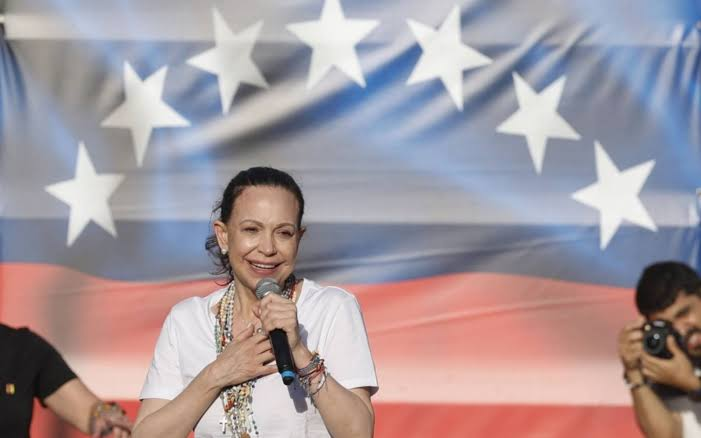
Not participating in the talks, much to the disappointment of some observers of Venezuela, is Nobel Peace Prize winner Maria Corina Machado, the nation’s most prominent opposition figure.
Machado departed Venezuela late last year to accept her Nobel after spending much of her time in hiding following a disputed 2024 presidential election. She has pledged to return to Venezuela to assist with the response to the devastating twin earthquakes that occurred in June, much to the frustration of U.S. officials who feel it is not the appropriate time for such actions.
Trump has refuted media claims that his administration advised Machado against returning. Since Maduro’s removal, Machado has consistently been publicly marginalized by Washington, with U.S. officials stating that she lacks sufficient support to lead the country.
Prior to Figuera’s visit to Caracas in mid-June, Machado was reportedly unaware that discussions were scheduled to commence, according to three sources. Another source indicated that Machado was aware of the discussions but was not invited to participate in the opposition delegation due to her lack of membership in the 2015 assembly.
“Machado is justified in distancing herself from this process,” stated an individual familiar with the negotiations. If the negotiations proceed successfully and culminate in free elections, she will be poised to become Venezuela’s first female president. If the negotiations do not proceed favorably, she will have demonstrated her argument: that negotiations require representatives who possess legitimacy and are regarded positively by the public.
The negotiators are tasked with delivering results swiftly to instill confidence among Venezuelans and to compensate for Machado’s absence from the discussions, according to the source.
Machado stated last week that although she would not take part, she would not obstruct “real progress” at the discussions and would assess their success based on the restoration of democratic institutions, the release of political prisoners, the scheduling of elections, and other related matters.
Machado and Figuera did not provide comments when approached. During the discussions, the interim government expressed its intention to advocate for the removal of the remaining U.S. sanctions. The U.S. has, in the past, temporarily relaxed sanctions on Venezuela’s oil, gas, and gold sectors following agreements between the government and the opposition aimed at ensuring fair elections.
US PROVIDES SECURITY
Venezuela’s opposition has consistently engaged in discussions over the years with the former Maduro government, which has filled key courts and the electoral authority with its own supporters.
A negotiated deal for the 2024 elections promised a fair contest and full opposition participation; however, Machado was barred from taking part. The U.S. and international electoral observers reported that her movement secured approximately two-thirds of the votes cast; however, electoral and judicial authorities supported Maduro as the victor, allowing him to maintain his position of power.
The exclusion of Machado’s faction from the forthcoming discussions effectively omits a significant segment of the nation, stated Ricardo Rios, leader of the Poder y Estrategia political risk consultancy. However, the opposition in Venezuela has historically been significantly fragmented, making it improbable that this will result in further divisions, he stated.
The United States has stated that Venezuela must first achieve stabilization and economic recovery before elections can occur. Trump has relaxed certain sanctions and consistently commended Rodriguez’s leadership.
U.S. Secretary of State Marco Rubio, a steadfast supporter of Machado, stated this month that she is welcome to participate in the talks if Venezuelans endorse her presence. He emphasized that the U.S. aims to facilitate the discussions rather than impose its will. “For Venezuela to achieve the reconciliation necessary to advance on various projects, it is essential that every segment of Venezuelan society be represented. “And clearly, Maria Corina plays a significant role in that,” Rubio stated.
The involvement of the U.S. provides security for the opposition, whose members and leaders have frequently encountered detention and prosecution on charges they assert are politically motivated, according to one opposition source.
One opposition source close to Figuera’s group referred to the U.S. as a “central player” in the discussions, indicating that it would not remain passive.