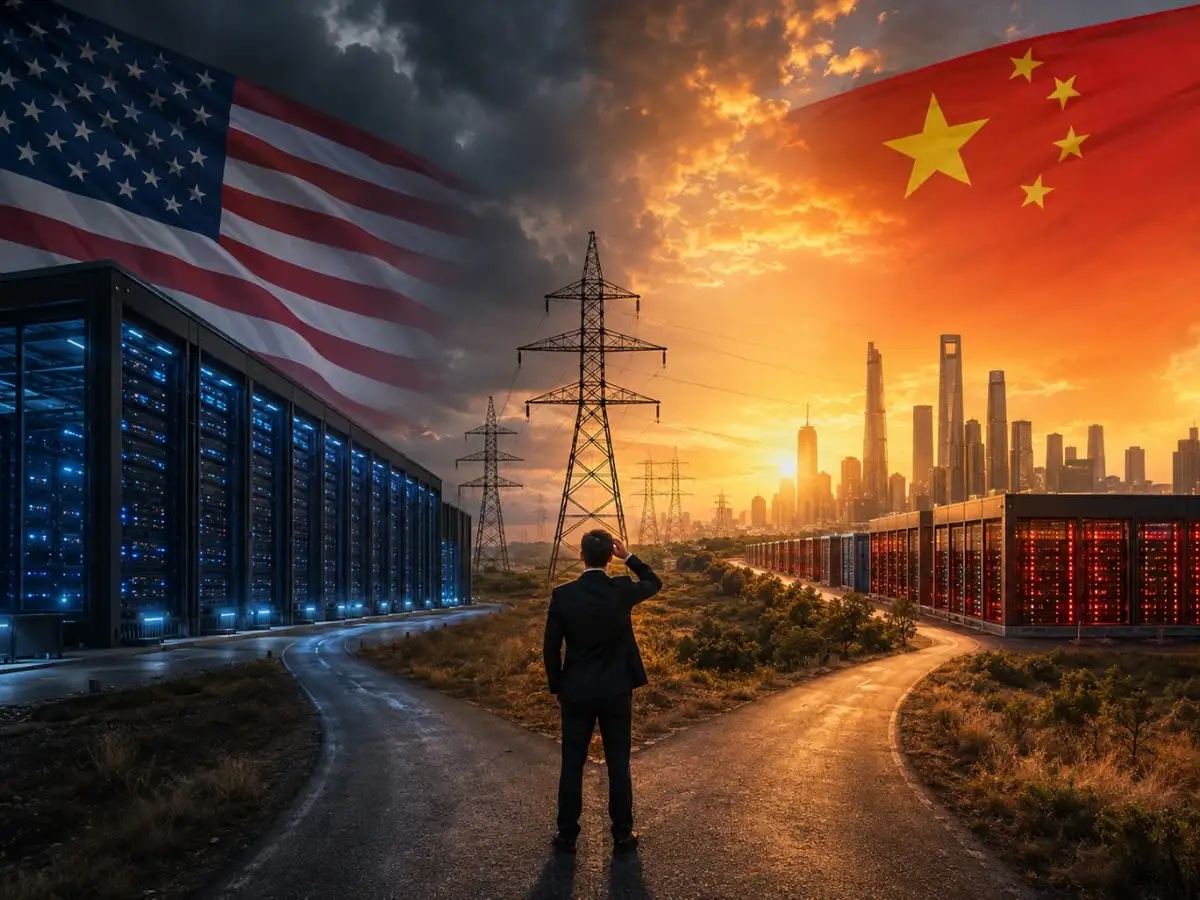
Robert Blohm asserts that the United States continues to maintain its leadership in artificial intelligence, even in light of China’s increasing investment and worldwide aspirations.
Robert Blohm, Managing Director of Keen Resources, asserts that the United States continues to lead the global artificial intelligence (AI) race, even in light of China’s substantial investments in AI infrastructure and its aspirations to take the lead in the industry.
During an interview with ARISE NEWS on Friday, Blohm stated that the United States continues to lead in artificial intelligence due to China’s limited access to advanced semiconductor technology, including essential chips and lithography systems that are crucial for AI development.
Reacting to the ongoing global artificial intelligence race, Blohm stated that the United States continues to maintain a lead over China, thanks to its sustained edge in advanced semiconductor technology.
The US continues to take the lead in AI, maintaining its position at the forefront for now. China aims to lead in AI, yet they still face challenges in obtaining the advanced chips and lithography technology essential for this goal.
Blohm stated that China’s planned DeepSeek data centre signifies a notable investment, yet it is still smaller than similar AI facilities in the United States.
In a discussion about China’s expansion in artificial intelligence, he remarked:
“They’re making significant strides, but they don’t quite match the scale of the US.” Their data center operates at one gigawatt, whereas a standard data center in the United States functions at three gigawatts.
He noted that China selected Inner Mongolia for the project due to its plentiful coal resources for power generation and its cooler climate, both of which assist in fulfilling the significant energy and cooling requirements of AI data centers.
Regarding China’s AI infrastructure, Blohm stated:
“China’s AI data centers need significantly more cooling due to the use of lower-quality chips, which produce substantial amounts of heat.”
Discussing China’s overarching AI strategy, Blohm noted that the nation enjoys a “second-mover advantage,” allowing it to duplicate established technologies and produce them more affordably. He observed that considerable technological obstacles still hinder China’s capacity to compete with the United States.
China possesses a second-mover advantage. All they need to do is replicate what others are doing and produce it at a lower cost.
Blohm also identified China’s limited internet connectivity with the rest of the world as a significant barrier to its aspiration of becoming a global AI hub.
“For China to establish itself as the hub for all these data centers, it must enhance its internet interconnection with the global community.”
Discussing major US technology companies, Blohm noted that recent earnings showcased the sector’s ongoing strength, pointing out Microsoft’s unprecedented one-day market value increase and strong cloud performance. He also conveyed optimism regarding Apple and Amazon, despite facing some short-term challenges.
Well, it’s good. What is there to dislike? Microsoft achieved the largest single-day increase in market capitalization ever recorded, and the future for US technology appears promising.
In conclusion, Blohm cautioned that the future of artificial intelligence relies not just on technological advancements but also on global stability, asserting that increasing geopolitical tensions could jeopardize the infrastructure necessary for AI development.
This technology demands an unprecedented level of global tranquility, yet geopolitical dynamics are heading in the contrary direction.