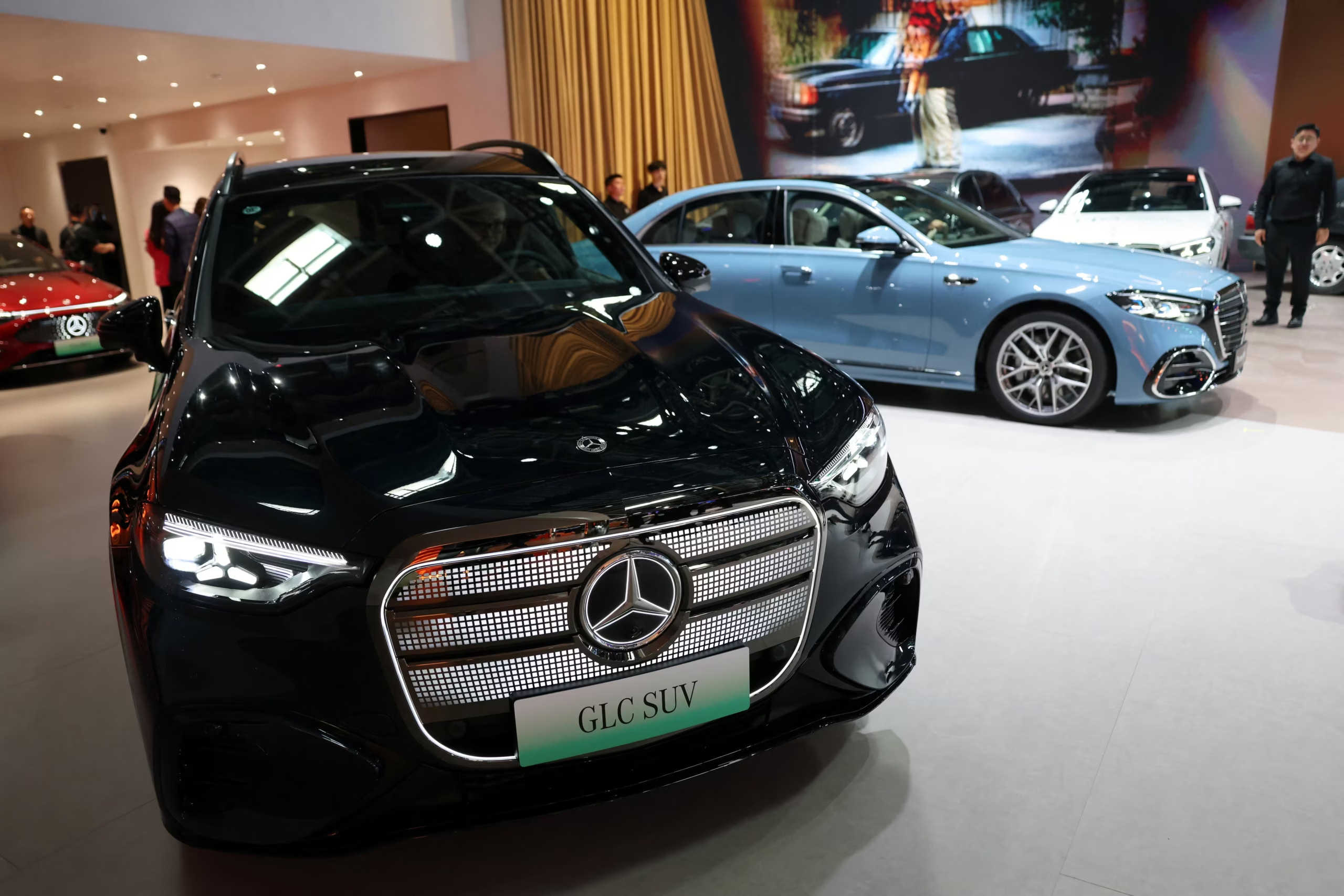
Mercedes-Benz reports a robust quarterly profit and upholds its margin outlook; however, it has revised its sales forecast downward due to ongoing weakness in demand from China and heightened competition.
Shares of German luxury carmaker Mercedes-Benz increased on Tuesday following the company’s announcement of a stronger second-quarter operating profit. The firm also upheld its core profit margin forecast for the year, despite ongoing weak demand in China impacting its core car business.
The premium automaker, in conjunction with German competitors Volkswagen and BMW, is facing increasing tariff expenses and heightened competition from Chinese electric vehicle manufacturers. In response, Mercedes announced plans to expedite cost-cutting measures, focusing specifically on enhancing productivity at its German plants.
Mercedes reported a 22% rise in second-quarter operating profit to €1.5 billion ($1.7 billion), attributed to decreased administrative costs and a reduction in research and development expenditures. However, the result did not meet analysts’ expectations of €1.6 billion, as indicated by a Visible Alpha consensus.
Despite the improved earnings, the company has retracted its earlier forecast for stable group revenue and passenger car sales, indicating that it now anticipates a slight decline in both compared to the previous year.
Mercedes has reaffirmed its full-year core margin guidance, maintaining a range of 3% to 5%. Chief Financial Officer Harald Wilhelm stated that the company now anticipates its passenger car business to achieve results at the lower end of that range.
The group’s overall performance benefited from robust contributions from its financial services and vans divisions. A €131 million gain from the anticipated sale of its leasing subsidiary, Athlon, further enhanced earnings.
Chief Executive Officer Ola Kaellenius stated that the company has stayed on track despite difficult market conditions.
“In the face of a challenging market landscape, we stayed on course in the second quarter while progressing with our product launch initiative,” Kaellenius stated, noting that Mercedes would implement additional cost-reduction strategies in the latter half of the year.
The company’s passenger car business encountered considerable challenges in China, with second-quarter sales declining by 30%. The largest automotive market in the world has grown more competitive as local manufacturers broaden their offerings of affordable, technology-driven electric vehicles, diminishing the historical supremacy of foreign brands.
Mercedes announced that it has built upon a 25% reduction in fixed costs since 2019 by intensifying global productivity initiatives starting in June, with particular emphasis on its German operations as a central aspect of the restructuring efforts.