US-Iran conflict escalates as Iran’s Supreme Leader pledges to impart ‘unforgettable lessons’ to the United States
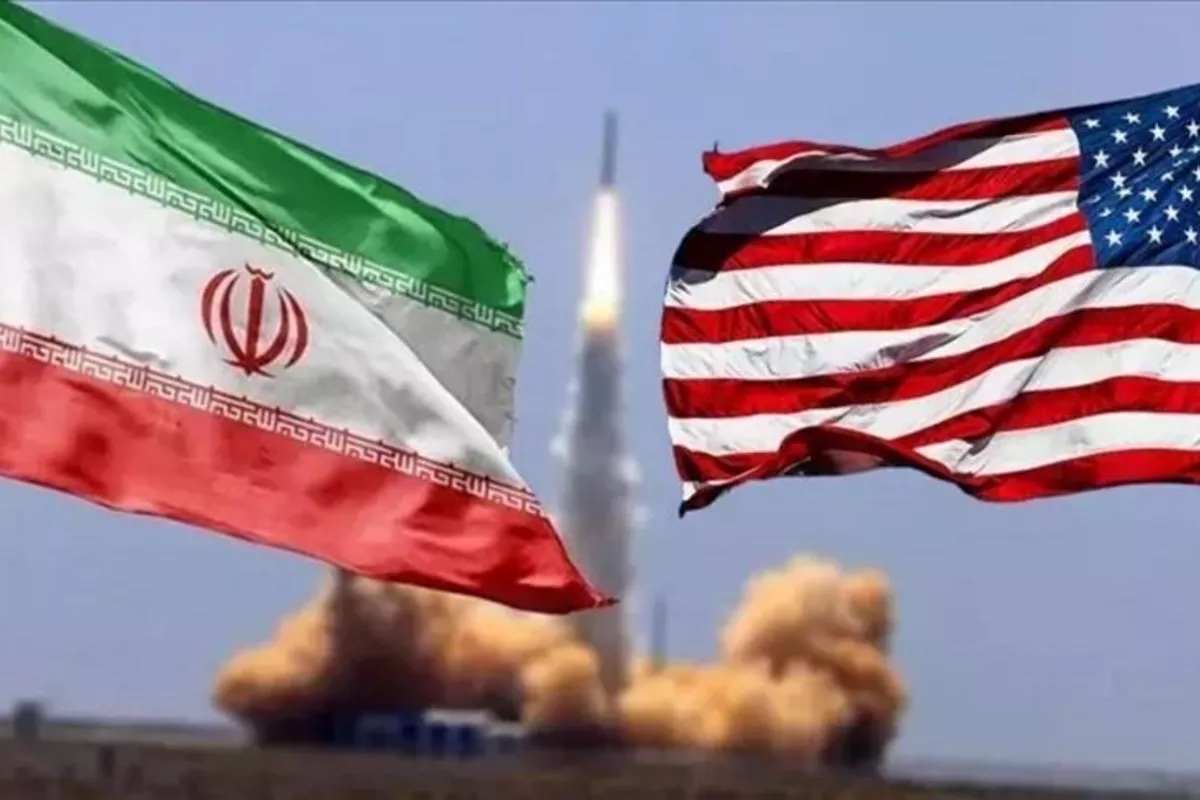
The United States expands its military operations against Iran as Khamenei promises to deliver “unforgettable lessons” to the US, while Tehran targets locations throughout the Gulf.
The United States has launched a global campaign against what it has termed transnational left-wing extremism, while simultaneously escalating its military confrontation with Iran across the Gulf, marked by new attacks on critical infrastructure in Kuwait and Bahrain by Tehran.
This comes as Iranian Supreme Leader Mojtaba Khamenei pledged to impart “unforgettable lessons” to the US amid escalating tensions, asserting that Washington’s assaults, despite a framework agreement aimed at concluding the conflict, rendered President Donald Trump’s signature meaningless.
On Saturday, the Pentagon reported that two US service members were killed and one went missing in action in Jordan due to a series of missile and drone strikes from Iran.
On Saturday, Washington conducted its seventh consecutive night of strikes within Iran.
Simultaneously, Tehran retaliated by assaulting essential infrastructure in Kuwait and aiming at installations associated with the US military in Bahrain.
During an international counterterrorism summit in Washington, which saw participation from representatives of over 60 countries spanning Europe, Asia, and Latin America, US Secretary of State Marco Rubio contended that Western governments have not adequately acknowledged the dangers presented by violent left-wing movements.
Our counterterrorism doctrine has overlooked extremist violence originating from the political left. Rubio asserted that even today, many dismiss the idea that far-left terrorism could pose a significant threat as a right-wing fantasy.
He stated that the United States aims to collaborate closely with international partners to identify, disrupt, and dismantle organizations engaged in politically motivated violence, regardless of where they operate.
White House Homeland Security Adviser Stephen Miller issued one of the administration’s most pointed critiques of left-wing political movements, alleging that violent extremists are exploiting democratic values to evade prosecution.
“One of the defining characteristics of left-wing violence and terrorism is its entirely pretextual and insincere invocation of civil liberties to protect its acts of violence,” Miller stated.
“When the leftist, who rejects freedom, civil rights, and any ordinary notion of justice, protests that we are violating his rights, understand that he is attempting to mislead those who are not closely following the political scene into believing that some injustice has been committed against him,” Miller said.
In the Gulf, the US military has confirmed that it conducted strikes inside Iran for the seventh consecutive night, focusing on areas near the Persian Gulf and the strategic Strait of Hormuz, along with transportation infrastructure further inland.
Iranian authorities have alleged that Washington is broadening its campaign to encompass not just military targets, but also airports, railway stations, bridges, telecommunications infrastructure, and energy facilities.
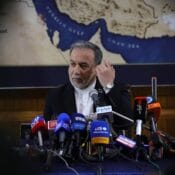
Iranian supreme leader Khamenei pledged to impart “unforgettable lessons” to the US.
“Now that the American enemy seeks to incite war and bear its most serious consequences, it should know that the dear Iranian nation and the axis of resistance have unforgettable lessons to offer it,” he stated in a message broadcast by state TV, adding that US violations of the deal “once again demonstrated to everyone the worthlessness of the American president’s signature.”
Authorities reported that 116 communications towers were disabled, resulting in the unavailability of landline, mobile phone, and internet services in multiple communities.
In the neighboring Khuzestan province, Iranian officials asserted that US forces had targeted 95 locations across 12 cities over the past 10 days.
Tehran reacted by broadening its military operations to include actions beyond direct assaults on US-affiliated assets.
Kuwait announced on Saturday that Iranian missiles and drones had targeted another electricity generation and water desalination plant, causing a fire that led to the shutdown of several generating units.
In a statement, Kuwait’s Ministry of Electricity and Water reported, “Another electricity and water distillation plant was targeted by a hostile attack that resulted in a fire breaking out in one of the plant’s components.”
Kuwait Petroleum Corporation confirmed that a strategic oil facility sustained considerable damage due to repeated Iranian attacks; however, authorities reported that workers had been safely evacuated.
In a separate incident in Kuwait, operations at Kuwait International Airport were temporarily suspended as air traffic controllers halted flights due to rocket and drone attacks.
Kuwait’s Foreign Ministry stated that the government retains the right “to take all necessary measures” to protect the country from additional attacks.
The conflict extended to Bahrain, where the kingdom’s military reported that its air defense systems successfully intercepted and destroyed several Iranian drones and missiles. As reported by Bahrain’s Interior Ministry, air raid sirens were activated five times after dawn, prompting residents to seek shelter.
Jordan intercepted several missiles allegedly aimed at military facilities, and officials confirmed that no casualties or significant damage occurred.
In a notable escalation of rhetoric from Tehran, Major General Mohsen Rezaei, a senior military adviser to Supreme Leader Ayatollah Ali Khamenei, issued a warning that Iran would shift away from its policy of proportionate retaliation should US attacks persist.
“Iran will no longer confine itself to retaliatory, like-for-like responses… and no political border will be secure,” Rezaei stated. He stated that Tehran would recommence “full-scale offensive operations” if American military actions persisted for another two or three days.
The diplomatic situation deteriorated sharply after Iran formally suspended its commitments under the memorandum of understanding reached with Washington just a month prior. The agreement had paused weeks of conflict and paved the way for negotiations facilitated by Qatar and Pakistan.
Iranian Deputy Foreign Minister Khazem Gharibabadi has accused Washington of breaching the agreement by persisting with military actions. “We were engaged in discussions. “Unfortunately, it was the Americans themselves who, in fact, took these aggressive actions, in violation of their commitments,” Gharibabadi stated.
Consequently, we have halted all of our commitments and are, in fact, no longer carrying them out.
“What we are currently confronted with is the defense of our nation. We will act with determination and clarity, and I believe the Americans have once again understood that their aggressive actions will lead them to no favorable outcome.
Esmaeil Baghaei, the spokesman for the Iranian Foreign Ministry, also dismissed the prospect of an immediate return to diplomatic efforts.
“We currently have no plans for negotiations and remain focused on defending the country,” he stated earlier in the week.
In a separate development, Lebanese President Joseph Aoun departed from Beirut for Washington on Saturday, where he was anticipated to meet President Donald Trump, according to the Lebanese presidency, following the conclusion of discussions between Lebanon and Israel in Italy.
This visit will be the first by a Lebanese head of state to Washington since Barack Obama welcomed Michel Sleiman in 2009.
Aoun will engage in discussions with various American officials regarding the situation in Lebanon and strategies to reinforce the ceasefire, especially in southern Lebanon. Additionally, the talks will address the withdrawal of Israel from the Lebanese territories it occupies, according to the presidency.
In April, Israel and Lebanon initiated negotiations, sponsored by the United States, with the goal of achieving a peace agreement and bringing a permanent resolution to the Israel-Hezbollah conflict.
On June 26, a framework agreement was reached in Washington, stipulating that the Israeli military will withdraw from southern Lebanon, while the Lebanese army is set to deploy, beginning with two “pilot zones.”
The agreement depends on the disarmament of the Iran-backed militant group Hezbollah, which has outright rejected both the deal and the negotiations between Israel and Lebanon.
On Saturday, Lebanon’s state-run National News Agency reported new airstrikes targeting two towns situated on the periphery of the designated security zone, in the Tyre and Nabatieh regions. The US embassy has issued a warning to Americans against traveling to Lebanon, citing elevated tensions in the Middle East.
Iran’s strikes on Jordan have resulted in the deaths of two US soldiers, with one still unaccounted for.
Two US service members lost their lives, and one is currently unaccounted for in Jordan after a series of missile and drone strikes launched by Iran.
US Central Command (CENTCOM) reported that the soldiers lost their lives on Friday while US and partner forces were “defending against Iranian ballistic missile and drone attacks.”
According to a post on X by CENTCOM, one US service member is currently missing in action, while four others have been evacuated to hospitals in Jordan.