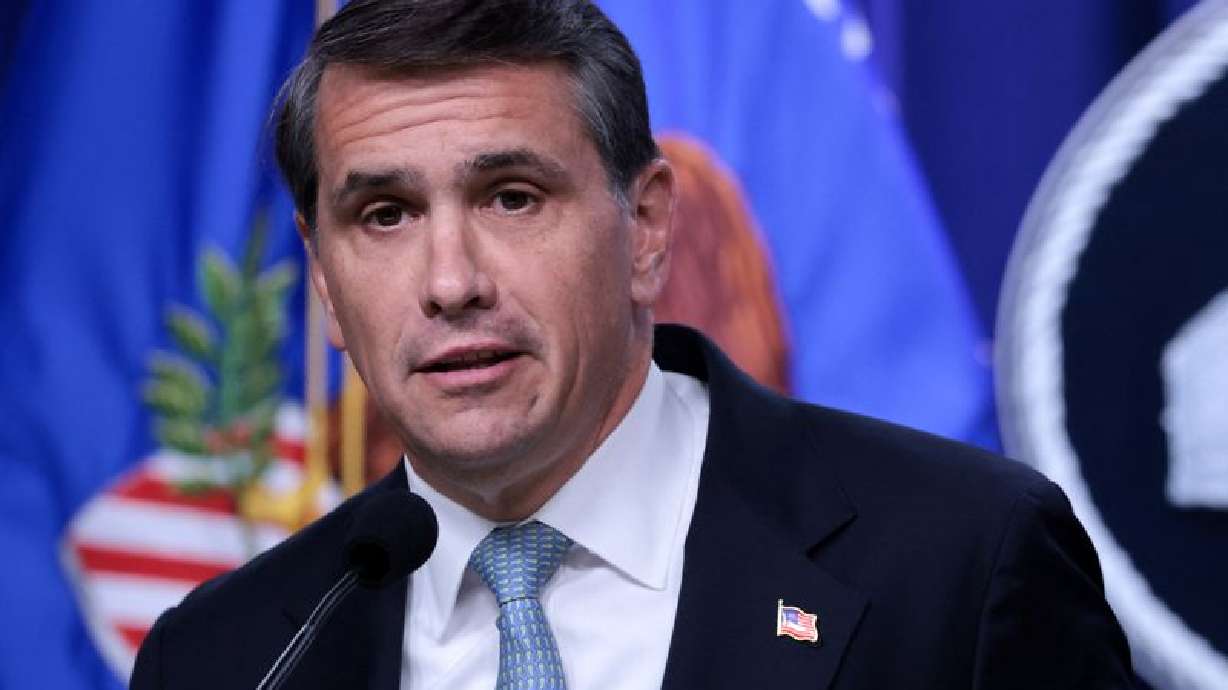
Senate Republicans have confirmed Todd Blanche. During Trump’s tenure as President, he appointed an Attorney General
Senate Republicans have confirmed Todd Blanche as attorney general by a narrow margin, following concerns regarding his independence and involvement in contentious policies from the Trump administration.
The US Senate has confirmed Todd Blanche as attorney general under President Donald Trump by a narrow margin, bringing to a close weeks of uncertainty surrounding his nomination due to concerns regarding his independence and involvement in contentious administration policies.
Blanche was confirmed by a narrow margin of 50 votes to 49 on Saturday, as Republican senators Susan Collins and Lisa Murkowski aligned with Democrats in opposing his appointment. Republican Senator Bill Cassidy cast the pivotal vote after determining that Blanche was the most formidable candidate Trump was expected to nominate.
The vote came after a prolonged standoff lasting several weeks between Senate Republicans and the Trump administration regarding Blanche, who has been serving as acting attorney general since April and previously occupied the number-two role at the Justice Department.
Several Republican senators had raised concerns about Blanche’s management of the document release pertaining to Jeffrey Epstein, along with his role in a contentious $1.8 billion “anti-weaponization” fund and a corresponding tax-immunity agreement involving Trump, his sons, and their family business.
Blanche aimed to tackle those concerns by holding a series of meetings with senators on Capitol Hill, eventually reaching a written agreement to limit the tax-immunity arrangement and terminate payments related to the “weaponization” program.
Critics have characterized the program as a possible means of channeling government funds to Trump allies, including individuals connected to the January 6, 2021, assault on the US Capitol.
The tax-immunity agreement and the fund originated from Trump’s $10 billion lawsuit against the Internal Revenue Service.
However, uncertainties persist regarding the legal binding nature of Blanche’s commitments and whether Trump might later attempt to reintroduce a similar program under a different name.
Cassidy and Murkowski, who had been undecided before the vote, took those concerns seriously.
Murkowski had earlier expressed her doubts regarding Blanche’s willingness to restrain the most troubling tendencies of this administration.
She also criticized Blanche’s management of the Epstein files, the immunity protections concerning the president and his family, remarks directed at anti-abortion groups, and what she characterized as the ongoing targeting of individuals, including former administration officials and current senators.
Cassidy, representing Louisiana, also criticized Blanche’s involvement in resolving Trump’s lawsuit against the IRS but ultimately expressed trust in his ability to offer the president honest legal counsel.
Blanche will now officially head a Justice Department that has experienced considerable transformations since Trump’s return to office for his second term.
During his time as acting attorney general, the department took action against individuals whom Trump considered political adversaries, while many career prosecutors departed from their roles.
The department has stated that it functions under the guidance of the president, a situation that has sparked worries regarding the enduring principle of independence between federal law enforcement and the White House.
Federal judges have expressed criticism toward prosecutors in various cases for pursuing what they deemed to be weak prosecutions, while grand juries have, in some instances, opted not to indict.
Political appointees have dismissed senior career officials deemed uncooperative with the administration’s agenda, and there has been a reduction in staffing in areas such as the civil rights division and ethics office.
Blanche has stood by his record, contending that the Justice Department has played a crucial role in reducing crime to unprecedented lows and addressing what he views as injustices perpetrated by the Biden administration against Trump and his conservative backers.
His supporters assert that he is dedicated to the fundamental mission of the department, which involves upholding the law and safeguarding the American people.
Senator Chuck Grassley, chairman of the Senate Judiciary Committee, who played a role in advancing Blanche’s nomination, characterized him as a tough and fair prosecutor dedicated to upholding the rule of law.
Blanche spent almost ten years as a career prosecutor in New York before transitioning to become Trump’s personal lawyer and subsequently joining the Justice Department.
Some Republican senators who initially questioned his nomination ultimately determined that Blanche was probably the most suitable attorney general candidate Trump could have chosen.
They contended that his permanent appointment might afford him increased independence and enhance his willingness to withstand pressure from the White House.