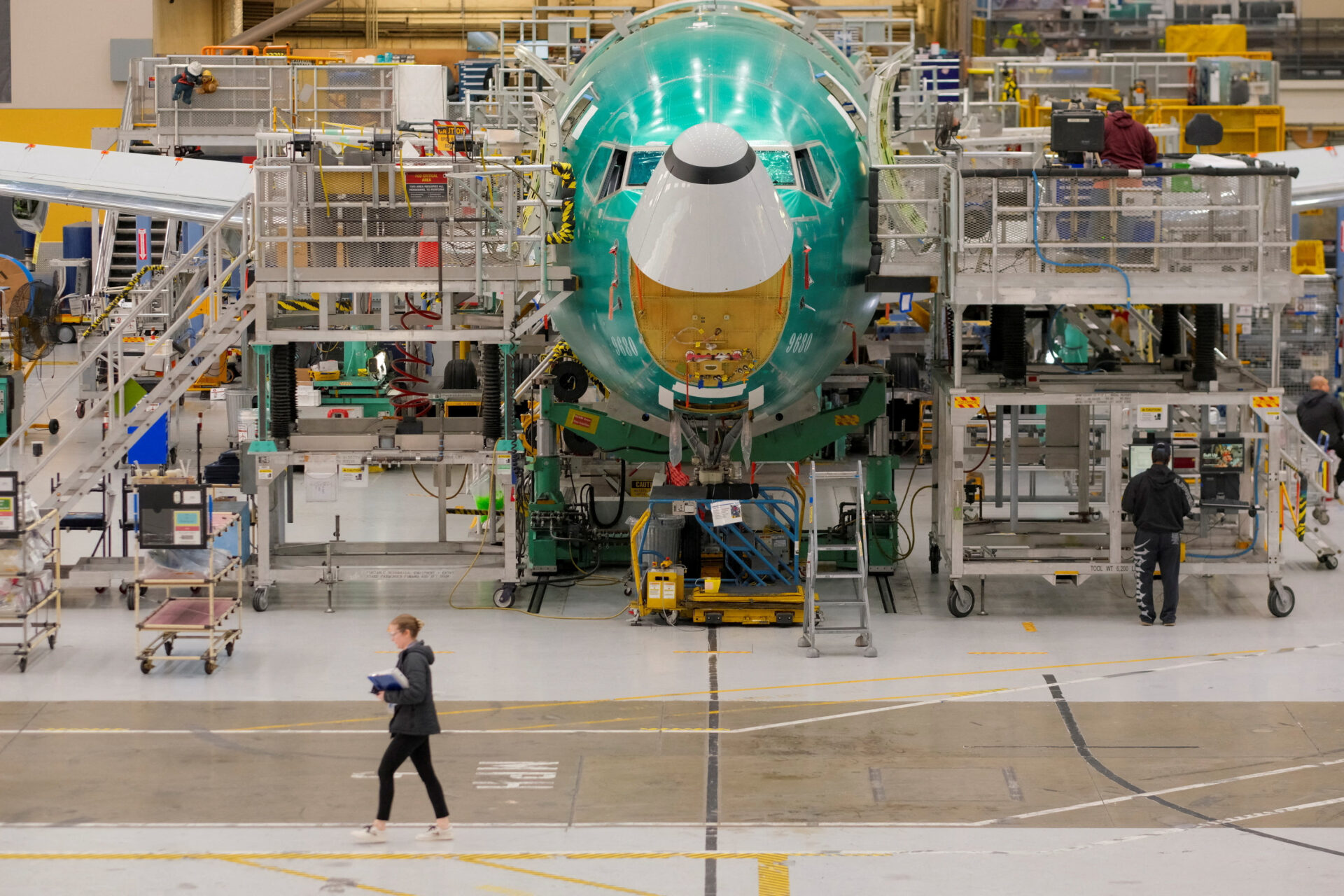
The head of Boeing’s commercial airplane unit stated on Sunday that the company is concentrating on enhancing and ramping up aircraft production, rather than on order announcements.
The backlog is exceptionally robust. Demand is not a concern for us. If we announce some orders along the way, we will celebrate with our customers depending on their interest in doing so,” said Boeing Commercial Airplanes CEO Stephanie Pope during a roundtable discussion with reporters prior to the Farnborough Airshow.
Instead, she stated that the planemaker’s priority “is to listen” to customers and suppliers at the biennial international event that gathers executives from many of the industry’s largest companies. “We’re going to understand what their challenges are, and then we’re going to update them on our products,” she remarked.
Boosting production is essential for the company’s ongoing financial recovery and its capacity to compete with European rival Airbus, whose A320 family has surpassed Boeing’s 737 MAX in the profitable narrowbody market.
The 737 constitutes the largest portion of revenue for Boeing Commercial Airplanes. Increasing output is essential to address the company’s $26 billion net debt. “Boeing is truly focused on production rates,” stated Tony Bancroft, an analyst with Gabelli Funds investment group.
The planemaker is examining a new phase of production increases for its top-selling 737 MAX following regulatory approval in May to elevate production to 47 units per month.
The Federal Aviation Administration imposed a historic production cap on the U.S. company shortly after a 2024 midair emergency that exposed significant production safety and quality issues at Boeing.
We are currently utilizing the safety management system along with our safety risk assessment to determine when we are stable and prepared to proceed to the next rate,” she stated. “I have directed the team to concentrate on stabilizing at 47. Once we reach 47, we’ll move on to 52, and then we’ll continue to examine further rate increases.