Iran says that US strikes on bridges and transportation hubs have made the armed conflict over the Strait of Hormuz worse.
The US began new military attacks against Iran for the sixth night in a row, which made the conflict worse. Iran said that Washington was targeting civilian infrastructure and increased its attacks in response across the Middle East.
As the latest attacks happened, fighting over the strategically important Strait of Hormuz heated up. Both countries were exchanging military attacks as worries around the world grew about oil supplies and the stability of the region.
US Central Command (Centcom) said that the action that happened overnight was meant to make Iran’s military even weaker. As part of the renewed blockade of Iranian ports, US forces also boarded a ship.
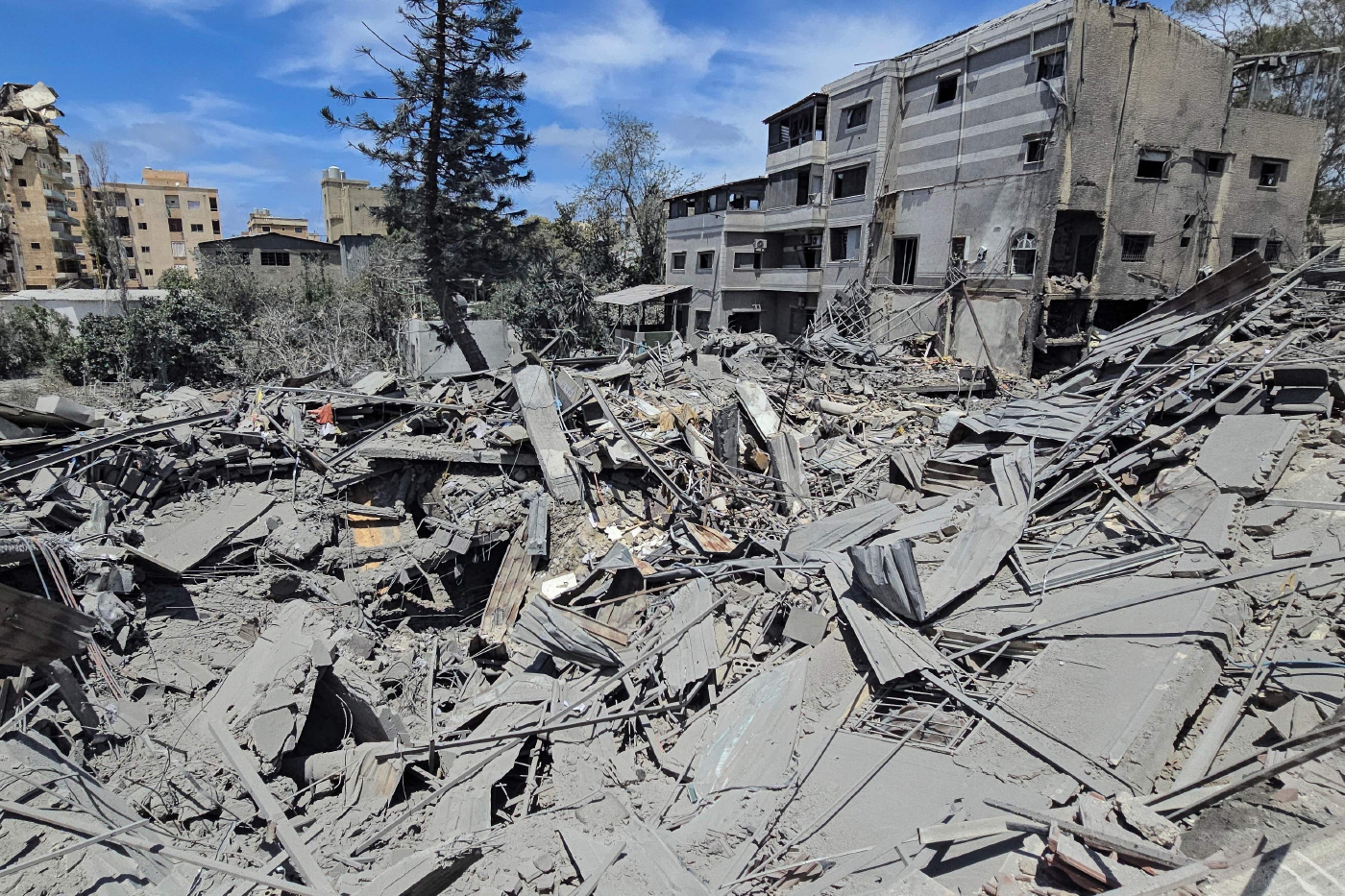
But Iran’s state media said that the US attacks happened on civilian targets, such as bridges, a train stop, and an airport. Damage has been confirmed to one bridge west of Bandar Abbas in the province of Hormozgan.
Centcom said that “its forces targeted dozens of Iranian military targets, including coastal surveillance and air defense sites, military logistics infrastructure, and maritime capabilities.” However, they did not say anything about buildings that were used by civilians.
To defend itself, the Islamic Revolutionary Guard Corps (IRGC) said it hit military targets in Kuwait and Bahrain as well as US marine surveillance radar sites in Oman.
The IRGC also said it was behind an attack on a US special operations command center at al-Tanf in Syria. They said it was in response to earlier this week’s killing of Iranian troops. Neither the US government nor the Syrian government responded right away to the claim.
Later, Jordan’s military said it had blocked three Iranian missiles without hurting anyone or doing any damage. In Iraq, Kurdish security forces said they had shot down eight drones over Erbil.
The conflict has kept the Strait of Hormuz pretty much closed since Iran blocked the key waterway after US and Israeli strikes.
The problem has made people more worried about the world’s energy sources. Fatih Birol, the head of the International Energy Agency, said, “We should be worried, and I am worried, if the situation does not improve in the next few weeks.”
According to Iranian state media, seven people were killed in the most recent US strikes. However, the country’s health ministry said that since the latest round of fighting began, at least 38 people had died and more than 400 others had been hurt.
As part of Washington’s renewed maritime blockade, US Marines boarded an oil tanker in the Gulf of Oman, Centcom also said. They said that forces had redirected three commercial ships that were trying to get around the blockage.
The military also said that blockade operations in April through June had turned off nine ships and sent more than 140 others in a different direction.
Even though things are getting worse, the White House said that diplomatic lines are still open.
Karoline Leavitt, the press secretary, said. “The president will hold them responsible if they break the promises they make to the United States.” He’s always willing to work things out, though.
“We are talking to them, but once more, the president will not let them fire on ships in the strait without getting in trouble for it.”
Mohammad Bagher Ghalibaf, Iran’s chief mediator, said that Tehran had no reason to honor any deal that didn’t help the country. He also said that keeping what he called “Iranian arrangements in the Strait of Hormuz” in place was important for Iran’s national security.
Even though there was a brief sign of possible diplomatic progress when President Trump thanked Iran for freeing US prisoner Dena Karari, writing, “The United States of America appreciates this gesture of goodwill by Iran!”