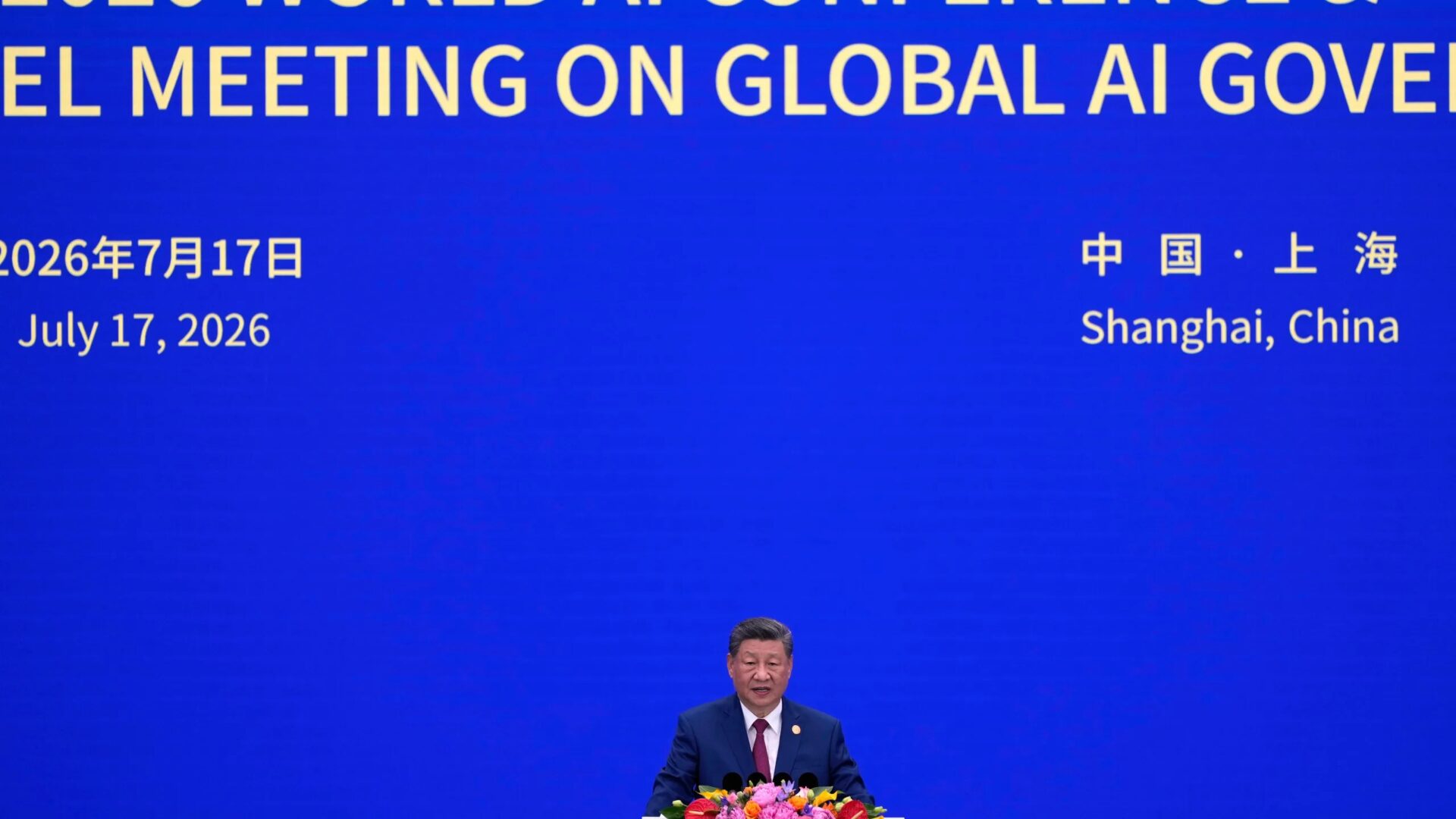
China presents 5,000 opportunities for AI training. The Global AI Governance Initiative is being introduced to developing countries
President Xi has committed to providing 5,000 AI training opportunities, emphasizing the importance of global collaboration to close digital gaps and promote inclusive technological advancement.
China has revealed its intention to provide 5,000 opportunities for artificial intelligence (AI) training and seminars to developing countries over the next five years. President Xi Jinping has emphasized the need for a new global system to prevent the rapidly advancing technology from exacerbating inequality between wealthy and poorer nations.
On Friday, Xi announced at the opening ceremony of the 2026 World AI Conference and High-Level Meeting on Global AI Governance in Shanghai a comprehensive international cooperation agenda focused on AI development, capacity building, and governance.
The Chinese leader announced plans to establish international AI application cooperation centers with the African Union (AU), the Association of Southeast Asian Nations (ASEAN), the League of Arab States, the Community of Latin American and Caribbean States, the Shanghai Cooperation Organization, and BRICS.
In a significant move with potential consequences for Africa, China announced that it would facilitate the use of MAZU, an AI-driven meteorological warning system, in 30 countries. This system is designed to help safeguard communities against extreme weather and various climate-related dangers.
Xi stated that the measures were integral to China’s initiative to ensure that artificial intelligence serves as a means for shared prosperity instead of becoming a new catalyst for global inequality.
He cautioned that the swift advancement of AI has generated significant opportunities while also raising intricate issues regarding security, ethics, human oversight, and accessibility.
“The advancement of AI ought to be a collaborative effort among nations, rather than the endeavor of one country alone,” Xi stated, emphasizing the importance of ensuring that no nation is excluded from the unfolding technological revolution.
He believes that the world should adopt a people-centered approach to AI and establish a global governance framework that guarantees the technology is utilized “for the positive, for good and for humanity.”
The Chinese president articulated four key priorities for the global AI framework: fostering openness and win-win collaboration to drive innovation; enhancing risk awareness to maintain the safety and control of AI; embracing inclusiveness and honoring cultural diversity; and promoting greater solidarity through multilateral cooperation.
He stated that nations need to create laws, regulations, monitoring systems, early-warning mechanisms, and emergency responses to avert the misuse or harmful application of AI.
Xi also cautioned against permitting artificial intelligence to evolve into yet another battleground for geopolitical conflict, urging nations to dismiss efforts to prioritize one country’s security over that of others.
The Chinese leader highlighted the importance of the Global South, asserting that international cooperation is crucial to close the growing AI and digital divides and to avert the emergence of “new historical injustice” in the advancement of frontier technologies.
He stated that China would persist in supporting global endeavors to enhance AI capacity, highlighting that Beijing had endorsed United Nations initiatives focused on AI collaboration and capacity development, while also promoting the establishment of the World Artificial Intelligence Cooperation Organization (WAICO).
Xi has announced the establishment of WAICO in Shanghai, characterizing this development as a significant advancement in addressing the requests from developing countries for increased involvement in shaping the future of artificial intelligence.
The announcement arrives as nations throughout Africa, including Nigeria, ramp up initiatives to establish digital economies, enhance local technological capabilities, and leverage AI across various sectors such as education, healthcare, agriculture, security, and public administration.
Xi stated that China is prepared to collaborate with nations globally to ensure that the development of AI stays under human oversight and is directed by a shared international agreement.
“The advancement of AI should not be an isolated endeavor by one nation, but rather a harmonious collaboration among countries,” he stated.
He stated that China would continue to be receptive to enhanced collaboration with other nations in capitalizing on the opportunities and tackling the risks presented by technology.
The 2026 World AI Conference is occurring during a period when governments and technology companies are competing to establish the regulations surrounding AI, in light of increasing worries about misinformation, autonomous systems, privacy, cybersecurity, job displacement, and unequal access to advanced technology.
Xi stated that the primary challenge facing the international community is to ensure that AI evolves into “a mighty force that enhances the well-being of humanity and propels human civilization forward.”