Poland has charged an 18-year-old Ukrainian with vandalizing war memorials and allegedly attempting to incite ethnic tensions through acts of sabotage.
Poland has charged an 18-year-old Ukrainian national with vandalizing war memorials and allegedly attempting to incite ethnic tensions between Poland and Ukraine, according to the country’s Internal Security Agency (ABW) on Thursday.
The suspect, known only as Illia K. in accordance with Polish privacy regulations, is confronted with 47 criminal charges for offenses purportedly committed between November 2024 and August 2025.
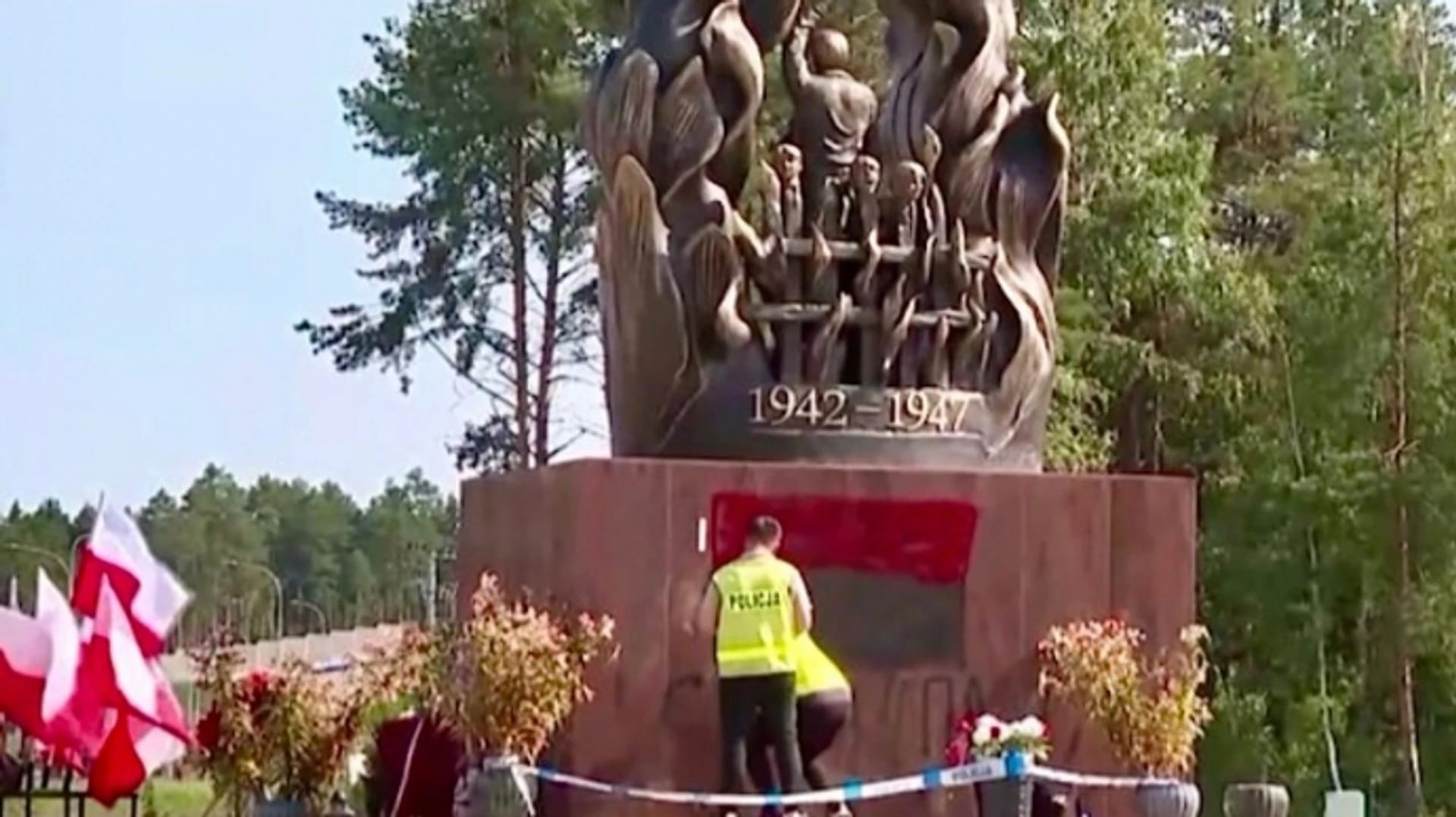
According to the ABW, the charges encompass the desecration of memorials dedicated to Poles who lost their lives during the Volhynia massacres, in addition to planning sabotage operations utilizing a drone.
Investigators stated that the purported offenses aimed to exacerbate ethnic divisions between Poland and Ukraine by taking advantage of deep-rooted historical grievances.
The ABW reported that it discovered an online recruitment network that purportedly utilized cryptocurrency payments via exchanges registered in Russia and China to fund its activities.
Polish authorities consistently allege that Russia engages in espionage and influence operations aimed at undermining the nation’s stability. Moscow has repeatedly refuted the claims.
The case arises amid enduring tensions surrounding the Volhynia massacres, a highly contentious topic in the relationship between Poland and Ukraine.
Diplomatic relations between Warsaw and Kyiv have worsened following Ukrainian President Volodymyr Zelenskyy’s decision to name a military unit after members of the Ukrainian Insurgent Army (UPA), a choice that has faced significant backlash in Poland.
Many Ukrainians view the UPA as a symbol of resistance against Nazi Germany and the Soviet Union. In contrast, Poland contends that the group was responsible for the deaths of approximately 100,000 Poles between 1943 and 1945, rendering the legacy of these massacres one of the most delicate issues in the shared history of the two nations.