Iran calls the Strait of Hormuz a “red line” and warns of more attacks in the Gulf if the US escalates its military attacks.
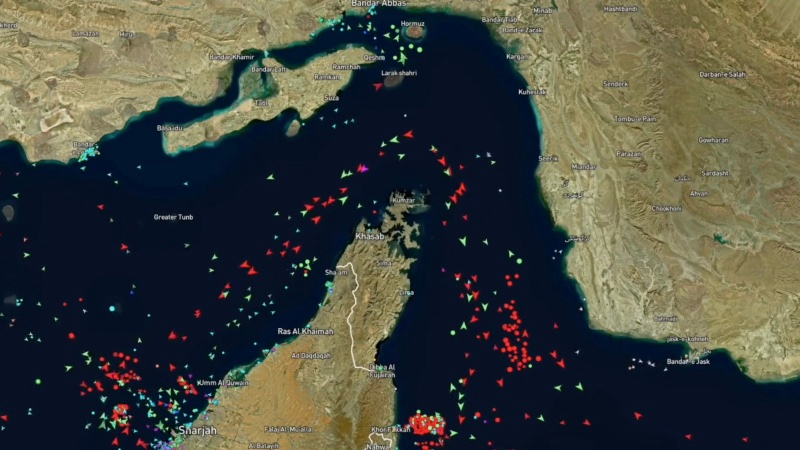
Iran has said that the Strait of Hormuz is a “red line” that can’t be crossed, and it has warned that it will attack key infrastructure across the Gulf if the US military campaign gets worse.
The warning came on Thursday, when things were getting worse between Tehran and Washington after five nights of US military activities. The US also put back in place a naval blockade around Iranian ports. They say the blockade is to allow ships to pass through the Strait of Hormuz again after Iran stopped it last Saturday when a fragile ceasefire broke down.
After the latest attacks, Mohammad Baqer Qalibaf, Iran’s top mediator, called the conflict with the US an “essential and existential war.” This demonstrated Tehran’s resolve to resist increasing American military pressure.
Brigadier General Mohammad Akraminia, spokeswoman for the Iranian army, said that the country still has full control of the Strait of Hormuz. He denied that recent US attacks on Iran’s southern coastal positions had made it less able to protect this important shipping route.
He said that Iran controls the strait from all over its land, not just from islands or sites on the coast.
Three US officials say that Washington’s military campaign is also aimed at Iran’s military capabilities before any future operation to reopen the important waterway.
The armed forces of Iran said again that they would not accept what they called US interference in the region and promised to protect the Strait of Hormuz “until the end.”
Iranian military officials also said that the strait would not be opened again until the US followed through on the 14-point agreement that was made with Tehran in June and followed Iranian rules for shipping through the waterway.
This week, US President Donald Trump said that if Iran didn’t return to talks, Washington would attack Iranian power plants and bridges.
In response to the threat, Akraminia said that if the US launched any more strikes, Iran would attack “all remaining infrastructure” across the Gulf. He promised that this attack would be bigger, worse, and more destructive than the previous ones.
Iranian officials also said they had attacked US military bases in Kuwait and Jordan. They warned nearby countries that they would be punished if they let US troops use their land to attack Iran.
The Iranian military said in a statement, “Our neighbors should know that giving bases to the US and letting them attack Iranian territory will not go unanswered.”
As things got worse, air raid sirens went off all over Bahrain, and Kuwait said it was reacting to what it called hostile drone threats.
The Islamic Revolutionary Guard Corps said it destroyed satellite communication facilities, an early warning radar system at Kuwait’s Ali Al Salem Air Base, and a US military pier in the Al Shuaiba area. Iran’s military said it fired ballistic missiles at Jordan’s Al Azraq Air Base.
The Defense Ministry of Bahrain said that its air defense systems stopped and destroyed several Iranian air raids that were aimed at the kingdom.
Fears of a larger regional battle have grown since the latest flare-up. Experts say that any long-term problems with the Strait of Hormuz, which carries about one-fifth of the world’s oil shipments, could cause problems in global energy markets and make the Middle East even less stable.