Trump Announces End of Iran Interim War Agreement Following Recent Gulf Strikes
President Trump states that the recent Iranian attacks on US Gulf bases have terminated the interim war agreement, heightening regional tensions and security concerns.
US President Donald Trump has announced the conclusion of the interim agreement intended to resolve the conflict with Iran, following Tehran’s recent assaults on American military installations in the Gulf. This development has heightened tensions and sparked concerns about a wider regional conflict.
The recent escalation came after Iran declared that it had aimed at US military bases in Bahrain and Kuwait in response to recent American strikes on Iranian positions, following attacks on oil tankers in the Strait of Hormuz.
The renewed hostilities have significantly undermined the fragile ceasefire and raised concerns about the future of the interim agreement signed on June 17, which was meant to establish a foundation for lasting peace after months of conflict that began with US-Israeli airstrikes on Iran on February 28.
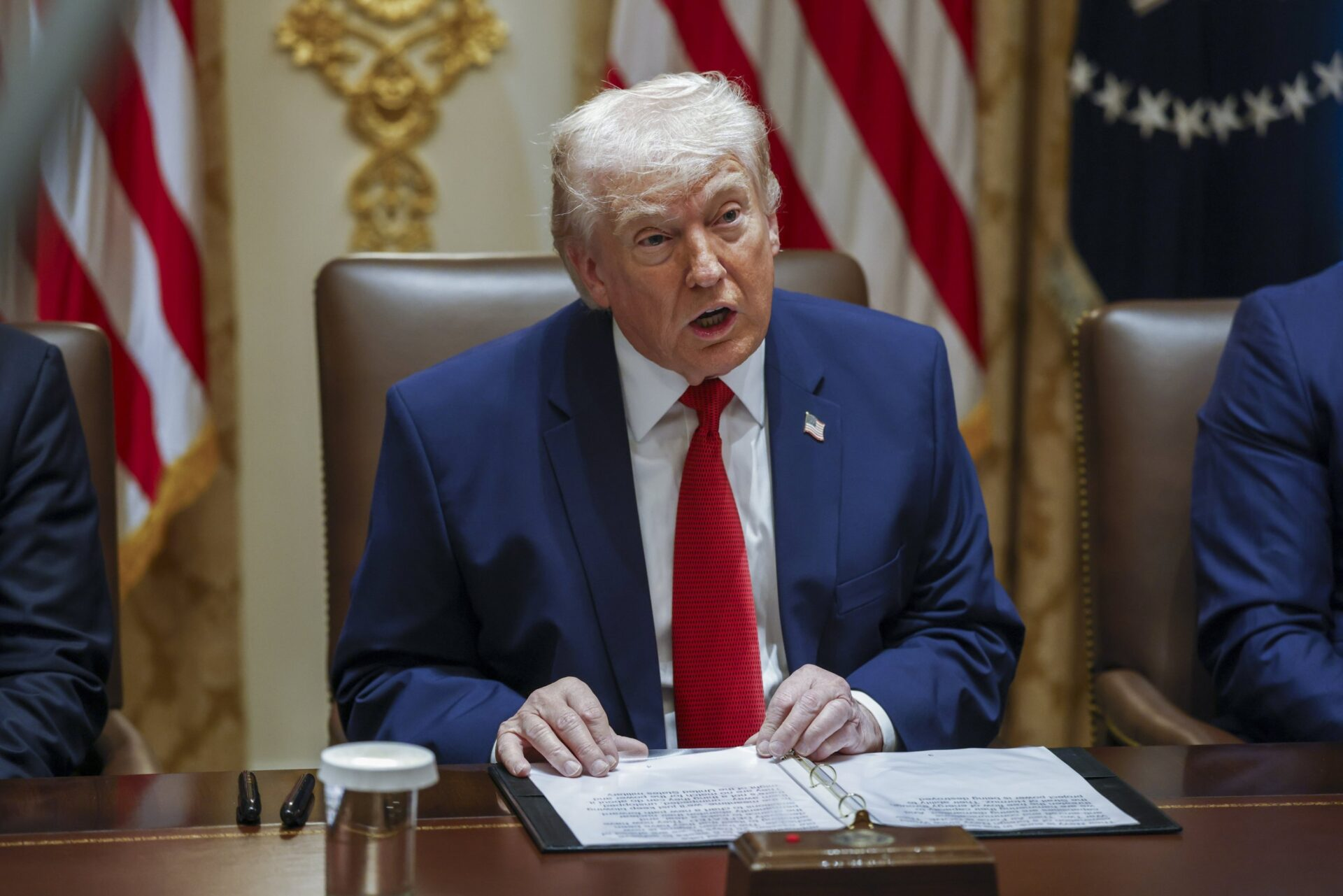
Speaking to reporters before a NATO summit in Ankara, Trump stated that he viewed the agreement as concluded and had no desire to resume negotiations with Tehran.
He also criticized Iran’s leadership, accusing it of acting recklessly and asserting that further discussions would be futile.
Financial markets responded quickly to the renewed tensions, with global oil prices increasing significantly and stock markets declining as investors evaluated the risks of extended instability in a key energy-producing region of the world.
Concerns increased regarding shipping through the Strait of Hormuz as tracking data revealed that multiple oil and gas tankers chose to reverse course instead of risking passage through the vital waterway.
Brent crude surged approximately five percent to roughly $78 per barrel, representing its largest single-day increase in weeks and reigniting worries that rising energy prices may drive global inflation.
Iran’s Revolutionary Guards announced that they had targeted US military facilities in Bahrain and Kuwait, asserting that they successfully shot down an American MQ-9 drone during the operation.
The assaults came in response to US military operations targeting Iranian installations, which encompassed coastal defense systems, missile sites, drone launch facilities, and vessels operated by the Revolutionary Guards. Washington stated that the operation aimed to impose substantial costs on Iran in response to attacks on commercial shipping, despite the ongoing ceasefire.
The US Central Command characterized Iran’s recent attacks as a serious breach of the ceasefire, posing a threat to freedom of navigation in the Gulf.
NATO Secretary General Mark Rutte supported the American strikes as essential, while European Union foreign policy chief Kaja Kallas criticized Iran’s assaults on Bahrain and Kuwait, cautioning that the resurgence of violence had further weakened attempts to achieve a lasting peace agreement.
Iran’s Khatam al-Anbiya Central Headquarters condemned the US operation as an act of aggression and cautioned of a strong response, asserting that Tehran would not accept foreign interference in the Strait of Hormuz.
Parliament Speaker Mohammad Baqer Qalibaf accused Washington of breaching the ceasefire with renewed military actions, imposing additional oil sanctions, and maintaining pressure on Iran’s strategic interests. He asserted that Tehran would not succumb to what he characterized as intimidation.
Iranian state media subsequently reported explosions in various southern areas, including Kharg Island, Qeshm Island, Sirik, and Bandar Abbas. However, US officials did not verify strikes on Kharg Island, which serves as the country’s primary crude oil export terminal.
A US official stated that the most recent military operation aimed to neutralize Iran’s air defense systems, surveillance facilities, anti-ship missile batteries, and drone infrastructure. No civilian casualties were reported.
The Strait of Hormuz remains at the heart of the confrontation, with analysts cautioning that Iran continues to wield its influence over this crucial shipping route as leverage in negotiations with Washington, while pursuing stronger guarantees in any future peace settlement.
The crisis intensified as the United States rescinded a temporary license that permitted restricted sales of Iranian oil and petrochemical products. Iran’s foreign ministry denounced the action as a violation of the interim agreement and cautioned that it would implement all necessary measures to safeguard its national interests and security.