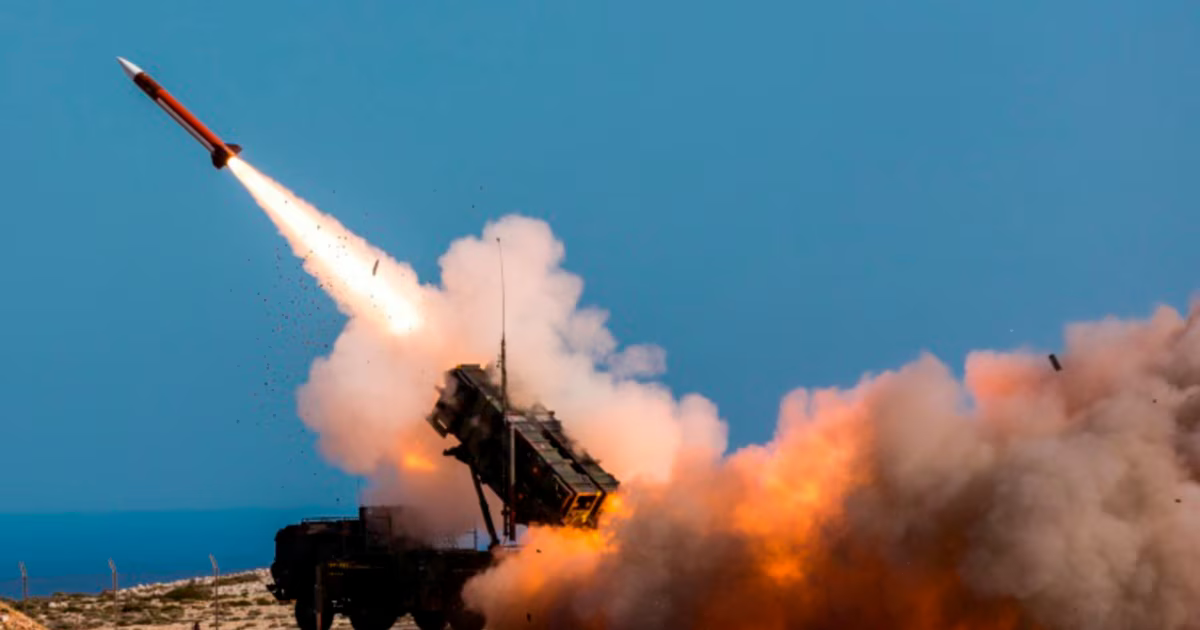
NATO allies have pledged £37 billion towards a new long-range missile program
Twelve NATO allies, including the United Kingdom, have unveiled plans to invest over £37bn ($50bn) in a new long-range missile programme over the next decade, aimed at bolstering Europe’s defense capabilities.
Twelve NATO allies, including the United Kingdom, have unveiled plans to invest over £37bn ($50bn) in a new long-range missile programme over the next decade, aimed at enhancing Europe’s defence capabilities in response to increasing security threats.
The Deep Precision Strike initiative, announced by Downing Street prior to Wednesday’s Nato summit in Ankara, is anticipated to provide one of the alliance’s most sophisticated conventional weapons systems, capable of accurately targeting locations up to 300 kilometres away, with the possibility of extending its range to approximately 1,250 miles.
Prime Minister Sir Keir Starmer stated that the UK-led programme would strengthen Europe’s collective security. “This initiative led by the UK will unite European allies to ensure the safety of Nato for years ahead.”
The announcement arrives as Sir Keir participates in what is anticipated to be his last Nato summit as prime minister, with defence spending and Europe’s security taking precedence on the agenda. He is also anticipated to encounter pressure from US President Donald Trump regarding Britain’s absence of a schedule for raising defence spending to 3.5% of GDP by 2035, a goal supported by the majority of Nato members last year.
The British government announced that the new missile programme would enhance Nato’s capability to target high-value military assets and disrupt enemy logistics well beyond the front lines, thereby reinforcing the alliance’s deterrence against possible aggressors.
Foreign Secretary Yvette Cooper stated that the project mirrored the evolving landscape of global security.
This addresses our commitment to ensuring a more robust Europe alongside a more resilient NATO.
She remarked that the capability would greatly improve the alliance’s military readiness.
“With exceptional precision strike capability, the UK and our allies will be equipped to target high-value military assets and the logistical frameworks that support armies, deterring any aggressor and enhancing our collective security.”
The government has stated that Britain has already pledged £300bn under its Defence Investment Plan by 2030, while emphasizing that the Deep Precision Strike programme is expected to become operational only in the 2030s.
At the summit, Sir Keir is anticipated to caution allies that Russia remains the most considerable long-term threat to European security. Downing Street reports that Nato fighter jets have intercepted Russian aircraft nearing allied airspace over 700 times, with a 30% increase in Russian military activity around UK waters.
The prime minister is anticipated to assert that while Nato does not aim for confrontation with Moscow, it must be ready to defend each member state against any potential aggression in the future.
Cooper utilized the announcement to convey a message to the Kremlin.
“At Ankara, we are conveying a definitive message to President Putin: NATO is more robust, increasingly European, and prepared to safeguard our citizens against the enduring threat he and the Russian state represent.”
The missile project reflects insights gained from the conflict in Ukraine, where Kyiv has increasingly depended on long-range missiles and drones to target Russian military infrastructure far behind the front lines.
Downing Street stated that Ukraine’s operations have showcased the strategic importance of long-range precision weapons.
“Ukraine’s Armed Forces have demonstrated that the strategic deployment of long-range systems can significantly alter the dynamics of the battlefield, enabling them to weaken enemy forces well beyond the frontline.”
Russia rejected the recent Nato initiative, stating it would keep a close watch on the developments at the Ankara summit. Kremlin spokesman Dmitry Peskov stated that the supply of new Western weapons to Ukraine would not hinder Moscow’s military campaign from progressing until its goals were met. “Resolving this conflict through political and diplomatic avenues is still the most desirable approach.”