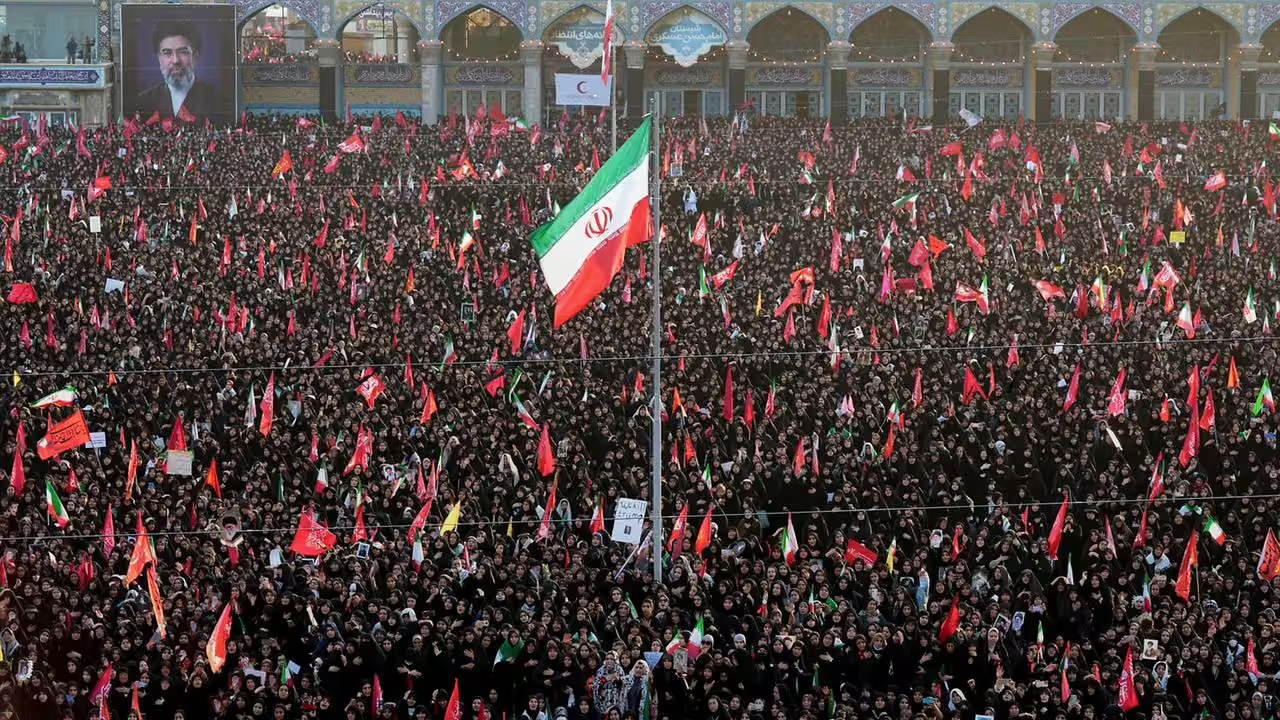
Qatar has accused Iran of launching an attack on an LNG tanker in the Strait of Hormuz, coinciding with the mourning of the slain leader, Ali Khamenei, by thousands.
Qatar has alleged that Iran carried out a drone strike on a liquefied natural gas (LNG) tanker in the Strait of Hormuz, coinciding with the gathering of hundreds of thousands of mourners in the Iranian holy city of Qom to pay tribute to the late Supreme Leader, Ayatollah Ali Khamenei.
The Qatari LNG tanker, Al Rekayyat, was hit overnight, causing a fire in its engine room, as reported by Qatari authorities. While all crew members were reported safe and in the process of evacuation, maritime security officials cautioned that the fire could lead to a significant explosion if not swiftly controlled.
A second vessel, a Saudi-flagged crude oil tanker thought to be the Wedyan, sustained damage off the coast of Oman. The reason for the incident was not immediately apparent.
A distress call reviewed by Reuters revealed that the captain of the Al Rekayyat reported the vessel had been struck by a drone on its port side, resulting in a fire and significant smoke in the engine room. The complete scope of the damage was still uncertain.
Qatar’s foreign ministry denounced the strike, characterizing it as a significant threat to international shipping and global energy supplies. Foreign ministry spokesperson Majed Al Ansari stated that Iran has violated international law, asserting that Tehran is fully responsible for the attack and any subsequent consequences.
Iran has yet to respond to the allegations or take responsibility for the strike. A US official, speaking on condition of anonymity, indicated that preliminary assessments suggested Iran had targeted the two commercial vessels.
The attacks represented the initial documented security incidents in the Strait of Hormuz since the onset of nationwide mourning after Khamenei’s death last week, highlighting ongoing tensions along one of the globe’s most crucial energy shipping routes.
Meanwhile, the streets of Qom witnessed the procession of Khamenei’s and his family members’ coffins as mourning ceremonies continued throughout Iran. Large crowds waved flags, held banners, and chanted slogans pledging revenge for the slain leader, while some displayed signs aimed at US President Donald Trump.
The procession followed a significant funeral gathering in Tehran on Monday. Iranian authorities announced that Khamenei’s body would subsequently be transported to Shi’ite holy sites in Iraq before being returned to Iran for burial.
The tanker attacks occurred despite an interim ceasefire established last month among Iran, the United States, and Israel, which halted hostilities for 60 days to facilitate negotiations for a more enduring agreement. Last week’s indirect talks in Qatar concluded without any notable progress.
On Monday, Trump intensified pressure on Tehran, cautioning that the United States was ready to reinitiate military action should negotiations falter. In response, Iran’s Foreign Minister Abbas Araqchi stated that negotiations for a permanent agreement could not advance as long as military threats persisted, calling on Washington to uphold the ceasefire framework.
Oil prices increased by approximately one percent after reports of the tanker incidents, highlighting renewed worries regarding the security of energy shipments in the strategically significant Strait of Hormuz.