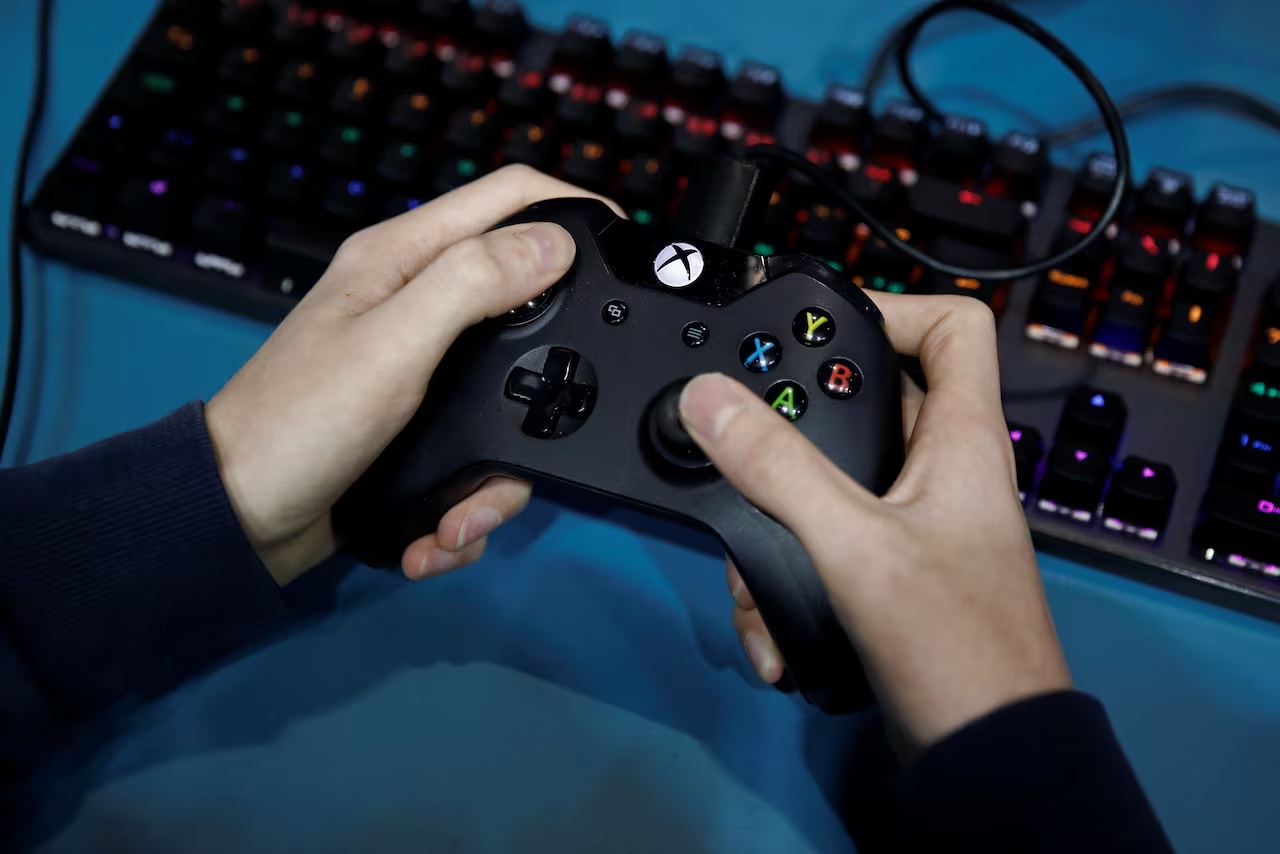
Microsoft announced on Monday plans to reduce its workforce by 4,800 jobs, which represents approximately 2.1% of its global team. This decision comes as part of a significant restructuring of its Xbox gaming business, including the divestment of up to five studios, aimed at enhancing returns following years of substantial investment in the sector.
The restructuring of its gaming division will entail 3,200 job cuts, which includes the layoff of 1,600 employees on Monday.
Despite investing tens of billions of dollars to expand Xbox, including its significant acquisition of Activision Blizzard, Microsoft has faced challenges in closing the gap with Sony’s PlayStation and Nintendo, leading to a reevaluation of the gaming business.
The company has progressively adjusted its strategy to focus on distributing its games across a wider range of platforms instead of depending solely on console-exclusive titles to boost Xbox hardware sales.
The Xbox restructuring will entail the divestment of four studios, as stated by Xbox’s new head, Asha Sharma, in a note to employees. ‘South of Midnight’ producer Compulsion Games and ‘Psychonauts’ creator Double Fine Productions will transition to independent studios, while Ninja Theory and Undead Labs will be spun off to further develop ‘Senua’ and ‘State of Decay 3,’ Sharma noted.
The management of Arkane Studios, known for developing ‘Dishonored’ and currently engaged in a project centered around the Marvel Comics character Blade, has initiated discussions with its workers’ union in France to explore available options, she added.
AI-Driven Efficiency Initiative
Big Tech’s unprecedented investments in AI, projected to exceed $700 billion this year, are intensifying the pressure on companies to demonstrate returns from the technology and mitigate the escalating costs associated with its implementation throughout their operations. Amazon and Meta Platforms have also reduced their workforce by thousands of employees this year.
However, Chief People Officer Amy Coleman informed employees in a memo that AI is not replacing the roles eliminated today.
At the same time, it is true that AI is transforming the way work is accomplished.
BURGEONING AI SPEND “That (targeted cuts) makes the announcement read more like portfolio reallocation and operating discipline than a fresh catalyst for the stock,” said Parth Talsania, CEO of Equisights Research. “In the near term, the market is likely to reward Microsoft less for headcount reductions and more for evidence that AI monetization is scaling faster than AI-related costs.
The company’s shares experienced a decline of 1.4% on Monday, continuing a trend that saw a nearly 23% drop in the first six months of 2026, marking their worst first-half performance since 2022.
The software giant earlier this year extended voluntary buyouts to approximately 7% of its U.S. workforce, totaling around 9,000 employees. Microsoft frequently reduces its workforce towards the conclusion of its fiscal year in June as it establishes budget plans for the upcoming year. “Microsoft has been downsizing its staff to allocate funds for its AI investments. By keeping its headcount down, they have been able to accelerate revenue growth while maintaining the same margins,” stated Gil Luria, managing director of D.A. Davidson.
Rising demand for AI has fueled expansion in Microsoft’s Azure cloud-computing division, which exclusively sold OpenAI’s models until April. However, the increasing expenses associated with constructing data centers to support these services are putting pressure on its cash flows.
The company, anticipated to announce results later this month, had in April projected quarterly Azure sales exceeding Wall Street estimates, while also providing a $190 billion spending forecast for 2026 that significantly exceeded expectations.
AI tools that can increasingly automate routine business tasks have also emerged as a challenge to its profitable software business, while a rise in memory chip prices driven by data center demand has compelled Microsoft to increase Xbox console prices at a time when demand for the console was already weak.