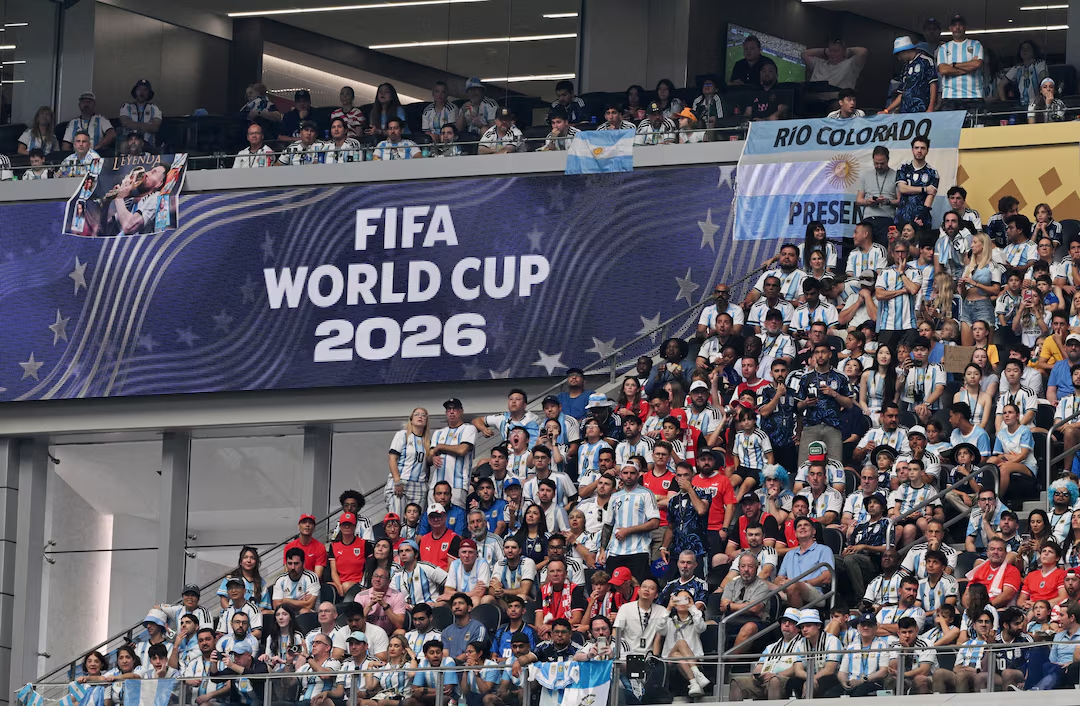
What does a song do? The history of the music played in World Cup stadiums
You may wonder how the World Cup music is chosen as you watch the tournament. Is it merely a coincidence that “Wonderwall” is played after England matches? Are “Freed from Desire” and “Livin’ on a Prayer” played consistently? What is the reason for that?
The songs are intentional. FIFA, the governing body of soccer, selects more than 750 individuals in advance. FIFA has a “Stadium Entertainment Team” that collaborates with the participating national associations to curate playlists that blend stadium classics with country-specific favorites.
Every team features a “signature” song that plays during the line-up announcement, a warm-up track, and a song that is played whenever they score a goal. After each game, a group of fans has the opportunity to sing along to the tune played for the winning team.
The playlists provide a fascinating cultural glimpse into the World Cup, featuring 48 teams competing for the first time in 2026.
Some tracks — including The White Stripes’ “Seven Nation Army,” AC/DC’s “Thunderstruck,” and the 1990s Eurodance hit “Freed from Desire” by Gala, which has been popular in sports stadiums for over a decade — have a global presence, appearing on multiple lists.
Popular songs often share specific characteristics. They should be engaging, enjoyable, and easily identifiable, remarked Andrew Lawn, British author of “We Lose Every Week: The History of Football Chanting.
The context is also crucial, he added. “They become linked to a moment if that moment is successful,” he said. “Then they become attached because that type of emotion resonates with the song.”
Neil Diamond’s “Sweet Caroline” serves as an illustration of that, he stated. Long favored by various groups of sports enthusiasts, it gained traction among England supporters following the COVID-19 pandemic, as the lyrics about “touching hands, reaching out, touching me, touching you” resonated deeply after months of isolation and lockdowns.
MARIACHI TO MEN AT WORK
Some songs are specific to certain countries.
Argentina has selected Los Fabulosos Cadillacs’ “El Matador” as their warm-up and goal song. The track, featuring the chorus “Matador! Matador!” might give the impression of celebrating the lethal goal-scoring abilities of Lionel Messi.
However, the reggae-influenced song carries a much darker theme—it addresses the Latin American dictatorships and state violence of the 1970s.
DopeNation’s captivating 2025 dance track “Kakalika” serves as both the signature and goal anthem for Ghana. The Ghanaian duo behind it have characterized it as a fusion of national and global music styles and languages, aimed at celebrating diversity and inviting listeners to revel in the experience.
Mexico has selected three distinct tracks by Mariachi Vargas, a mariachi folk band established in 1897 that has endured through multiple generations and continues to thrive today. Meanwhile, South Korea has chosen a collection of K-Pop tracks featuring artists such as Blackpink and BTS.
When Kylian Mbappe scores for France—once more—fans can join in with French electronic duo Daft Punk’s fitting anthem “One More Time.” Australia’s iconic song is Men At Work’s classic “Down Under,” while Belgium’s pre-game anthem is the techno hit “Pump Up the Jam” by Technotronic.
At times, the selection of a song changes throughout the tournament, influenced by the reactions of the fans. Oasis’ “Wonderwall” has established itself as a staple following its success after England’s first World Cup 2026 match—a 4-2 victory over Croatia—when fans joined in song.
“It was one of his all-time favorite moments in an England shirt, as he connected the team with the fans,” captain Harry Kane shared in the in-house show Lions’ Den.
We share a connection at this moment, but that time we sang ‘Wonderwall’ in the stadium—when everyone knew the lyrics—was truly memorable,” he expressed.
In a similar vein, John Denver’s “Take Me Home, Country Roads” has rapidly gained popularity among a U.S. supporters’ base that has encountered online criticism for their rather conventional “USA! USA!” chant.
The absence of a unique chant highlights a more commercial and fragmented sporting culture. Currently, the embrace of the Denver song—while enjoyable—may come across as somewhat artificial, according to Lawn.
The various aspects of American soccer culture seem somewhat contrived at this stage,” he remarked. “However, if it endures, it could become a wonderful illustration, and in 30 years, if it’s still being celebrated, it will truly embody a sense of authenticity.