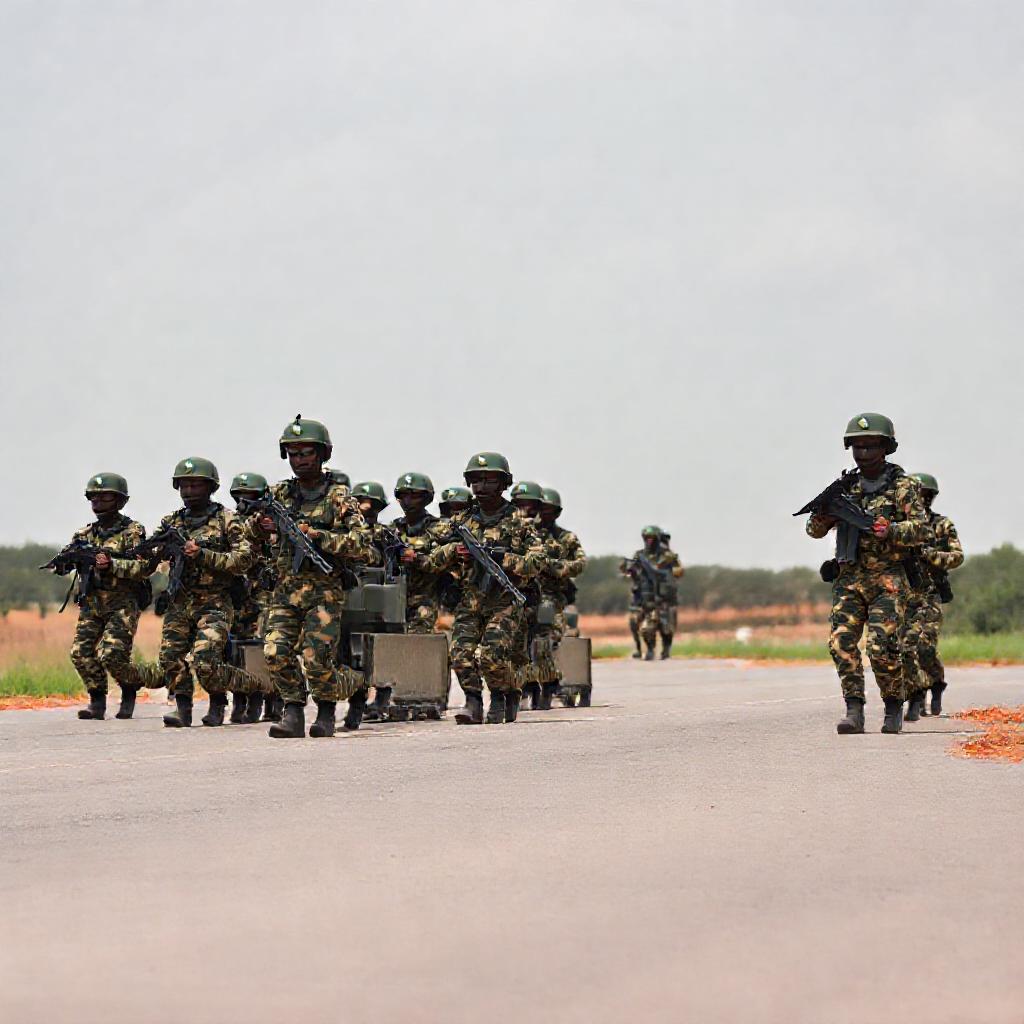
The United States has pulled back the majority of its troops from Nigeria after a collaborative anti-ISIS mission, while maintaining intelligence cooperation with Abuja.
The United States has pulled back the majority of its troops that were sent to Nigeria for a recent collaborative operation against Islamic State (ISIS) militants, while still providing support to Nigerian forces through intelligence sharing at the request of Abuja.
The Commander of the US Africa Command (AFRICOM), General Dagvin Anderson, announced the development after a meeting of African defense chiefs in Luanda, Angola. He stated that the temporary deployment had largely concluded following the successful mission.
The joint operation conducted in May by US and Nigerian forces in the Lake Chad Basin resulted in the death of Abu-Bilal al-Minuki, who was identified by US officials as ISIS’s global deputy leader. The mission came after a distinct US strike on Christmas Day, authorized by President Donald Trump, aimed at militants believed to be responsible for assaults on Christian communities in Nigeria.
General Anderson characterized the May operation as a benchmark for future security collaboration in Africa, noting that it showcased Washington’s strategy of offering specialized military capabilities while enabling African partners to take the lead in on-the-ground operations.
He stated that while the majority of US troops assigned to the mission have departed from Nigeria, the collaboration continues to thrive through intelligence sharing as requested by Nigerian officials.
Anderson noted that the operation inflicted a considerable setback on ISIS’s leadership, disrupting the group’s command structure in West Africa and impacting its wider international communications and operational network.
He noted that Nigerian security forces have persistently targeted militants since the May offensive, maintaining pressure on extremist groups without ongoing US military presence.
Anderson noted that the success of the operation, along with efforts to publicize the mission, has motivated more ISIS fighters in northeastern Nigeria to defect and surrender.
The AFRICOM commander delivered his remarks during a briefing by the US State Department, which followed a three-day conference held in Luanda, Angola. This event saw the participation of military leaders from 35 African nations, as well as representatives from the United States and Brazil.