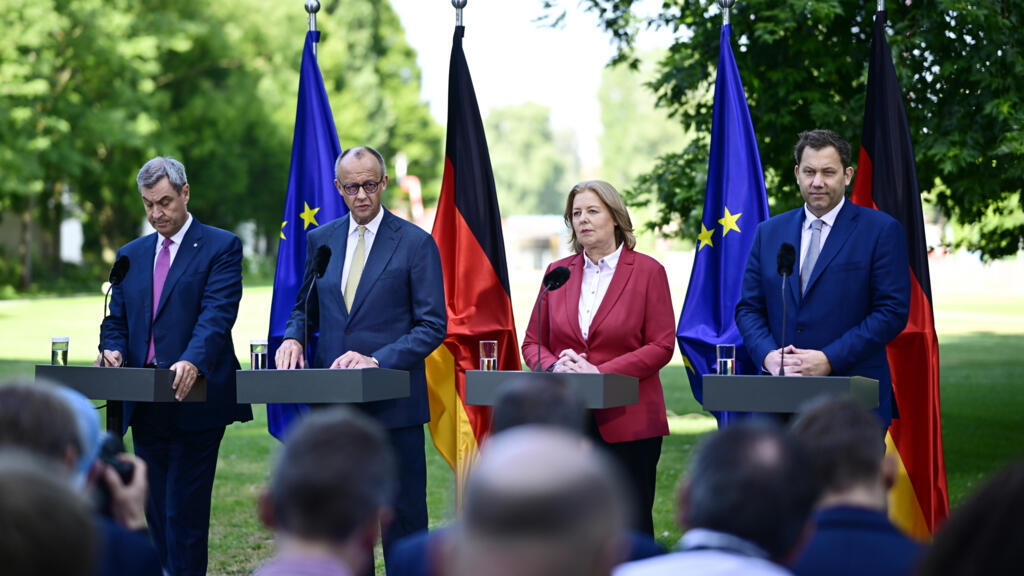
Germany’s ruling coalition has introduced extensive reforms that include tax reductions, alterations to pensions, housing initiatives, and deregulation aimed at stimulating economic growth across the country.
Germany’s ruling coalition has introduced an extensive set of economic reforms, featuring tax relief for lower-income earners, pension reforms, and initiatives to increase affordable housing. Chancellor Friedrich Merz aims to stimulate growth and bolster Europe’s largest economy.
The reform package, unveiled on Thursday, seeks to expedite the nation’s economic recovery while tackling ongoing challenges that have hindered growth recently. The coalition is facing mounting political pressure, as recent opinion polls show the far-right Alternative for Germany (AfD) leading over the governing alliance.
During the announcement, Merz stated that the government is dedicated to revitalizing Germany’s economic strength and guiding the nation towards a trajectory of sustained growth, investment, and competitiveness.
In addition to tax cuts and housing initiatives, the reforms encompass measures aimed at reducing bureaucracy, addressing welfare fraud, and eliminating the practice of using telephone-issued sick notes for employees. The government plans to decrease staffing levels across federal ministries by approximately eight percent through enhanced digitalization and administrative reforms.
To support the tax relief package, the coalition plans to increase the top income tax rate from 45 percent to 47 percent for individuals earning €280,000 or more each year, thereby enhancing the contribution from the nation’s highest earners.
Economists have largely embraced the proposals, characterizing them as one of Germany’s most important reform initiatives in recent decades. Marion Muehlberger from Deutsche Bank Research noted that the coalition has shown its capacity to reach consensus on significant structural reforms and implement them by year-end, suggesting that these measures could bolster confidence and foster enhanced economic growth.
The government asserts that the reforms aim to enhance Germany’s competitiveness, bolster businesses, and strengthen the economy as companies confront increasing international competition and ongoing global uncertainty.
Germany’s economy has faced challenges in regaining momentum since the COVID-19 pandemic. Stronger competition from China and high energy costs, initially spurred by the war in Ukraine and more recently exacerbated by tensions involving Iran, are placing mounting pressure on the country’s export-driven economy.
In light of those challenges, the government adjusted its economic growth forecast for 2026 to 0.5 percent and revised its 2027 projection down to 0.9 percent, a decrease from the earlier estimate of 1.3 percent. It also adjusted its inflation forecast upward as rising energy prices persist in impacting businesses and consumers, highlighting the pressing need for the coalition’s reform agenda.