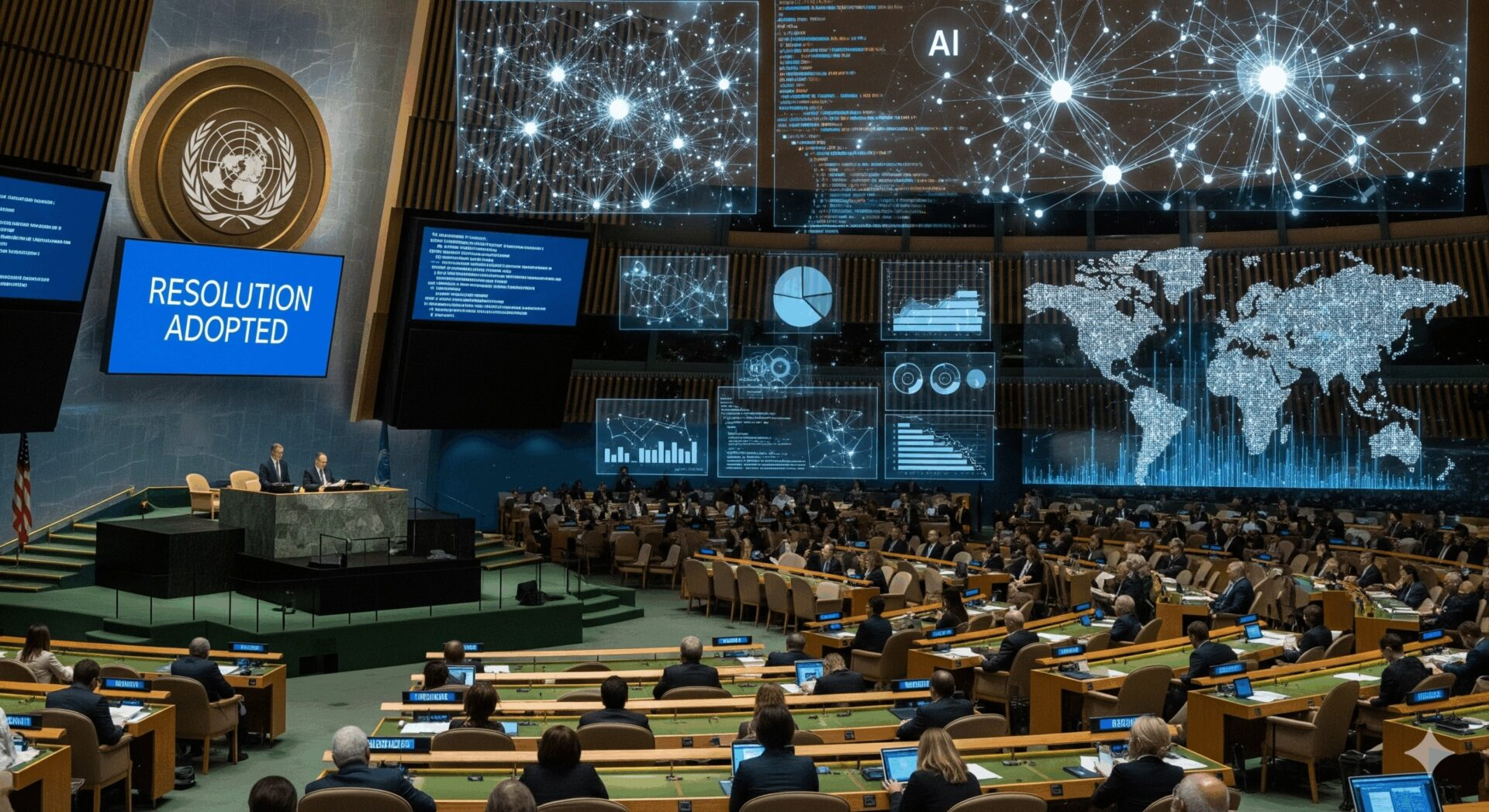
The United Nations’ Independent International Scientific Panel on Artificial Intelligence has cautioned that the swift advancement of artificial intelligence is surpassing both scientific comprehension and governmental oversight, rendering it unfeasible to
The United Nations’ Independent International Scientific Panel on Artificial Intelligence has cautioned that the swift advancement of artificial intelligence is surpassing both scientific comprehension and governmental oversight, rendering it unfeasible to ensure that progressively sophisticated AI systems will not lead to catastrophic consequences.
The warning was included in the panel’s preliminary report issued on Wednesday in Geneva. The assessment, regarded as the inaugural independent global review of AI’s risks and opportunities, was crafted by a panel of 40 international experts to furnish governments with scientific evidence as they formulate policies for the rapidly evolving technology.
The report indicated that policymakers are encountering an increasing challenge as AI technology evolves at a pace that outstrips the scientific research necessary for comprehension and the regulatory frameworks needed for effective governance.
Yoshua Bengio, co-chair of the panel, stated that the speed of AI development has surpassed both scientific understanding and the capacity of governments to react.
“The capabilities of AI are surpassing both our scientific comprehension and the capacity of governments to adjust,” Bengio stated.
“As evidence of deceptive AI behavior continues to mount, science is currently unable to assure that, with the ongoing enhancement of capabilities, AI will not inflict catastrophic harm, whether independently or through the actions of malicious users.”
As outlined in the report, AI systems are anticipated to gain greater autonomy in the near future with the advancement of agentic AI, capable of executing real-world tasks with minimal human involvement. While the technology has the potential to enhance economic activity and revolutionize sectors like healthcare by accelerating drug and vaccine development, the report indicated that its long-term effects on employment and productivity are still uncertain.
The panel identified several safety concerns, including the potential loss of control over highly autonomous AI systems, the dissemination of misinformation, and the possible misuse of AI for fraud, cyberattacks, and biological threats.
It also highlighted that numerous countries do not possess the technical capability to assess or manage advanced AI systems, resulting in their reliance on technologies that they may not completely comprehend or govern. The report noted that existing safety assessments frequently depend on restricted testing data supplied by AI companies.
In response to the findings, United Nations Secretary-General António Guterres called on governments to enhance their comprehension and regulation of artificial intelligence.
“The world cannot govern what it cannot understand,” Guterres stated.
“The potential is significant, yet the risks are tangible, and the expense of inaction is increasing,” he added.