Samsung and SK Hynix are ramping up their investments in AI chips, amounting to multi-trillion won, as South Korea aims for semiconductor leadership, even amidst rising global oversupply concerns.
South Korea’s semiconductor leaders, Samsung Electronics and SK Hynix, are embarking on a significant investment initiative, pledging trillions of won to enhance artificial intelligence chip production in response to the surging global demand for AI technologies.
The expansion has garnered significant support from President Lee Jae Myung, who has committed government assistance for the companies as part of South Korea’s long-term strategy to enhance its status as a global semiconductor leader.
As part of the initiative, South Korea intends to double its capacity for producing memory chips within the next five years. Samsung and SK Hynix are set to expedite the construction of fabrication facilities in the Yongin semiconductor cluster, aiming to reduce development timelines and bring additional production capacity online at a faster pace.
Together, the companies have detailed extensive investment plans amounting to around 3,200 trillion won ($2.07 trillion). This includes an 800 trillion won semiconductor complex set for the country’s southwest, in addition to previously announced manufacturing initiatives.
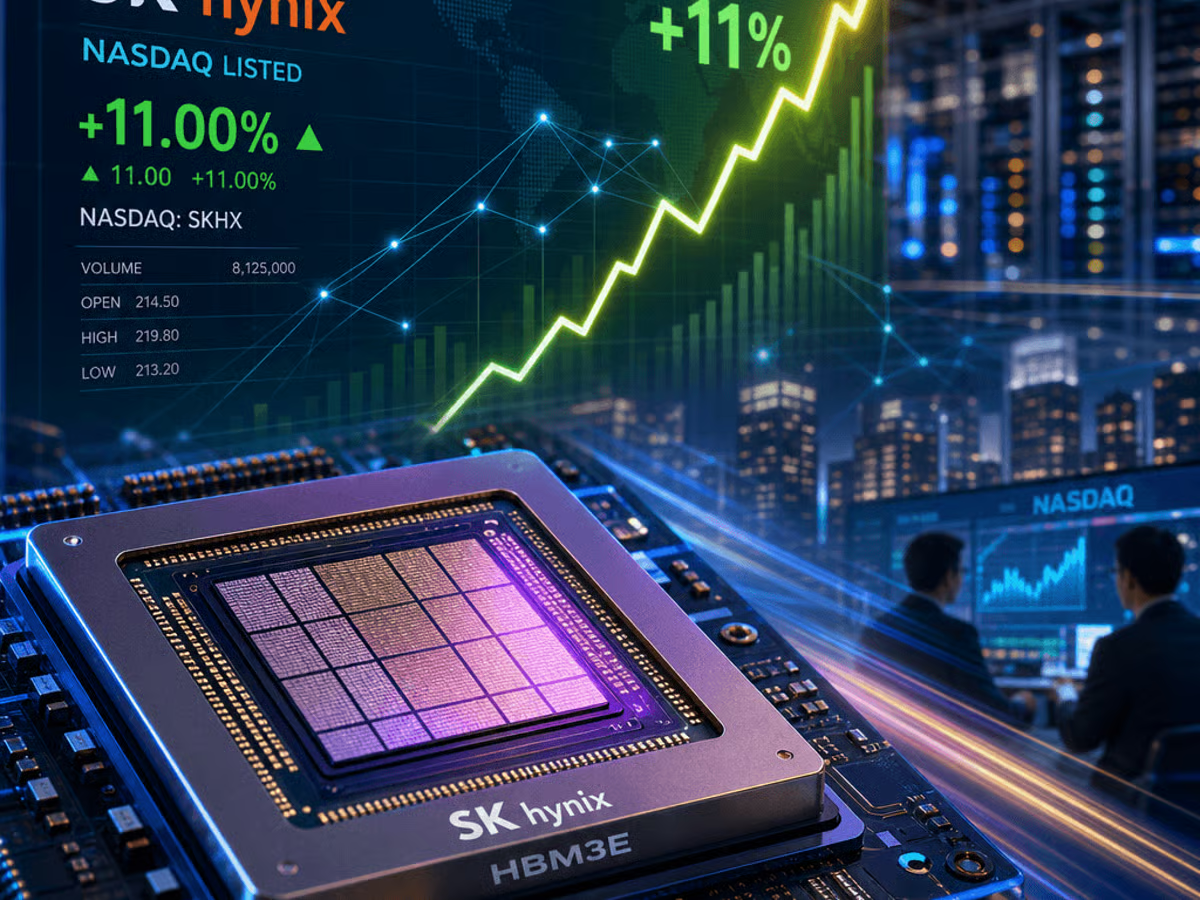
South Korea has become a major player in the global AI boom, with Samsung and SK Hynix leading the market for high-bandwidth memory (HBM) chips. These chips allow advanced AI processors to manage large volumes of data at impressive speeds.
Demand from leading AI infrastructure providers and global technology firms has increased significantly due to persistent shortages of advanced memory chips. However, industry analysts warn that semiconductor fabrication plants require years to construct, indicating that a significant portion of the increased production capacity will not be operational until the next decade.
There are concerns that the current aggressive investment may ultimately result in oversupply if spending on AI infrastructure diminishes in the future. Analysts indicate that the interplay between supply and demand significantly influences memory chip prices. Excessive capital investment may exert downward pressure on prices if production ultimately exceeds market demand, according to their warnings.
Industry and academic experts have expressed the need for caution, highlighting that while manufacturers should take advantage of the current AI-driven surge, predicting semiconductor market conditions several years ahead is fraught with uncertainty.
The renewed confidence signifies a remarkable shift for the memory chip industry. Strong demand for AI and limited global supply have greatly increased profitability for Samsung and SK Hynix, following a period of substantial losses in the sector during the downturn of 2023.
Both companies expressed that quicker regulatory approvals would allow them to expedite construction at Yongin while maintaining the ability to modify future investment plans in response to changing market conditions.
Government officials have committed to expediting permits and infrastructure development, with the goal of finishing the Yongin semiconductor cluster before President Lee’s current term concludes in 2030.
Despite concerns regarding future market cycles, numerous analysts are confident that the investment strategy will enable South Korea to uphold its leadership in the swiftly growing AI economy while also providing manufacturers with the flexibility to adjust spending should indications of excess production capacity arise.