Iran sets the rules for reopening Hormuz, asks the US to end sanctions, and makes threats
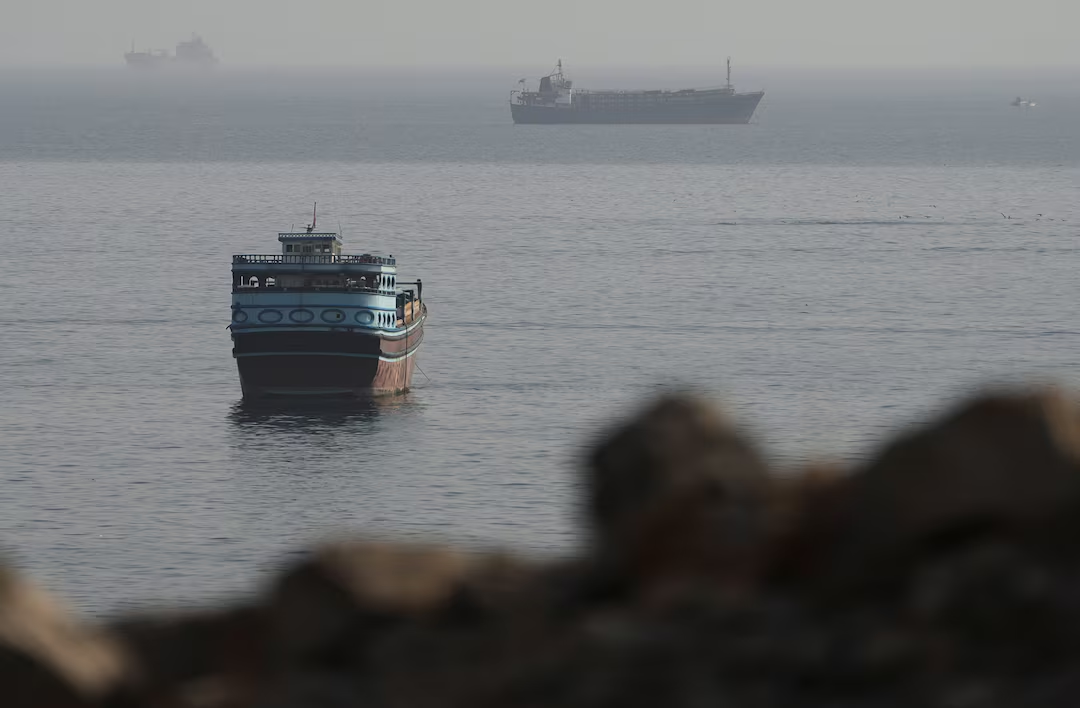
Iran has stated that the reopening of Hormuz is contingent upon concessions from the US, which include compensation, relief from sanctions, a cessation of military threats, and the lifting of the blockade.
Iran has linked the reopening of the strategic Strait of Hormuz to several concessions from the United States, which include compensation for damages resulting from attacks, the cessation of sanctions, and the removal of military threats directed at Tehran.
Iranian Foreign Minister Abbas Araqchi announced that an agreement with Oman regarding new shipping lanes through the strait is nearing completion. However, he emphasized that the waterway will remain closed until Washington fulfills Tehran’s conditions.
The development followed a statement from a US official on Friday, indicating that Iran and Oman were nearing an agreement that could facilitate the restoration of safe passage through the strategic waterway, a crucial route for global oil and gas shipments.
Araqchi stated that the proposed agreement with Oman would create new shipping lanes to be utilized once the United States met Iran’s demands and the strait was reopened.
Iran and Oman have engaged in discussions regarding shipping arrangements through the waterway following Iran’s blockade of the strait in reaction to US and Israeli attacks on Tehran that commenced in late February.
Araqchi stated that Tehran was not ready to reopen the channel based solely on an agreement with Oman.
He also stated that Iran and the United States were not involved in direct negotiations and that Tehran would not participate in direct talks as long as Washington continued to violate an interim agreement signed in June. Messages were exchanged between the two sides through intermediaries.
US President Donald Trump, in an interview with Axios, stated that Washington was “low-keying” its engagement with Iran. “We are currently in a state of semi-negotiation with them. We are observing Iran as it grapples with significant inflation and a lack of financial resources.
Iranian officials have outlined an expanded set of conditions for the reinstatement of unrestricted shipping in the Strait of Hormuz.
Araqchi stated that the United States would need to provide compensation to Iran for the harm inflicted during the extensive attacks on the nation.
Mohammad Baqer Zolqadr, secretary of Iran’s top national security body, outlined several key demands: the cessation of further US threats against Iran, an end to aggression toward Iran and its allies in Lebanon, Palestine, Yemen, and Iraq, the removal of the US naval blockade in the Gulf, the lifting of sanctions, and the release of frozen Iranian assets.
The United States and Israel initiated air strikes against Iran over five months ago, with Trump stating that the military campaign was intended to prevent Tehran from developing nuclear weapons and to diminish its capacity to pose a threat to the region.
In June, Washington and Tehran reached an agreement for a ceasefire; however, in July, the United States reinstated a blockade on Iranian shipping in the Gulf.
Tehran stated that the action breached the ceasefire, which was already starting to fall apart.
A US official stated that Washington would remove the blockade of Iranian ports once an agreement is reached to facilitate commercial shipping without obstacles. “Once the agreement is made public to resume commercial shipping without obstacles, the United States will remove the blockade on Iranian ports.”
The official stated that US actions would be contingent upon Iran fulfilling its commitments under any agreement.
The proposed arrangement has sparked worries among shipping operators, especially regarding reports that it might grant Tehran control over vessel traffic entering the Gulf via the strait.
Sources within the shipping industry have raised doubts about the practicality of such an arrangement.
The diplomatic developments have emerged alongside heightened tensions concerning commercial vessels in the region.
The United Arab Emirates reported that Iran had targeted a vessel linked to its state oil company. Iran has not yet responded to the allegation, though its Revolutionary Guard Corps has a history of attacking vessels that it claims have tried to navigate the strait without Iranian authorization.
The tensions surrounding Hormuz have coincided with a rise in attacks by Iran-aligned Houthi forces in Yemen, who have aimed at shipping near another significant energy chokepoint between the Red Sea and the Gulf of Aden.
The Houthis announced a naval blockade against Saudi Arabia last month, stating it was a reaction to what they characterized as a Saudi siege in Yemen. Riyadh has refuted the claim.
The group has also taken responsibility for an attack on Saudi Aramco’s Jazan refinery on Sunday, occurring just two days after Saudi Arabia finalized a defense pact with Turkey and Pakistan in the context of increasing regional instability.
Saudi Arabia’s Energy Ministry confirmed that a fire occurred at the refinery, but it was subsequently extinguished without any reported injuries. It failed to determine the cause.
Turkish Foreign Minister Hakan Fidan stated that the newly formed defense alliance is not aimed at Iran or any other nation but rather serves as a wider commitment to regional security.
Meanwhile, clashes between the Houthis and Yemeni government forces have escalated, with the Yemeni military reporting that seven individuals, including both military personnel and civilians, lost their lives in a Houthi assault on the Red Sea port city of Mocha.
The military reported that air defenses successfully intercepted and destroyed 11 Houthi drones that were part of the attack.