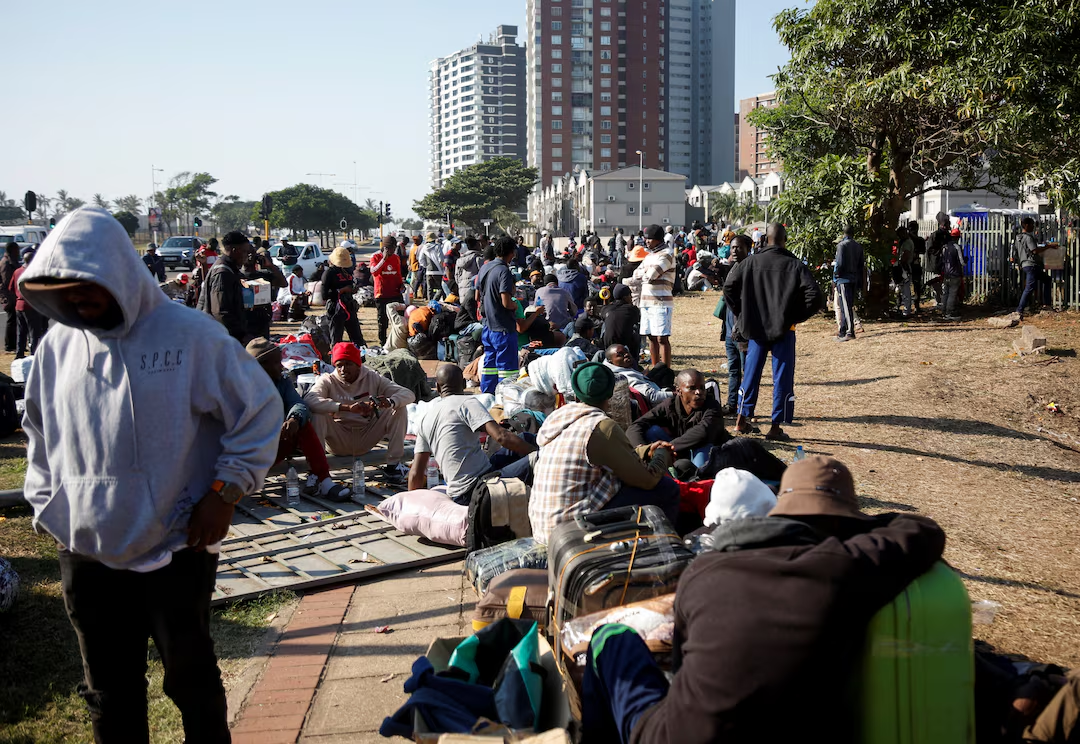
This week, a makeshift camp in the South African city of Durban processed thousands of Malawian migrants. At the same time, hundreds of Zimbabweans slept on the ground outside their port in Cape Town.
The goal of all of them was to get out of South Africa before Tuesday’s national protests against immigrants, which many people are afraid will turn violent.
“It’s scary because you never know what someone is going to do to you.” “We shouldn’t just wait and see what happens,” said 37-year-old Ebrahim Moosa.
A long line of people, some with kids on their backs, were waiting in line to catch a bus from Durban to Malawi. He was with his wife.
South Africa has been hit by a wave of racist protests and sometimes deadly attacks in the past few weeks, causing many foreigners to leave the country or be chased from their homes.
Groups that don’t like immigrants have given all illegal migrants until June 30 to leave. Many towns are getting ready for trouble, even though the government has asked people not to enforce immigration laws on their own.
Phumelele Makoba, acting police commissioner for KwaZulu-Natal province, which is likely to be one of the trouble spots, told the marchers, “We ask you to respect the police.”
The police have promised a large-scale presence to keep things calm. Thursday, President Cyril Ramaphosa said, “Our security forces are ready.”
The main group behind the protests, March and March, have said that they are not asking for violence. Yet, it has said that it won’t be responsible for any bad things that happen on June 30.
Countries have trouble getting everyone home by bus.
Hate crimes against foreigners happen a lot in South Africa, where some people blame immigrants, mostly from other African countries, for everything from crime and unemployment to overcrowded public hospitals.
Ramaphosa urged the South African populace to refrain from blaming foreigners for these issues, attributing them primarily to apartheid.
There is still a lot of inequality in South Africa, and the economy hasn’t grown much for years. But it still has the biggest economy in Africa, and people from nearby countries come to seek employment.
Antonio Njive, a Mozambican, had been doing odd jobs in South Africa since 2019. He left on June 1 after his house was burned down in a violent episode that killed five of his countrymen. “I left home without clothes. He told me on the phone from Chibuto, Mozambique, “Everything was on fire.”
Mozambique sent back hundreds of its people by bus. Njive, his wife, and their 6-year-old daughter were among them. Malawi and Zimbabwe are also doing the same, but they are having trouble keeping up with demand. “We are sleeping outside while we wait for buses. The 30-year-old Amina Chiwoko said this in front of the Zimbabwean consulate in Cape Town. “Everyone just wants to go home.”
There is nowhere for asylum seekers to go.
Many foreigners don’t have anywhere safe to go.
She came to South Africa from the Democratic Republic of the Congo when she was three years old and is now 25 years old. “Everyone knows there’s a war in Congo, so going back feels like going back to death,” she said.
She was attacked at the Durban nail shop where she worked and then chased from her home. Now she is camped out in front of the Home Affairs office.
“I’m hoping that the government can help us find a place to stay.” “We’ve heard that people are being attacked since yesterday, and they’re coming here,” she said as she sat on a mattress on the sidewalk with many other people.
“There’s no safety here.”