Dubai held an emergency business summit following the strikes from Iran, as authorities took measures to safeguard the economy
Dubai convened leading executives following the Iranian strikes, initiating support measures aimed at rebuilding investor confidence and mitigating economic impact.
Days after Iranian missile strikes targeted locations throughout the United Arab Emirates in March, Dubai’s leadership held an emergency meeting with hundreds of business executives to develop strategies focused on mitigating the economic impact and rebuilding investor confidence.
The previously unreported gathering, organized by Dubai’s Department of Economy and Tourism (DET), convened senior government officials, notable business leaders, and financial institutions as authorities acted promptly to avert capital flight and safeguard the emirate’s position as a regional tourism and financial center.
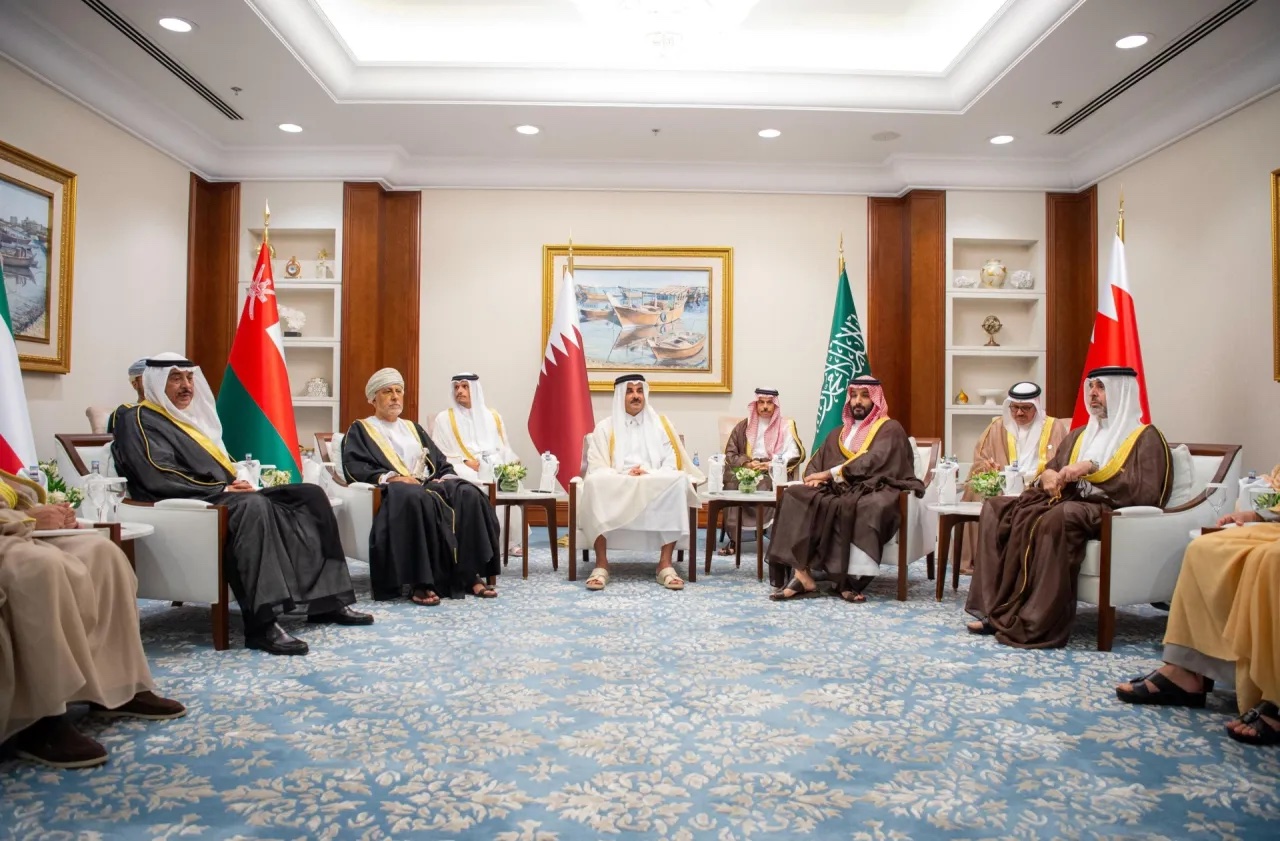
Five attendees of the private meeting reported that officials sought direct input from the business community regarding measures necessary to revive tourism, attract investors, and support struggling companies. Dubai Crown Prince Sheikh Hamdan bin Mohammed bin Rashid Al-Maktoum actively engaged with executives and sought their recommendations as he moved between tables.
“Attendees were posed three questions: What actions can we take to attract tourists once more?” What steps can we take to attract investors again? How may we assist your business? Two participants informed Reuters.
The meeting on March 10 was held at the newly renovated Meydan Hotel while shelter alerts were being issued throughout the UAE. Helal Saeed Al Marri, Director-General of the DET, chaired the meeting, which saw the attendance of notable individuals such as DAMAC founder Hussein Sajwani; Emirates Airline President Tim Clark; representatives from Rothschild and UBS; along with military officials and heads of leading family-owned conglomerates.
Sources indicated that government officials assured business leaders of fiscal and financial assistance as teams worked to address supply chain disruptions. The discussions contributed to the formulation of a series of economic support measures, which included a central bank liquidity package introduced shortly thereafter.
Dubai has committed 2.5 billion dirhams ($681 million) in economic assistance, primarily focusing on sectors most affected by the conflict, especially tourism and retail.
In a statement to Reuters, the DET expressed that it upholds “regular and ongoing engagement with a broad range of stakeholders as part of Dubai’s established public-private collaboration model.”
“While recent months have witnessed political instability in the region, they have also highlighted the city’s robust economic foundations and its capacity to navigate challenges,” the department stated, emphasizing that Dubai remains dedicated to its long-term strategic goals.
While a preliminary U.S.-Iran peace agreement has alleviated immediate worries, business leaders and analysts indicate that rebuilding trust among investors and tourists will require a significantly longer timeframe.
“Investors are seeking indications of how authorities will react if tensions resurface, rather than solely focusing on their management of the previous crisis,” stated Neil Quilliam, an associate fellow at Chatham House, almost four months after the conflict commenced.
Several investor outreach initiatives have already taken place, including conference calls organized by major banks like JPMorgan and Citi, according to sources familiar with the matter.
Dubai’s economy, drawing less than 2% of its GDP from oil, has achieved success by attracting multinational corporations, financial institutions, and affluent investors through its strategic location, tax benefits, and access to Gulf sovereign wealth funds.
That economic model, however, also rendered the emirate susceptible during the conflict.
HSBC analysts have revised their Gulf growth forecasts for 2026 downward by five percentage points since the onset of the fighting and now anticipate that the region’s economy will contract for the first time since the COVID-19 pandemic. It is estimated that non-oil growth in Dubai and Abu Dhabi may decrease by over eight percentage points compared to the previous year.
“March and the entire second quarter have been lost,” stated the chief executive of a UAE investment firm, speaking on the condition of anonymity.
Robert Mogielnicki, founder of consultancy Polisphere Advisory, noted that the recovery is expected to differ among various sectors.
“I believe that recovery will vary, with certain sectors and activities rebounding or adapting to the new normal more quickly than others,” he stated.
Although airlines have reinstated the majority of their operations and restaurants are starting to welcome back customers, hotel occupancy rates continue to be significantly lower. Trade routes have been impacted, with a growing amount of cargo being transported through Oman and Saudi Arabia instead of the Strait of Hormuz, thereby circumventing Dubai.
Analysts and business leaders indicate that additional intervention might be necessary to assist vulnerable sectors.
Quilliam proposed focused support for tourism, aviation, and small and medium-sized enterprises (SMEs). In addition, an SME executive recommended that authorities motivate banks to increase lending and explore options for temporary corporate tax relief or rebates.
Another business owner suggested forming government partnerships with global private equity firms to stabilize asset values, minimize investment risks, and enhance international confidence in the market.
The UAE Central Bank took steps to protect the financial system by launching a relief package on March 17, supported by over $270 billion in foreign exchange reserves.
Analysts observe that the 2.5 billion dirham support package is relatively modest when compared to the roughly $1.93 billion allocated during the pandemic, and it constitutes merely a small portion of Dubai’s projected real GDP of $121 billion for 2024.
Strategies for sustained investment growth
In spite of the economic challenges, Dubai remains committed to ambitious infrastructure and development initiatives designed to strengthen long-term growth.
Among the announced projects are a new metro line valued at $9.3 billion, airport expansion contracts estimated at $15 billion, and a planned $55 billion development by Emaar Properties.
Nonetheless, market sentiment continues to be delicate. Foreign investor activity on the Dubai Financial Market changed from net inflows of $890 million as of February 26, just prior to the onset of the conflict, to net outflows of $853 million by June 12.
Mogielnicki stated that Iran’s strikes have created significant economic pressures, in part due to the UAE’s substantial expatriate population. However, he observed that confidence in the resilience of the economy remains largely intact.
Quilliam stated that the longevity of the peace agreement would ultimately dictate the speed of recovery.
If stability continues, capital will come back. If uncertainty persists, they will hesitate,” he stated.