Tehran refutes allegations of establishing new commitments regarding nuclear inspections, countering US assertions of advancements in post-war discussions.
Iran has rejected assertions made by the United States that it consented to permit international nuclear inspectors to return to the country after the initial round of discussions focused on achieving a conclusive agreement to resolve tensions between Washington and Tehran.
The disagreement arose following discussions in Switzerland, where negotiators from the US and Iran convened with the mediation of Qatar and Pakistan to further efforts toward a comprehensive peace agreement.
Following the discussions, US Vice-President JD Vance stated that talks about the return of inspectors from the International Atomic Energy Agency (IAEA) could commence almost immediately.
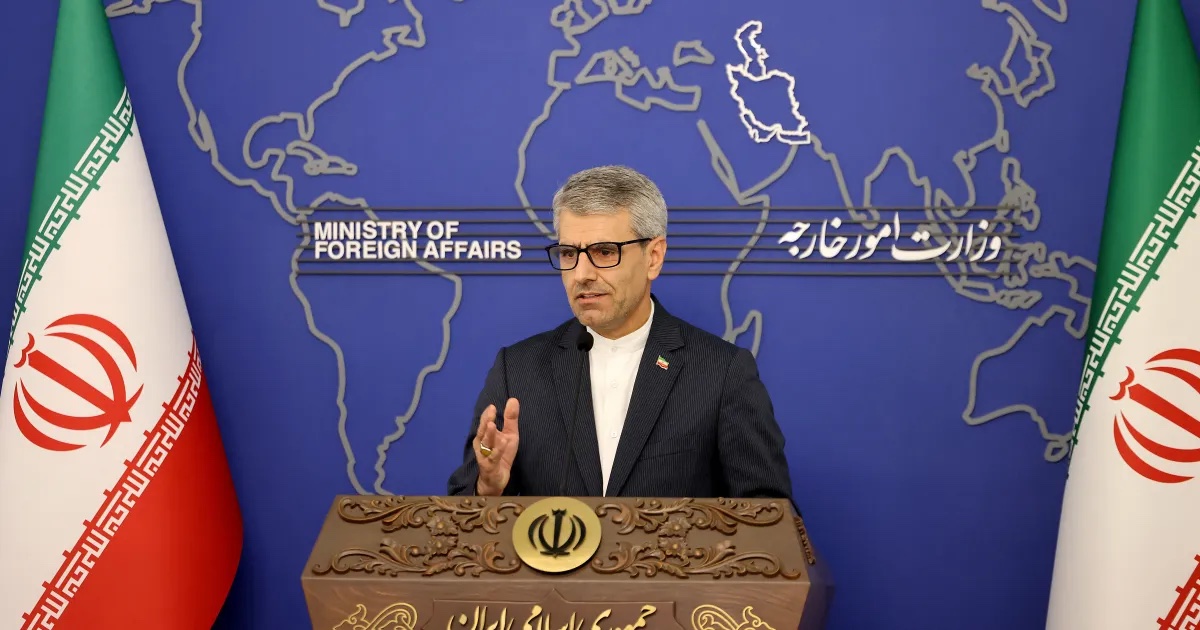
However, Iran’s Foreign Ministry dismissed that claim, asserting that Tehran had made “no new commitments” concerning nuclear inspections.
Foreign Ministry spokesman Esmail Baqai informed Iran’s state news agency that any forthcoming interactions with UN nuclear inspectors will adhere to the current procedures sanctioned by Parliament and the Supreme National Security Council.
The disagreement emerged despite both parties characterizing the initial round of talks as productive.
In a joint statement, mediators Qatar and Pakistan declared that the parties had reached an agreement on “a roadmap towards achieving a final deal within 60 days,” with technical discussions set to continue in the upcoming weeks.
Vance characterized the negotiations as establishing a “very good foundation,” noting that the discussions centered on the reopening of the Strait of Hormuz and the preservation of regional ceasefire arrangements.
A significant development occurred when the United States lifted sanctions on Iran for a limited time, permitting Tehran to sell oil in US dollars for the first time in many years.
The 60-day waiver, granted by the US Treasury, permits the production, sale, and transportation of Iranian crude oil and petrochemicals until August 21. The measure allows for direct imports of Iranian oil into the United States and eliminates various financial and logistical restrictions that had hindered Tehran’s energy exports.
US Treasury Secretary Scott Bessent stated that the relief from sanctions was contingent upon Iran’s commitments to maintain the strategic Strait of Hormuz open and allow the return of IAEA inspectors.
President Donald Trump also indicated that Tehran would ultimately consent to comprehensive inspections, stating on social media that Iran “will agree to have major weapons inspections.”
Iran, however, asserted that no new agreement had been established regarding the matter.
The IAEA has not yet made a public statement regarding the conflicting claims.
Iran has halted inspector access to multiple nuclear sites following the targeting of facilities during last year’s conflict involving Israel and the United States. The UN nuclear watchdog subsequently withdrew its remaining inspectors from the country.
The recent discussions also focused on regional security issues, particularly the tensions in Lebanon.
Both countries have agreed to set up a communication mechanism aimed at preventing misunderstandings and ensuring safe commercial navigation through the Strait of Hormuz, as stated by the mediators. A separate “de-confliction cell” involving the United States, Iran, and Lebanon was also established to support efforts aimed at concluding military operations in Lebanon.
Iranian Foreign Minister Seyed Abbas Araghchi characterized Lebanon as the initial significant challenge of the wider agreement.
In recent days, there has been a decrease in hostilities between Israeli forces and Hezbollah, with a tenuous ceasefire reportedly in place since the weekend.