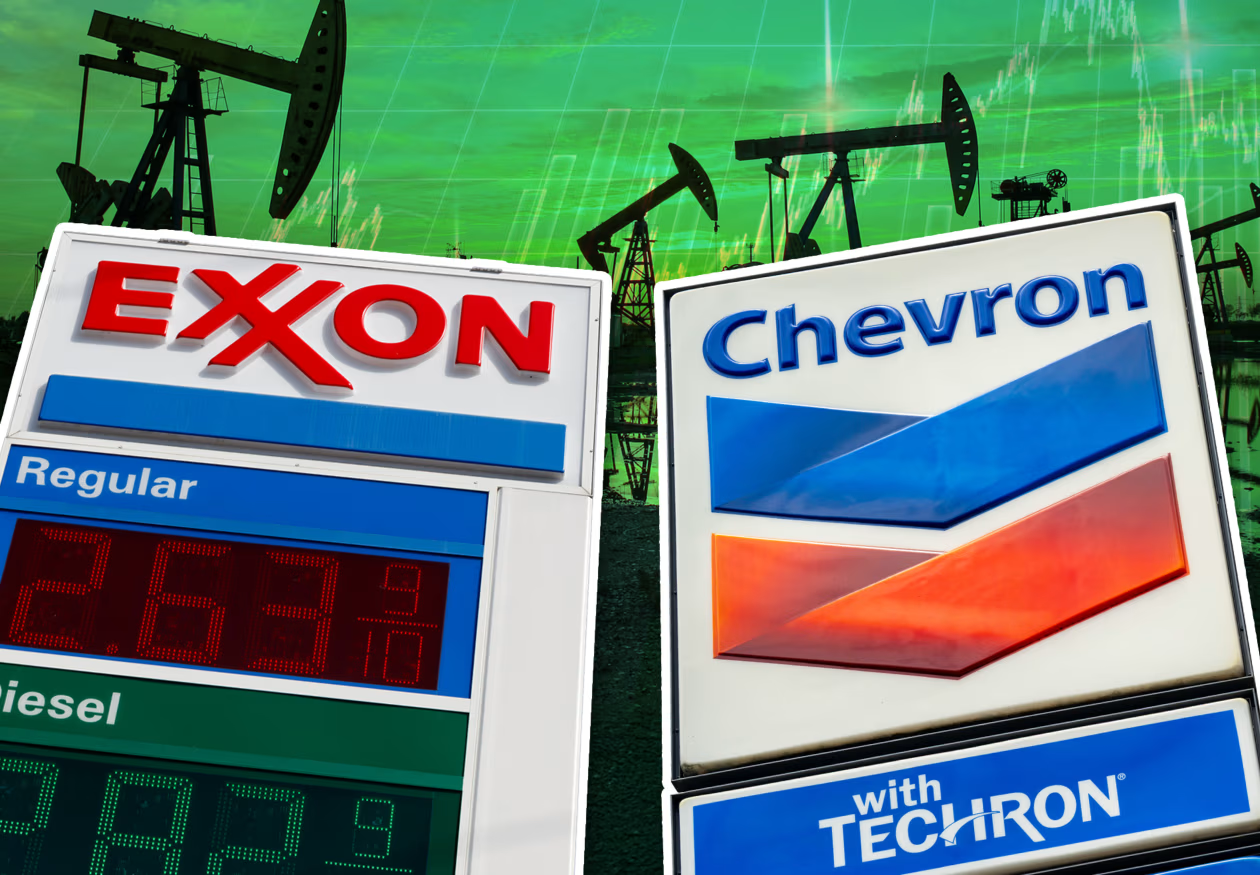
Exxon and Chevron have reported declines in profits, even as oil prices continue to rise, due to supply disruptions and timing effects that have postponed earnings improvements.
Major oil companies Exxon Mobil and Chevron have announced declines in profit for the first quarter of 2026, amid halted crude oil deliveries and supply interruptions in the Middle East, even as oil prices continue to rise.
Exxon reported quarterly earnings of $4.2 billion, a decrease from approximately $7.7 billion in the same quarter last year, reflecting a decline of around 46 percent. Meanwhile, Chevron’s profits decreased to $2.2 billion from about $3.5 billion, marking a decline of roughly 37 percent. Nonetheless, both companies surpassed Wall Street expectations.
America’s two largest oil companies are anticipated to ultimately benefit from the surge in oil prices, which have reached heights not seen since 2022 this week amid the ongoing conflict in Iran, according to a report by Reuters.
Exxon stated in a prepared statement that reported earnings were reduced due to “timing effects” and volume impacts in the Middle East; however, when these effects are excluded, the company reported a profit of $8.8 billion. Chevron reported that unfavorable timing effects amounted to approximately $3 billion for the quarter.
“One aspect we highlighted in our press release was the timing,” said Darren Woods, chair and chief executive officer of Exxon, during an interview. “As you conclude the quarter in the unpredictable market, you record the hedges, the paper, but the physical barrels remain in inventory until they are delivered.”
“We wanted to emphasize this deferred profit to ensure our investors recognize that the efforts we are making to address current demands are yielding benefits that may not be reflected in this quarter,” Woods added.
At the beginning of the war, Donald Trump stated on Truth Social: “The United States is the largest oil producer in the world, by far, so when oil prices rise, we profit significantly.”
Some oil and gas companies are currently enjoying the advantages. BP reported that its profits more than doubled in the last quarter, attributing this surge to “exceptional oil trading,” resulting in its highest quarterly profit since 2023. This announcement prompted advocacy groups and several European finance ministers to advocate for increased taxes on windfall profits.
Additional earnings reports suggest that oil companies might require more time to present definitive gains. ConocoPhillips, a partner in Qatar’s state gas company, has revised its forecast for annual output downward due to disruptions in Qatar’s liquefied natural gas operations resulting from the war. State energy officials have stated that the Iranian attacks on QatarEnergy LNG’s export plant will require years for repairs.
Chevron’s and Exxon’s stocks surged at the onset of the war but declined in April following the US and Iran’s agreement on a ceasefire and the reopening of the Strait of Hormuz. Lockheed Martin, a prominent defense contractor for the federal government, initially experienced a 25 percent increase in its stock since the beginning of the year, but it has since returned to approximately the same levels.
At the same time, gas prices at the pump are on the rise, with the current average hitting $4.39, an increase from $3.187 a year prior. Americans are confronting concerns about rising inflation and sluggish job growth in the context of unrest in the Middle East, which has contributed to economic uncertainty and increased living costs for many households.