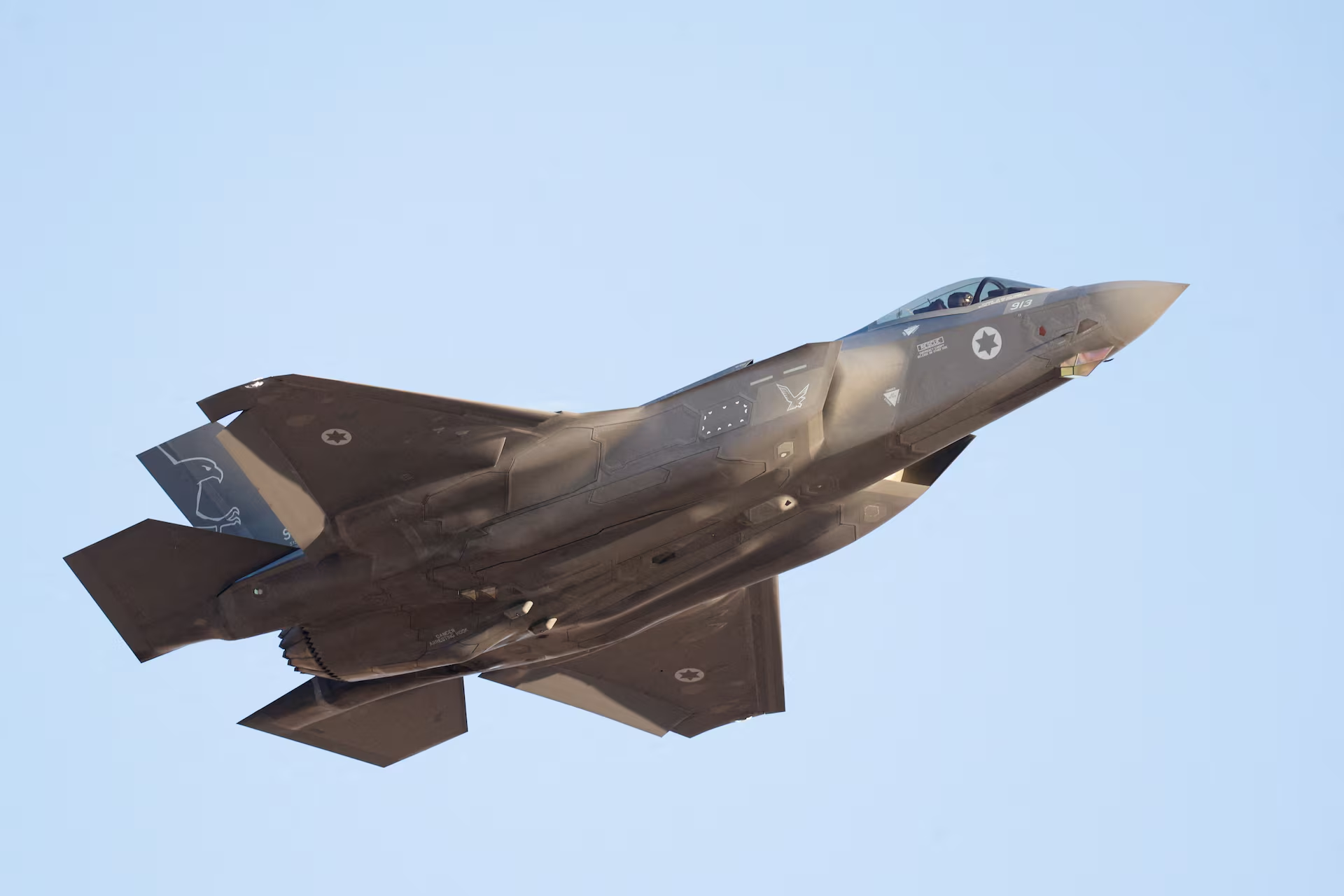
The Israeli defense ministry announced on Sunday that it has granted final approval for a plan to acquire two new combat squadrons of advanced F-35 and F-15IA fighter aircraft from Lockheed Martin and Boeing in a deal valued at tens of billions of dollars.
The agreement, sanctioned by Israel’s Ministerial Committee on Procurement, marks an initial phase in a 350 billion shekel ($119 billion) initiative aimed at enhancing Israel’s military and “reinforcing preparedness for a challenging decade in Israeli security,” it stated.
Prime Minister Benjamin Netanyahu stated that a significant portion of this increased defense budget will be allocated to the production of munitions within Israel, reducing its reliance on foreign nations. Israel, he remarked, will also create “groundbreaking” aircraft.
The ministry stated that the new squadrons will play a crucial role in the military’s long-term force development, tackling regional threats and maintaining Israel’s strategic air superiority.
“In addition to addressing urgent wartime procurement requirements, we must take action now to ensure the IDF maintains its military advantage for the next decade and beyond,” stated ministry Director General Amir Baram, in reference to the Israel Defense Forces.
The recent conflict with Iran highlighted the importance of the U.S.-Israel strategic relationship and underscored the continued necessity of advanced air power, he noted.
According to the agreement, Israel is set to acquire a fourth squadron of F-35s from Lockheed Martin, along with a second squadron of F-15IA fighter jets from Boeing.
Netanyahu stated, “Israel is stronger than ever, and it is essential for Israel to remain significantly stronger than our adversaries.” “These aircraft enhance Israel’s dominant air superiority.”
In December, Boeing received a $8.6 billion contract from Israel for 25 new F-15IAs, with an option for an additional 25 aircraft.
Baram indicated that the subsequent step would involve proceeding with the finalization of agreements with the U.S. government and military counterparts.
On February 28, the U.S. and Israel initiated airstrikes on Iran; however, a ceasefire has been effective since April 8. The U.S. Navy upholds a blockade of Iranian ports.
Israel Katz, the defense minister, stated that the Iranian conflict showcased the strength of the air force and its crucial role in safeguarding Israel.
“The insights gained from that campaign compel us to continue advancing our force buildup, ensuring air superiority for many years ahead,” he stated.
Israeli aircraft have targeted Iranian-backed Hamas militants in Gaza and Hezbollah militants in Lebanon, following the Hamas attacks on Israel on October 7, 2023.
Katz said that the new aircraft would significantly improve technology by adding self-flying features, advanced defense systems, and helping Israel become a leader in military operations in space.
“Our mission is unequivocal: to guarantee that the IDF possesses the tools, capabilities, and strength to operate anywhere, at any time,” Katz stated. “We will persist in our investments, strengthen our position, and maintain our advantage over adversaries—ensuring Israel’s security now and for the future.”