China’s Labor Day travel boom turns inward as rising fuel prices and flight cancellations hurt trips abroad
Rising fuel prices and cancelled flights force Chinese tourists to stay in China during the Labor Day holiday, even though demand is high overall.
China’s travel demand is expected to stay high during the five-day Labor Day holiday starting May 1. However, rising fuel prices and a lot of flight cancellations are making more people choose to stay in China during their vacations.
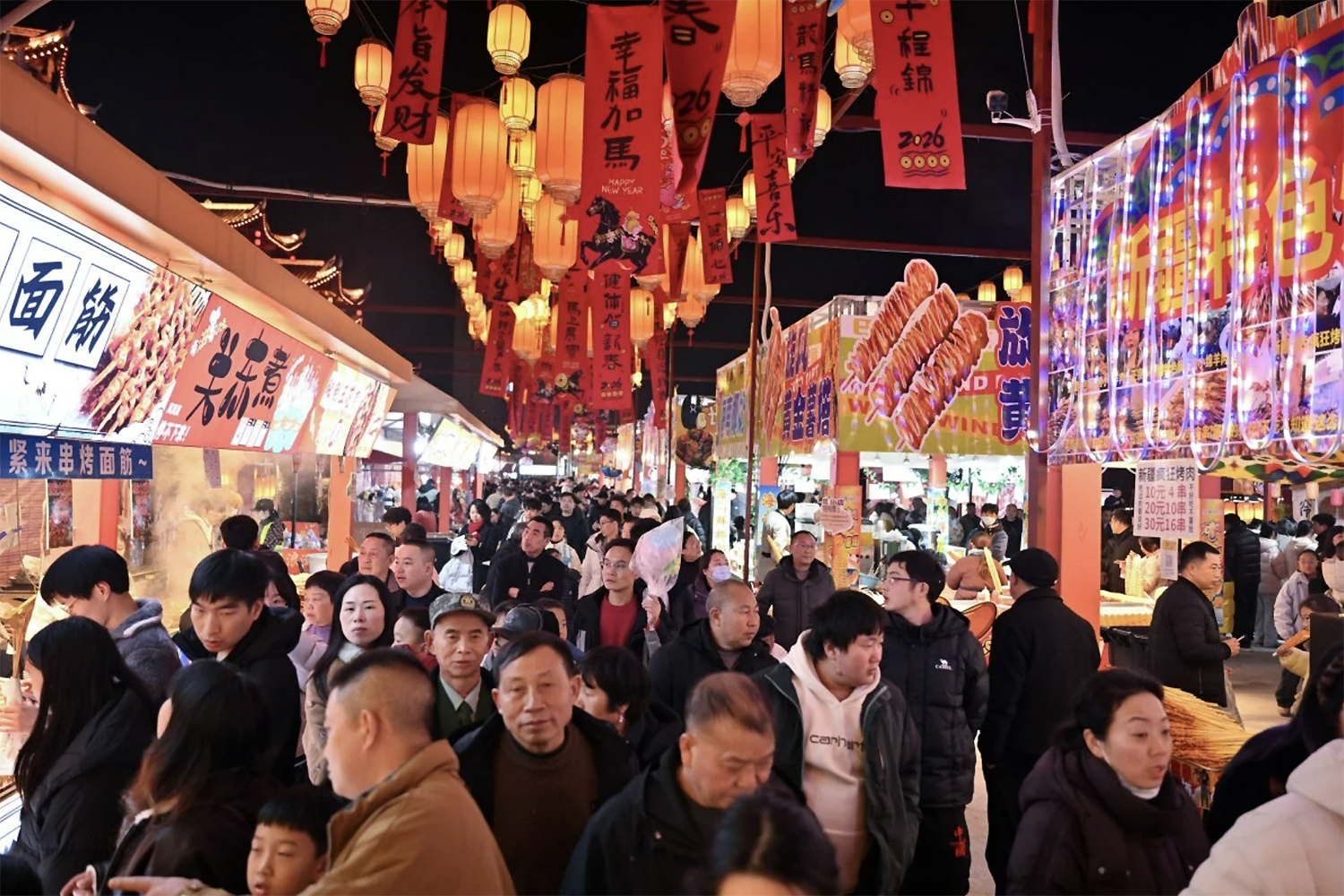
Industry experts and travel companies say that more and more Chinese tourists are choosing road trips and independent local tours over vacations abroad. This is a continuation of a trend that has been going on for a few years now as people try to save money for their future.
The ongoing war in Iran has made jet fuel prices much higher, which has made international travel much more expensive and caused problems on key routes in the area.
The number of foreign flight cancellations over the May Day holiday has sharply increased to 7.4%, with about 785 flights being canceled. This is more than double the number of cancellations that happened last year. Several airlines, such as Air China, China Eastern, Spring Airlines, and AirAsia, have cut back on or stopped flights between China and Bangkok, Phuket, and Kuala Lumpur, among other Southeast Asian cities.
At Dragon Trail Research, Sienna Parulis-Cook is in charge of marketing and communications. She said that the war is already having an effect on the aviation industry.
As a result of the war in Iran, jet fuel is becoming harder to find and more expensive. As a result, many trips between China and Southeast Asia are being canceled, mostly by low-cost airlines, she said.
She also said that travelers are paying more even in places where planes are still running.
“Flights that were still going out between China and Southeast Asia were about 18% more expensive than they were at the same time last year,” Parulis-Cook said.
Some travelers have been able to avoid the problems despite them. May Pan, 39, from Beijing, said that her planned trip to Malaysia had not been changed.
She said, “We planned this trip a long time ago, and I bought the plane tickets six months ago.” “I heard that a lot of flights to Southeast Asia have been canceled. Luckily, ours hasn’t changed yet.”
Because it’s not always safe to travel abroad, a lot of Chinese tourists are turning to trains and domestic places as safer and cheaper options.
China Railway Group thinks that 158 million train trips will happen between April 29 and May 6. This is more than the 151 million trips that happened during the same time last year.
Some people choose to take trains to get around their own country. “They can also take the train to Hong Kong and Macau, so they don’t have to worry about flight delays,” Parulis-Cook said.
Booking trends also show that more people are traveling within their own country. Bookings for self-driving group tours over the Labor Day holiday have gone up more than 50% year-over-year, according to the travel service Tuniu. Bookings for independent travel packages have also gone up nearly 20%.
This year, there were 135% more travel bookings in Zhejiang province than there were last year. Bookings from nearby towns like Huzhou and Hangzhou more than tripled. This is because school spring breaks and public holidays fall on the same week, making an extended “3+5” break.
Deputy General Manager at Shanghai-based Spring Tour Zhou Weihong said that most people will be traveling within China over the holidays.
“Year-over-year, 20% more domestic trips were booked through our platform,” he said.
But it’s still not clear if total spending per traveler will reach levels seen before the pandemic. This is because consumers are still looking for ways to save money.
The war in Iran has effects that go beyond aviation. Dragon Trail’s most recent Chinese Traveller Sentiment Report found that 43% of those who answered said their travel plans had already been changed, and 2/3 said they were much less likely to visit the Middle East and North Africa.
As China tries to boost internal demand in the face of a slowing economy, the tourism industry has become a more important sign of consumer confidence.
In the first quarter, retail sales growth was only 2.4%, which was less than the 5% growth in GDP as a whole. This shows how hard it is for officials to get consumers to drive recovery.
Because of this, local governments have come up with a number of ways to get people to spend more during the holidays. These include culture and tourism campaigns that focus on spring trips, flower viewing, and educational travel. To get people to spend money over the holidays, the government has also given out more than 284 billion yuan (about $41.6 billion) in vouchers and subsidies for purchase.