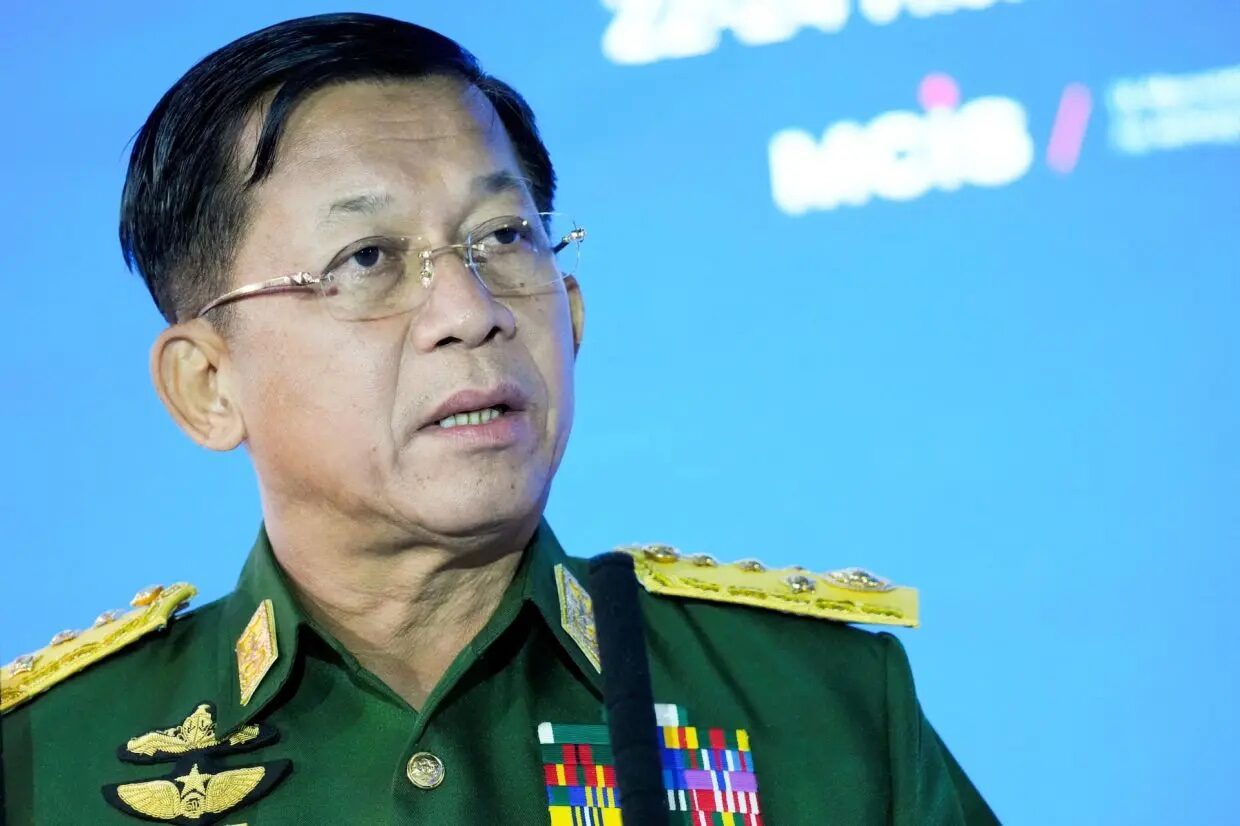
Min Aung Hlaing has been nominated as president as the Myanmar parliament convenes after an election that faced criticism for excluding significant opposition parties.
Min Aung Hlaing, the military chief of Myanmar, received a nomination for the presidency as parliament gathered on Monday, after a general election that left out the country’s primary opposition parties.
Min Aung Hlaing is anticipated to receive confirmation, having been nominated alongside two loyal supporters deemed unlikely to contest his ambitions.
A military leader, sanctioned by multiple Western nations, orchestrated a coup five years ago, resulting in a lasting civil conflict in Myanmar. Since that time, thousands have lost their lives and millions have been forced to flee, while significant areas of the country continue to be held by armed opposition factions.
The junta portrayed the general elections, conducted between December and January, as a means to achieve peace. Nonetheless, the process faced considerable criticism for its lack of credibility, as major political parties were excluded from participation and voting was not feasible in many regions due to persistent violence.
The military government has dismissed those criticisms, asserting that the election was conducted freely and fairly.
Nonetheless, approximately 90% of the legislators in the newly established parliament are affiliated with Min Aung Hlaing, either as military appointees who inherently occupy a quarter of the parliamentary seats or as representatives of the armed forces’ political party.
Parliament is anticipated to dedicate the week to discussions regarding the presidential selection, yet his rise is regarded as inevitable.
Min Aung Hlaing has been perceived for some time as having aspirations for the presidency. The military takeover that ousted Aung San Suu Kyi’s administration was significantly influenced by his inability to gain power in the 2020 election, which was won by the civilian government.
According to Myanmar’s constitution, he would need to give up control of the armed forces if he takes on the presidency, a situation that could change the internal power dynamics within the military structure.
Reports suggest that certain senior commanders are unhappy with his leadership, prompting concerns regarding the potential risks of relinquishing direct military control.
He has chosen a trusted associate, General Ye Win Oo, to take over as military chief. The general is recognized for his strict position and purported severe treatment of those who oppose him.
Min Aung Hlaing has established a new consultative council, which he will lead, potentially enabling him to maintain influence over both military and civilian structures even after taking on the presidency.
The anticipated transition is not expected to indicate any significant change in policy, as analysts point out that the new administration will predominantly reflect the existing junta, though it will operate within a civilian structure.