On Canada’s tariff frontline, business is experiencing a slowdown due to uncertainties surrounding the US trade deal
FASTSIGNS, a company based in Windsor, Canada, specializing in the design and installation of custom business signs and graphics, faced its most challenging year since the pandemic last year as orders from its primary automotive clients diminished.
This year’s new project launch has provided some relief; however, the company reports that customers are requesting longer payment terms, placing smaller orders, and negotiating more aggressively on prices due to the uncertainty surrounding the review of the United States-Mexico-Canada Agreement this year.
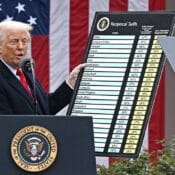
U.S. President Donald Trump has consistently stated that he might abandon the trilateral trade agreement he negotiated during his first term, deeming it no longer pertinent to the United States. U.S. Trade Representative Jamieson Greer has characterized the negotiations with Canada regarding the agreement, which exempts the majority of Canadian goods from U.S. levies, as difficult.
The effects of the deal—along with its unpredictable future—are particularly pronounced in areas such as Windsor, one of the Canadian cities that relies heavily on the U.S. for its economic well-being, highlighting the general apprehension surrounding the nation’s economy. The economy experienced a contraction of 0.6% in the fourth quarter. “CUSMA is extremely significant,” stated Jackie Raymond, co-owner of FASTSIGNS, as she referred to the agreement’s name in Canada. “It flows through every small business, all the way to your barber shop and nail salon, impacting all of our customers.”
Mexico has formally initiated negotiations with the U.S. to renew the deal, with an expected finalization date of July 1. Canada has thus far engaged in only informal discussions regarding the deal, which remains intact legally even if negotiations are not finalized by that deadline.
EXPERIENCE IT DEEPLY, EXPERIENCE IT INTENSELY
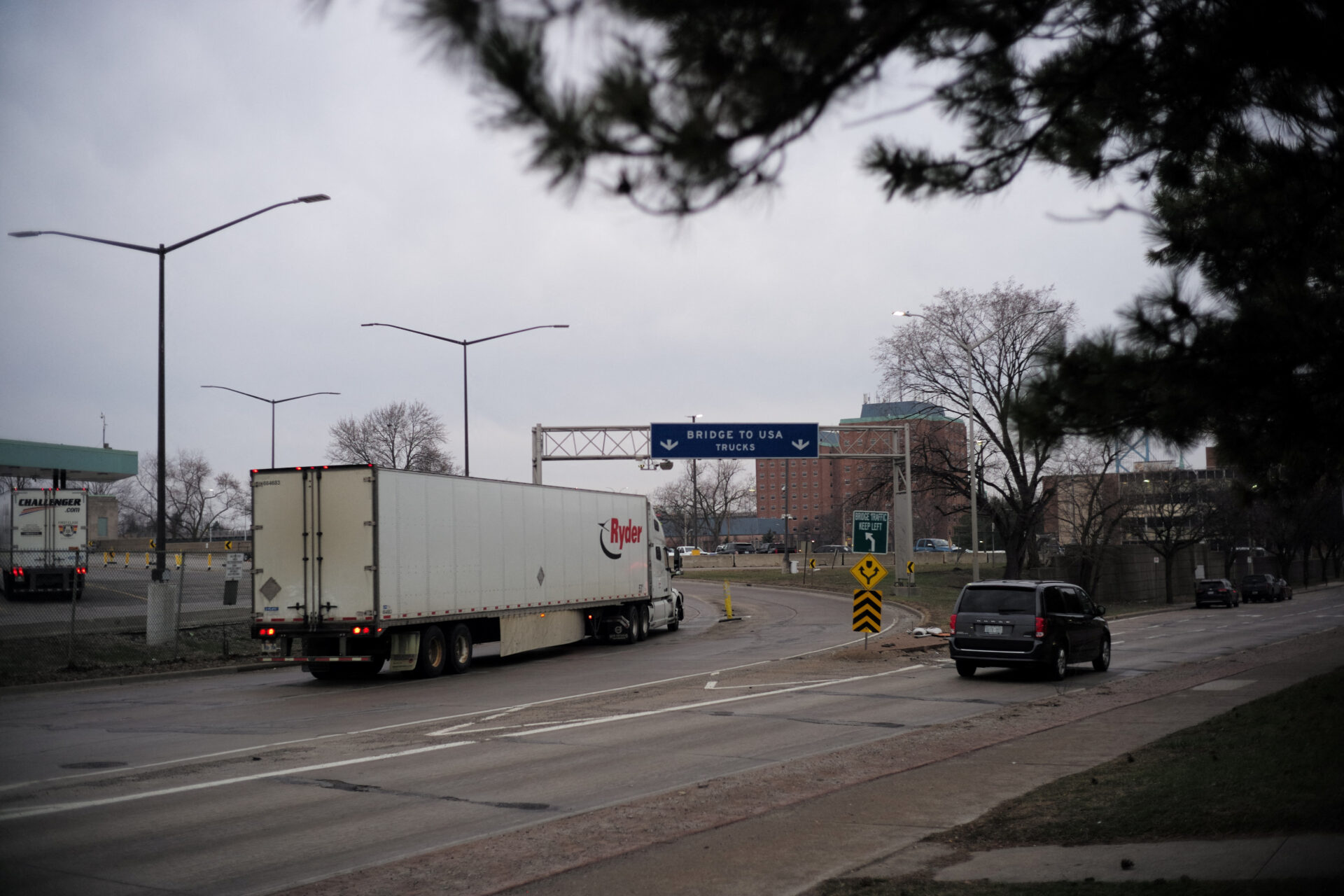
A manufacturing center bustling with numerous small and specialized component producers, Windsor primarily serves automotive companies and equipment manufacturers, both locally and across the river from Detroit, the heart of America’s automotive industry.
In Canada, it stands out as one of the cities most affected by Trump’s tariffs on steel, aluminum, and autos. The economy has experienced significant fluctuations over the past year due to Trump’s inconsistent stance on tariffs, yet the majority of Canadian goods have managed to maintain tariff-free access under USMCA.
Numerous small parts and equipment manufacturers in the city encountered diminishing demand as their order books dwindled, relying on their close ties with Detroit’s auto industry.
Manufacturing represents almost 25% of employment in the Windsor-Essex area, which includes Windsor and its neighboring municipalities. Approximately 90% of the city’s exports traverse the border, frequently doing so multiple times throughout the production process. Overall, the U.S. represents approximately 68% of Canada’s exports. “When Donald Trump… does make a threat, we feel it first, and we feel it hardest,” stated Ryan Donally, CEO of the Windsor-Essex Chamber of Commerce.
The chamber, which represents 750 local businesses employing over 40,000 employees, said companies paused investments, delayed production, and cut jobs at the height of the tariff uncertainty last year.
That pushed the region’s unemployment rate above 11% in June—the highest among major Canadian cities.
In March of last year, Trump exempted USMCA-compliant exports from Canada from tariffs, allowing Windsor to partially regain its footing.
Earlier this year, carmaker Stellantis NV added a third shift at its local plant, and LG Energy Solution said it is building a battery facility, boosting job prospects. However, uncertainty continues to weigh on business confidence. “As long as the CUSMA (Canada-United States-Mexico Agreement) relationship remains in place, Windsor will be fine,” Donally stated. “If that were to erode in any way … that’s where the difficulties arise.”
DECLINE IN SELF-ASSURANCE
Windsor’s unemployment rate, while reduced from June, continues to be one of the highest among major Canadian cities at 8.6%.
Local shops are experiencing reduced foot traffic, restaurants are noting smaller crowds, and builders indicate that the housing market is approaching a standstill—housing frequently becomes one of the initial sectors to exhibit strain from the ripple effects of tariff uncertainties. “When individuals are about to make the largest investment of their lives, they seek assurance in their employment, the stability of their jobs, and the overall economy. ” And people lost that due to the tariffs,” said Brent Klundert of BK Cornerstone, a local real estate builder.
Klundert laid off 13 of his 21 staff on his books as sales and prices slumped last year.
Since January, he has brought back 10 of his employees, anticipating that homebuyers who have been on the sidelines for a year would begin to return. So far, only a few have.
Data from the Canadian Real Estate Association showed that in February, Windsor’s residential real estate sales fell 15%—almost double the national decline of 8%. Average prices of homes in the region also fell more than the national average, the data showed.
“If we can get through our trade agreements with the U.S., I think that will add a lot of confidence,” Klundert said.
Skilled training and apprenticeships have also taken a hit in Windsor, as young people factor in trade uncertainty as they contemplate their future.
Lido Zuccato, chair of the School of Skilled Trades and Apprenticeships at the city’s St. Clair College, said that the college suspended one post-secondary manufacturing program due to start in the fall this year because of low demand.
Donally, from the local chamber of commerce, said Windsor’s deep economic and social ties with Detroit underscore what is at stake—residents follow Detroit sports teams, listen to U.S. radio stations, and cross the border daily for work and business meetings.
“That deep relationship is pretty difficult to divorce,” he said.