China’s position as a major lender to developing countries has changed during the last ten years, according to ONE Data’s analysis, with fresh loans to poorer countries declining significantly while debt repayments are still rising.
According to the first analysis by the ONE Data effort, several low- and middle-income nations, especially those in Africa, are now sending more money to China to pay off their debt than they are getting in new loans from the second-largest economy in the world.
The swing has been accompanied by an increase in net financing from multilateral organizations, which, when debt-service outflows are considered, have emerged as the primary worldwide source of development money.
According to the analysis, multilateral lenders currently account for 56% of net flows, or $379 billion between 2020 and 2024, having boosted net financing by 124% over the previous ten years.
The executive director of ONE Data, David McNair, stated that the reason for the outflows was “the fact that there is less lending coming in, but that previous lending from China still needs to be serviced.”
In Chinese finance, the most significant reversal has occurred in Africa. It saw a $52 billion swing from collecting $30 billion to paying out $22 billion.
In Chinese finance, the most significant reversal has occurred in Africa. It saw a $52 billion swing from collecting $30 billion to paying out $22 billion.
Africa experienced the biggest impact in 2020–2024, the most recent period for which data is available, with a $30 billion inflow in 2015–19 and a $22 billion outflow.
2025 cuts are not included in the statistics. African emerging economies have already been negatively impacted by the U.S. Agency for International Development’s closing last year and a decline in funding from other affluent nations.
“Official Development Assistance flows are likely to show a significant decline once 2025 data becomes available,” McNair added.
As many governments struggle to finance investments and public services, he said the trend was “a net negative” for African countries. However, he also stated that as governments depend less on outside funding, it will encourage domestic accountability.
Aid cuts starting in 2025 are expected to worsen the larger reduction in bilateral finance flows and private external debt, which was also emphasized in the report.
According to a report released by the Griffith Asia Institute, a different study indicates that China’s foreign dealmaking activities increased in 2025.
According to the report, China’s Belt and Road Initiative (BRI) saw record-breaking deals last year totaling $213.5 billion, with Africa receiving the most, including $128.4 billion in construction contracts and $85.2 billion in investments.
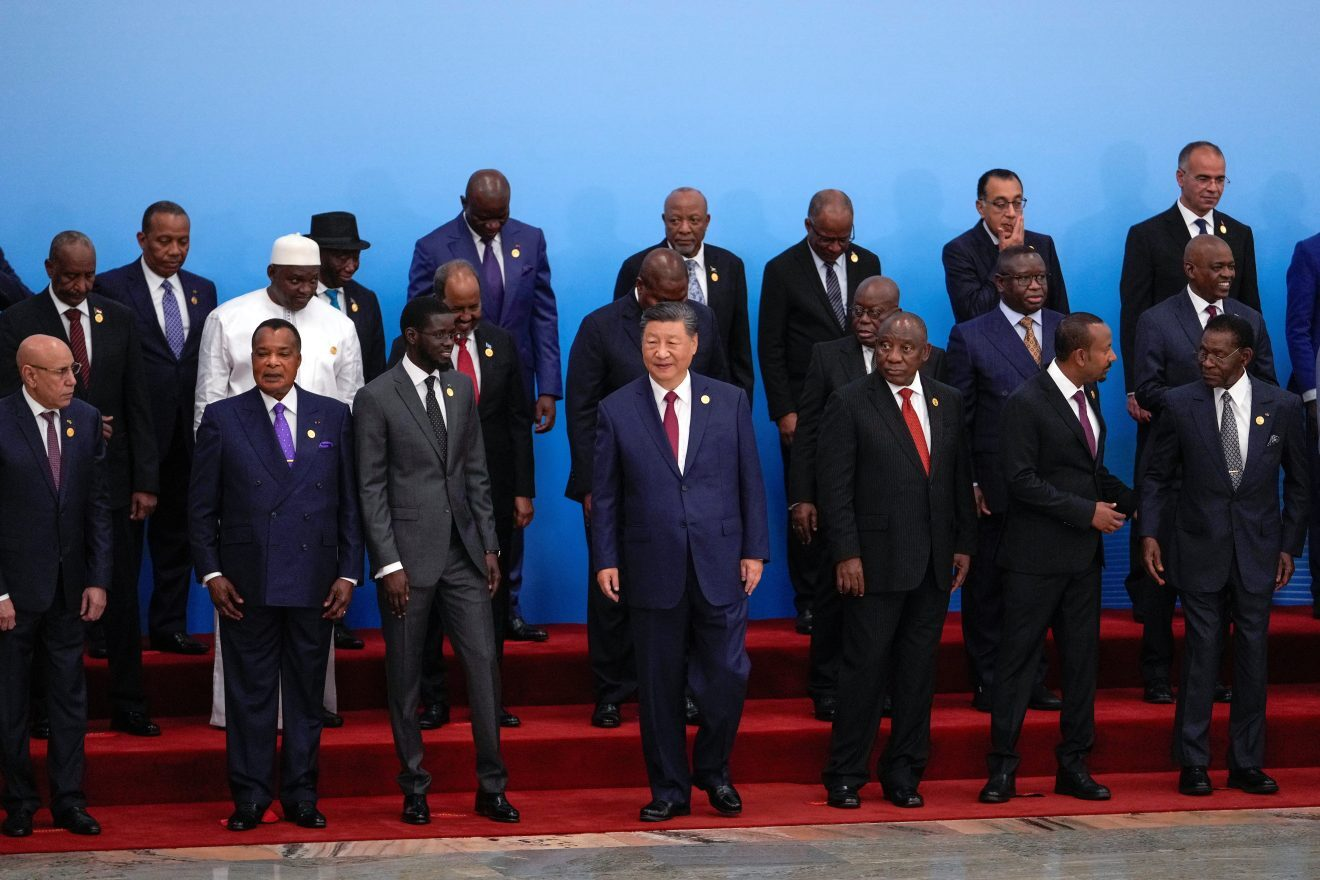
Launched by President Xi Jinping in 2013, China’s Belt and Road Initiative (BRI), also known as the New Silk Road, is regarded as one of the world’s most ambitious infrastructure projects.
The effort was once designed to build physical infrastructure between East Asia and Europe, but it has subsequently spread to Africa, Oceania, and Latin America, increasing Beijing’s political and economic might during the last ten years.