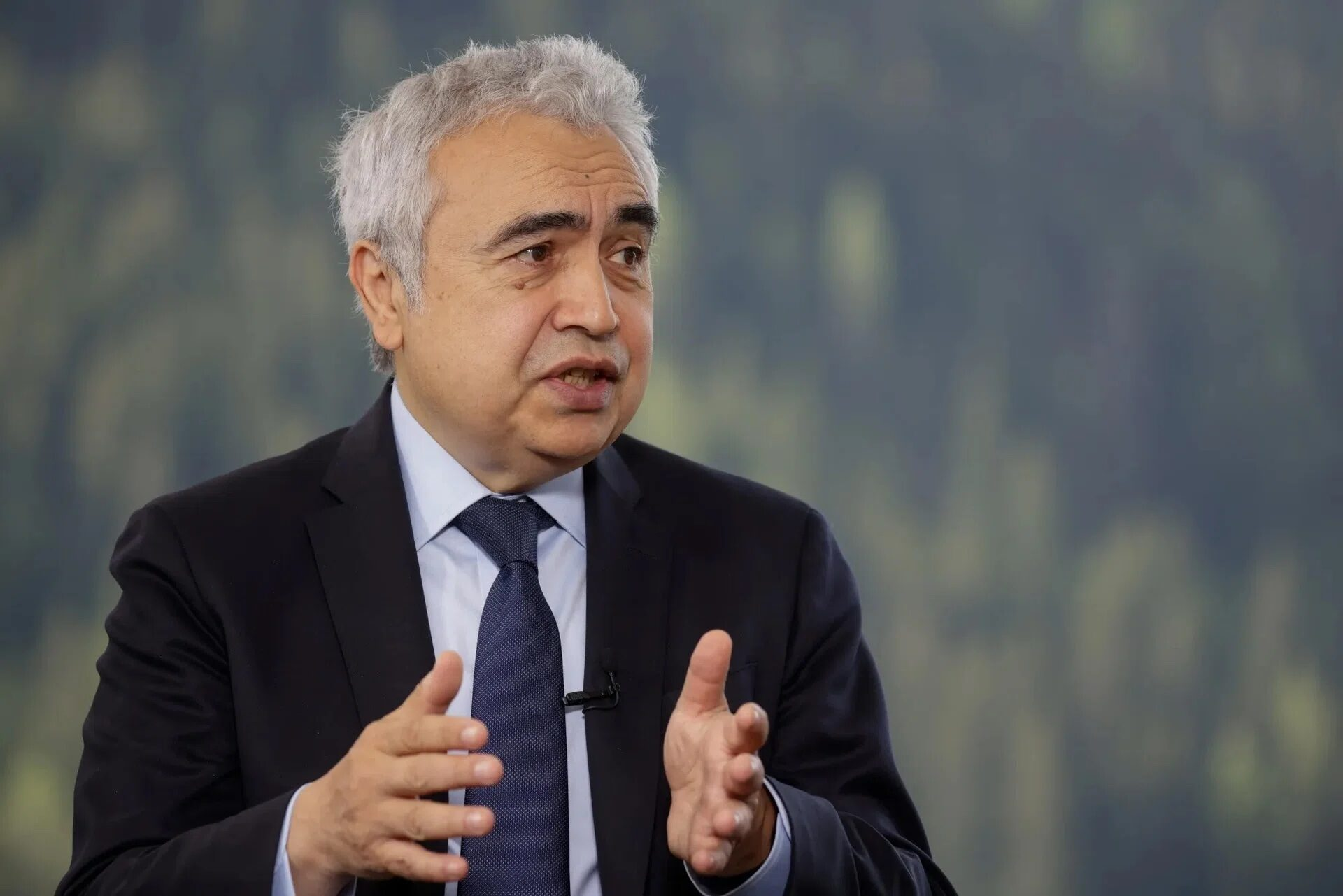
China’s slowdown and EV adoption, according to IEA Executive Director Fatih Birol, are changing the world’s oil demand, but the US-led supply increase is still robust.
According to Fatih Birol, Executive Director of the International Energy Agency (IEA), the emergence of electric vehicles and China’s economic downturn are the main causes of the sharp reduction in the increase of the world’s oil demand.
Birol said in an interview that the rise of the world’s oil demand is slowing down. principally due to China. Over the past ten years, China alone has contributed more than 60% of the growth in the world’s oil demand, with the rest of the world contributing 40%.
Currently, the increase of Chinese oil demand is slowing, primarily due to the declining Chinese economy. For obvious reasons, everyone agrees that the Chinese Communist Party, the IMF, and financial institutions in this nation is responsible. In addition, electric vehicles
Even though there was debate at the time, he pointed out that the IEA had accurately forecast this decline. There was a lot of debate in 2024. We predicted that the demand for oil will slow down and rise by fewer than 1 million barrels per day by the end of 2024. Other organizations stated that it would never fall below two million. We were right on the money at the end of 2024. However, it was not written about. Thus, we are a modest company. Our perspective will be as follows.
One important factor influencing market dynamics, according to Birol, is the expanding supply from the Americas. The Americas, which include the United States, Canada, Brazil, Argentina, and Guyana, produce a significant amount of oil. I call it the quintet of Americans. It is a very high output growth, with the largest growth coming from the United States. Globally, however, demand growth is slowing down.
But he emphasized that even though demand is falling, oil investment is still vital. This is by no means an indication that we do not require oil investment. Like people, oil fields are extremely productive, but they start to diminish after reaching a peak. Spending money is necessary to make up for the loss of existing fields. Only 10% of oil investments are made to meet growing demand; the remaining 90% are made to offset the decrease in existing fields.
The IEA chairman claims that the mismatch between robust supply and weaker demand is stabilizing prices. The market is oversupplied with oil because the American States is supplying a lot of it and demand is low in comparison to earlier. Consequently, prices remain at $60—comfortable rates—despite the large number of events occurring in the Middle East and the rest of the world.
Birol then addressed the issue of energy security in Europe, cautioning that the continent was vulnerable due to its previous policy decisions. My home is in Paris. In addition to the US administration, I also meet with the European, Japanese, Indian, and other administrations. But when it comes to energy, we are in a really challenging position.
First off, the competitiveness of the European economies is severely hampered by the significantly higher energy prices. Second, the risk to energy security is enormous. “I believe that Europe has made three historical strategic errors in the past 30 years, and they have cost them in terms of energy, foreign policy, the economy, and even defense,” he stated.