 "Where Africa Comes to Stay Informed."
US Edition
"Where Africa Comes to Stay Informed."
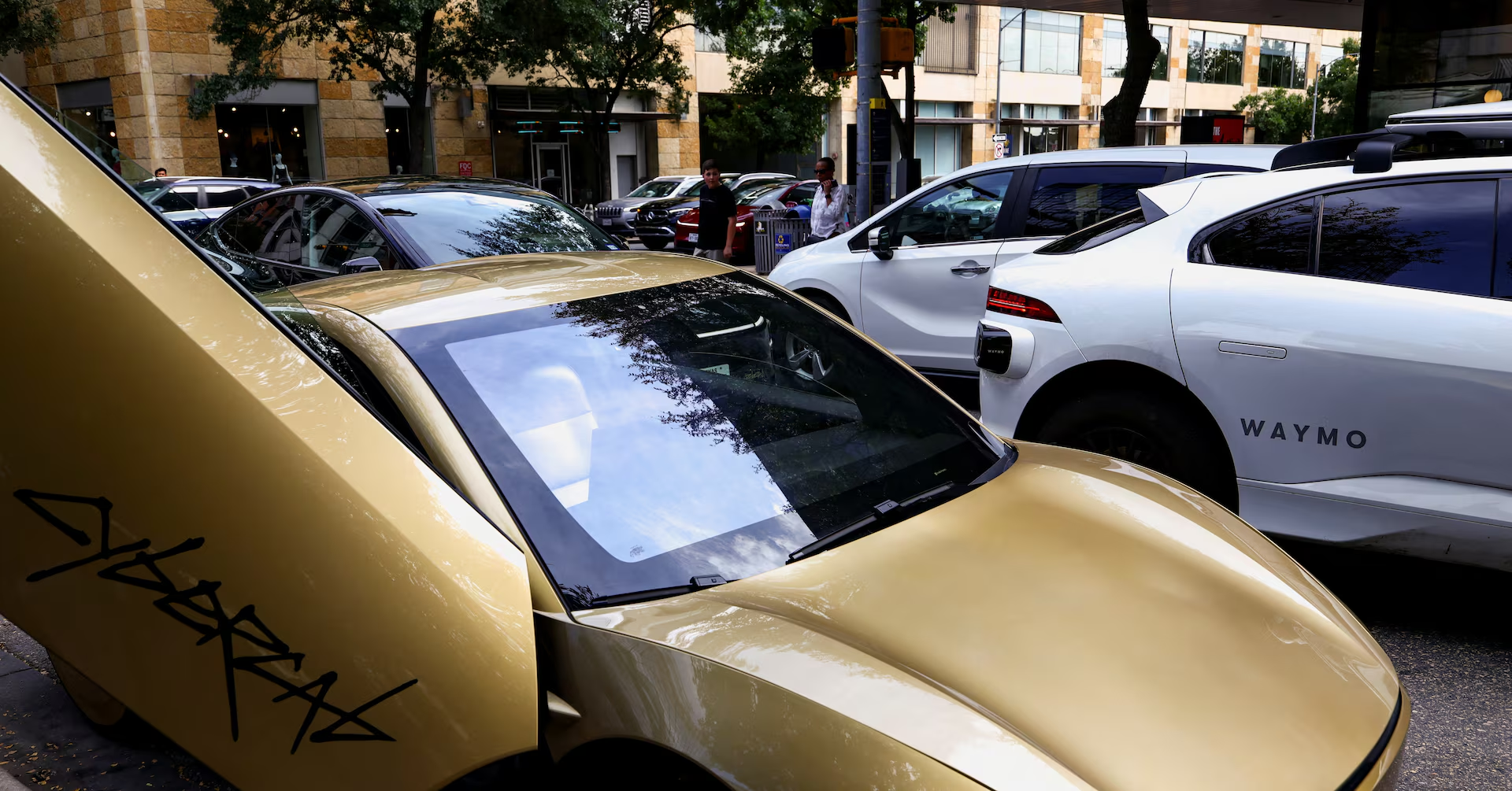
The U.S. National Highway Traffic Safety Administration has initiated an investigation regarding Tesla's certification of its autonomous Cybercab robotaxi.
The auto safety regulator is reviewing the process and technical data that the EV maker used to show compliance with federal motor vehicle safety standards for as many as 1,000 Cybercabs.
Tesla on Thursday initiated the commercial rollout of a limited number of two-seater Cybercabs in Austin, Texas, and announced plans to progressively extend the service to more vehicles and locations.
NHTSA stated that the Cybercab does not include traditional manual controls, such as a steering wheel, brake pedal, accelerator pedal, and mirrors.
Automakers are required to certify that vehicles comply with the Federal Motor Vehicle Safety Standards. When certified vehicles seem to fall short of these standards, the NHTSA conducts an investigation, as stated by the agency on Friday.
In June, the agency suggested eliminating a government mandate for manual brake pedals in self-driving vehicles, a decision that would facilitate the deployment of these vehicles on U.S. roads. It has suggested further modifications to federal safety standards to enable AVs to bypass the requirement for additional human driver equipment.
Until that work is completed, existing standards remain in effect, according to NHTSA. "NHTSA is fully committed to the safe development and deployment of automated vehicles. “As the federal regulator, it is our responsibility to ensure that all of our laws are adhered to,” stated NHTSA Administrator Jonathan Morrison.
The agency is examining the foundation of Tesla's Cybercab certification and associated matters, including how the company assessed that specific standards were not relevant to the vehicle.
Tesla has yet to respond to a request for comment.
The electric vehicle manufacturer had 420 autonomous vehicles registered in Texas as of Friday morning, according to state records, which included 45 Cybercab vehicles.
Under current regulations, fully self-driving vehicles are not required to obtain NHTSA approval if they are equipped with necessary human controls, such as steering wheels, brake pedals, or mirrors.
NHTSA has the authority to grant petitions permitting up to 2,500 vehicles per manufacturer each year to operate on U.S. roads without the need for human controls. In July, NHTSA granted approval for Amazon's Zoox unit to conduct limited commercial deployment of its innovative steering-wheel-free robotaxis, a major turning point for the autonomous ride industry.
NHTSA previously stated that Tesla had not requested an exemption.

Comments
0