 "Where Africa Comes to Stay Informed."
US Edition
"Where Africa Comes to Stay Informed."
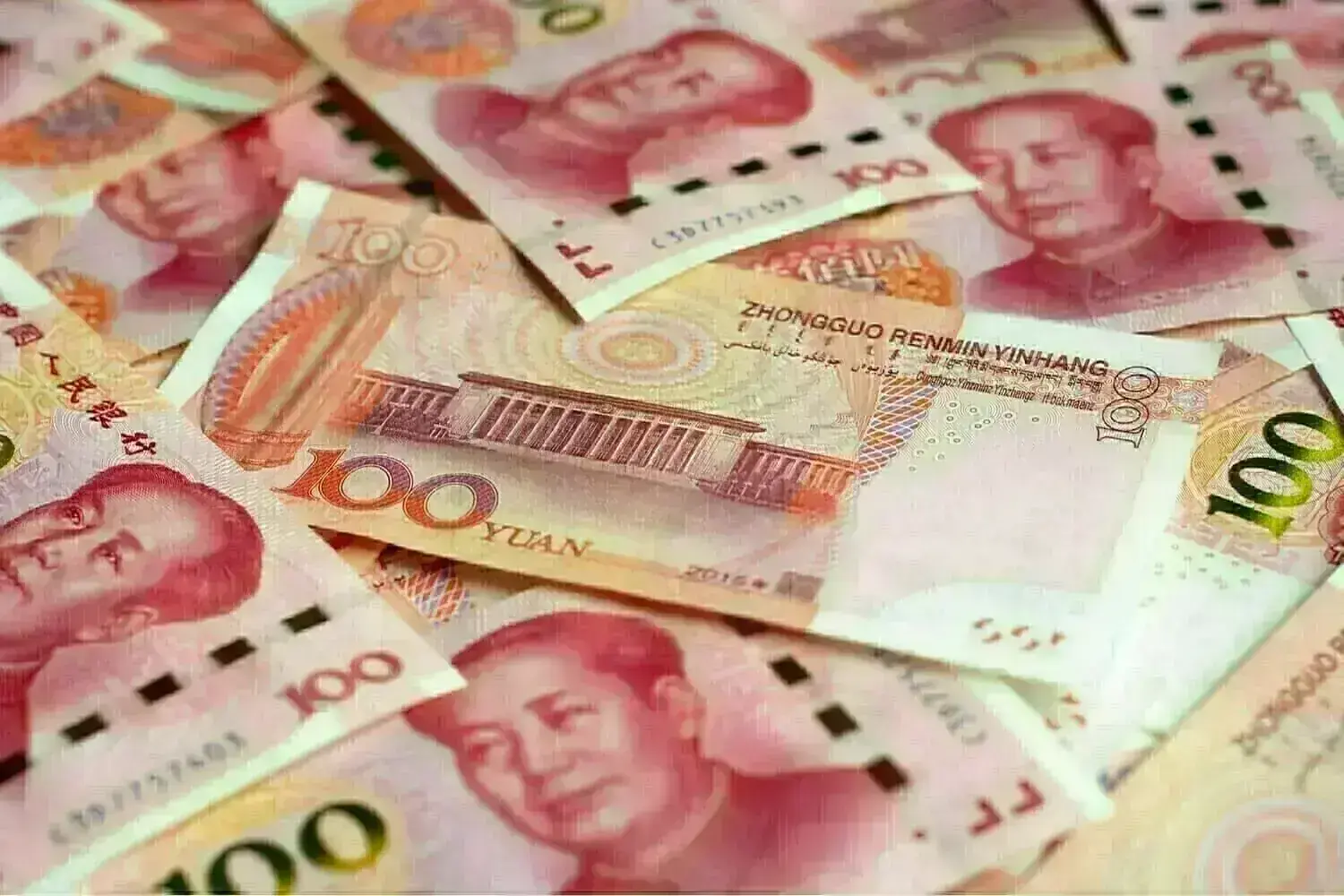
The Chinese yuan reached its firmest level against the US dollar in more than three years on Monday, after the central bank looked to have relaxed the brake it has been applying to the currency in the run-up to this week's meeting between US President Donald Trump and Chinese President Xi Jinping.
US Treasury Secretary Scott Bessent and Chinese Vice Premier He Lifeng wrapped up discussions in New York on Sunday, clearing the way for the two leaders to sit down together from September 23 to 25.
Artificial intelligence, the trading relationship, supply chains and the situation in the Middle East are all on the expected agenda, though few analysts are betting on a significant policy breakthrough coming out of it.
The onshore yuan touched 6.6950 per dollar during the session, a level last seen on January 16, 2023, and finished domestic trading at 6.6955 — its firmest close since June 30, 2022. Offshore, the currency firmed to 6.6946, a gain of roughly 0.03% across Asian hours.
Ahead of the open, the People's Bank of China fixed the daily midpoint at 6.7487 per dollar, the strongest such guidance since February 3, 2023. That figure still came in 536 pips softer than what the market had penciled in. Trading is permitted 2% either side of the fixing.
For close to a year the PBOC has published daily guidance weaker than market forecasts, a pattern traders and analysts read as a deliberate drag on the currency's climb.
This month tells a different story. The official midpoint has been firming at a quicker pace and the distance between it and market expectations has been closing. That gap had stretched to its widest since February, so the shift points to a central bank now willing to tolerate more appreciation.
Goldman Sachs read the firmer fixing ahead of the summit as in keeping with recent behavior, and said it could open up further room for the offshore yuan to gain.
“The fact that the summit is occurring should help maintain a stable trading relationship… policymakers in China should continue to feel comfortable allowing sustained but gradual currency appreciation,” the analysts said.
OCBC made a similar point about the diplomacy, arguing that a firmer, steadier yuan gives the US-China talks a better backdrop and makes fresh claims of competitive devaluation less likely.
The bank was careful, though, not to call this the start of a long appreciation run. “Given the wide US-China yield differential and still-soft domestic fundamentals, part of the recent appreciation may reflect policy-managed stability around the summit rather than a fundamental re-rating of the RMB,” OCBC said.
Elsewhere in foreign exchange the mood was flat, with investors still working through what last week's run of rate hikes by major central banks means for the global cost of money.
The dollar index, a gauge of the greenback against six leading currencies, held at 100.23, having added more than 1% the week before on the back of a hawkish Federal Reserve hike.
In money markets, overnight dollar/yuan swaps were quoted at -5.50 pips both onshore and offshore. Three-month SHIBOR sat at 1.4%, against 1.6% for the equivalent CNH HIBOR.



Comments
0