 "Where Africa Comes to Stay Informed."
US Edition
"Where Africa Comes to Stay Informed."
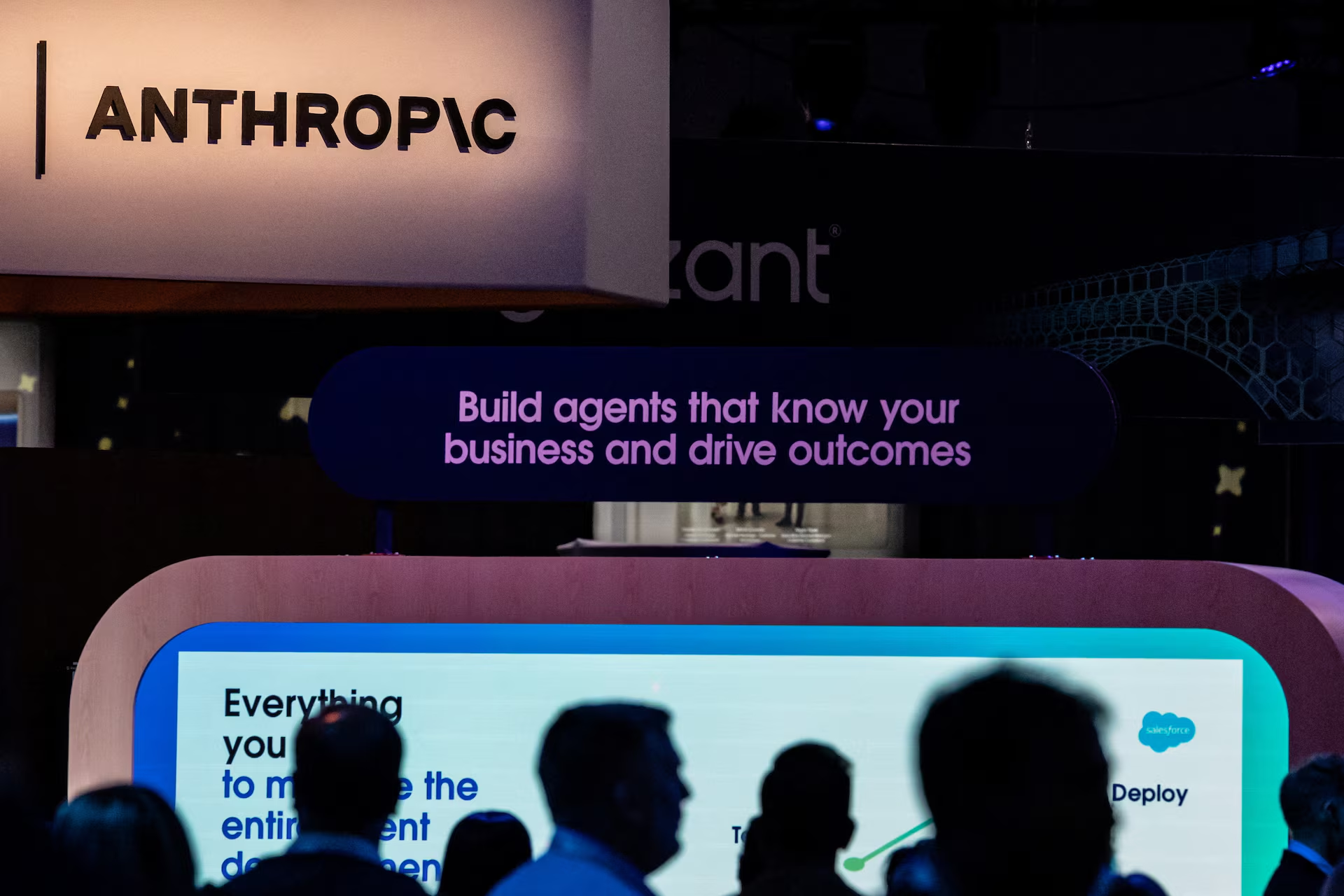
Anthropic is weighing whether to ship a new AI model to blunt the momentum OpenAI has built since launching GPT-6 Astra, three sources say — a decision landing just before an expected stock market debut and only days after its own chief executive urged the industry to ease off the accelerator.
Any release aimed at a direct competitor would sit awkwardly beside Dario Amodei's public appeal for the global AI community to slow the rollout of new capabilities on safety grounds, the sources said.
“We must slow the pace at which we improve the capabilities of AI models,” Amodei wrote in a 3,800-word essay published September 12. The piece, which described swarms of AI agents overrunning the internet and slipping beyond human control, won backing from OpenAI's Sam Altman and SpaceX's Elon Musk.
One person close to the matter said safety testing of the next model forms part of the internal deliberation over whether to release it. Anthropic declined to comment.
Part of the internal conversation concerns how to weigh the cost of shipping new models against the need to shore up margins, people familiar with the company's thinking said, with higher interest rates making investors far more attentive to when profits actually arrive.
That tension reflects broader pressure on the companies driving the AI boom to reach durable cash flow sooner, squeezed simultaneously by borrowing costs and by aggressive open-source rivals, many of them Chinese.
A release would also test whether Anthropic can hold its ground commercially against OpenAI without diluting the safety-first posture that has set it apart.
OpenAI shipped GPT-6 Astra on September 3, promoting improvements in computer use, software engineering, cybersecurity and professional tasks. Enterprise customers and developers responded strongly enough that prospective Anthropic IPO investors are now examining whether OpenAI can start eating into the lead Anthropic has held for months in enterprise AI.
On the corporate expense platform Ramp, Astra represented roughly 13% of tracked enterprise AI spending in the latest figures, against about 8% for Anthropic's Claude Fable.
OpenRouter, which directs developer traffic across competing models, tells a similar story: users spent more on OpenAI models than Anthropic models last week — OpenAI's first week on top of that metric in over two and a half years.
Several current backers, and investors planning to buy into both IPOs, played down the threat, pointing to the scale of Anthropic's lead in enterprise tooling and how slowly large corporate customers switch vendors.
The company's annualized revenue run rate cleared $65 billion by the end of July, against roughly $9 billion at the close of 2025, and it projects 2028 revenue in the region of $190 billion to $200 billion, as Reuters has previously reported. OpenAI's annualized run rate crossed $40 billion in July.
Investors also anticipate the lead changing hands repeatedly between Anthropic, OpenAI, Google and other large developers as each new model generation arrives, which limits how long any edge lasts.
The more serious long-term risk, according to investors, comes from open-source and open-weight models that cut token costs and let companies build their own AI stacks instead of buying from Anthropic or OpenAI.
That shift could erode the economics of the whole sector by widening the field well beyond a two-horse race between the leading commercial labs.
Meta, one of Anthropic's biggest customers, is working to cut its reliance on Anthropic's models as it builds out more capability in-house, people familiar with the matter said. Meta did not immediately respond to a request for comment.
OpenAI has eased the race to market: Altman confirmed on Saturday that his company will not list in 2026, citing AI safety concerns as reason enough to wait.
Anthropic may hold its own offering until after the US midterm elections in November, two people familiar with the matter said, adding that the vote is not expected to materially affect the deal. The listing has already slipped once, with Reuters reporting earlier that investor marketing was unlikely to begin before mid-October.



Comments
0