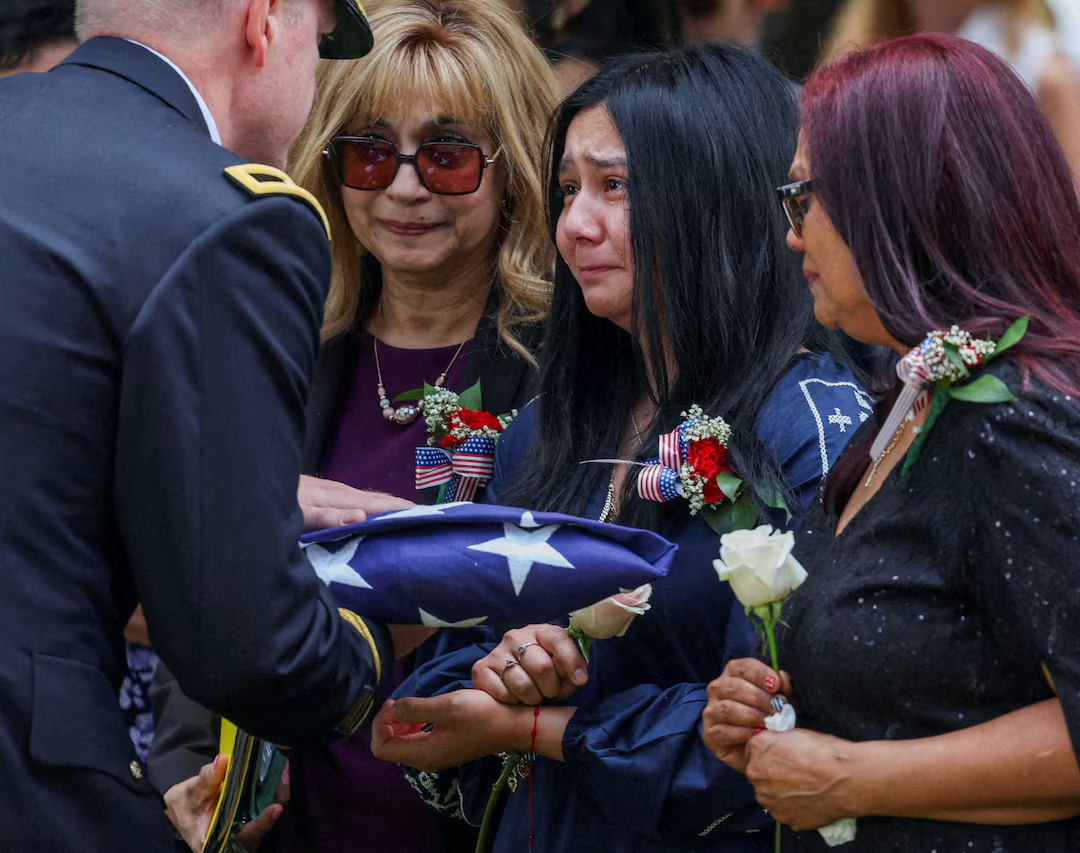
US military families experience a tumultuous journey of feelings throughout the six months of the Iran war
Since the United States went to war with Iran six months ago, Courtney Sanders has been assisting soldiers’ families in addressing the voids created by their loved ones’ absence.
There are school pickups to arrange, lost incomes to make up for—and for—and the constant challenge of separation anxiety.
“It feels as though I’m constantly on edge,” Sanders said.
She heads the Chicagoland chapter of Blue Star Families, the largest nonprofit in the nation dedicated to serving military families, and her daughters are both in the U.S. Navy. They have been deployed to several international locations over the past six months, including the Middle East.
The U.S. maintains over 50,000 troops in the region and has sent thousands of additional Marines and sailors to bolster the war effort. Eighteen U.S. service members have lost their lives in the conflict, and over 750 have sustained injuries.
Throughout the intermittent fighting of the war, shuttle diplomacy and unsuccessful peace negotiations have led military families to endure a “roller coaster of emotions,” Sanders stated. “Just when you think you can finally catch your breath, life hits you hard once more.”
These pressures are well-known to the partners and children, mothers and fathers, of American troops. Relatives informed Reuters that the abrupt nature of the Iranian conflict, along with its inconsistent progression, has created a cumulative impact.
In a poll conducted by Blue Star Families in early March, involving around 200 active-duty military families, 81% indicated experiencing heightened stress due to the Iran conflict.
The group has reacted by enhancing its programming, establishing online resource hubs, organizing webinars and in-person meet-ups, and pairing military spouses experiencing a deployment for the first time with those who have prior experience.
Numerous service members have faced unexpected extensions to their deployments.
The USS Abraham Lincoln aircraft carrier has reportedly gone over 200 days without a port call, setting a modern-day record as noted by Democratic lawmakers. Military outlets have also reported on suicide attempts and a decline in morale among its 5,000 sailors and Marines. U.S. Defense Secretary Pete Hegseth stated that the reports “completely misrepresented” the conditions on board.
Some military families encounter financial difficulties.
Members of the National Guard frequently hold regular jobs during their time away from deployment. The unexpected loss of their primary income can create significant challenges for those remaining to provide for their families, Sanders noted. “There is a prevalent misunderstanding in civilian society that being in the military means all your financial obligations are managed,” she stated. “That is simply not accurate.”
In a statement, the Pentagon expressed, “We acknowledge these families and are attentive to their concerns. We will take all necessary steps to ensure they receive the resources, support, and stability they need and deserve during these difficult times.
‘A GREAT DEAL OF FEELINGS’
Shannon, an Army spouse and mother of three in North Carolina who requested Reuters use only her first name for security reasons, makes an effort to ignore the news and the political discussions related to the war.
In February, her husband was deployed to the region with just five days’ notice and could contactut to her occasionally during the first few months.
Despite having kept in touch almost every day since June, Shannon expressed, “There are a lot of emotions, especially when people are dying over there.”
Her children began therapy during the summer. She puts on a brave face in their presence, yet she finds herself in tears when they are not around.
Soon after her husband’s deployment, Shannon became involved in an Army-sponsored soldier-and-family “readiness group” within her husband’s unit, assisting in organizing meal trains and providing support for family members in need. “Every day is not going to be a great day, but you’ve got to just keep going and keep yourself busy,” she remarked.
In Virginia, Pat, a Navy spouse who requested to be identified by her first name for security reasons, has made efforts to maintain a sense of normalcy for her children, who are in middle and high school.
Since her husband deployed about five months ago, Pat mentioned that her neighbors have been incredibly supportive in assisting with kid pickups and various chores.
Her family dons red on Fridays—a demonstration of support for deployed service members—and so do many of her children’s classmates, even those without military ties.
Pat’s husband has been deployed in the past. She was pleasantly surprised this time to find that his ship had Wi-Fi, which made communication easier.
Her family continues to navigate the uncertainty surrounding his return. “With older kids and the realization that dad missed those sporting events, it has been quite emotional,” she shared. However, my children possess a remarkable resilience.