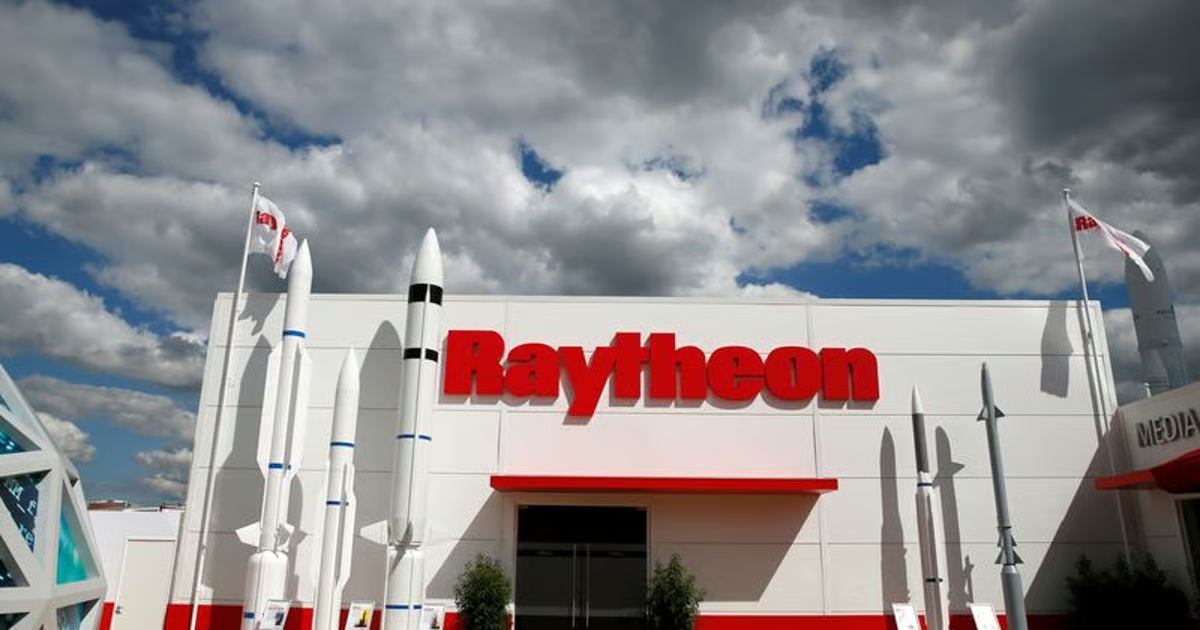
The US has awarded Raytheon a seven-year contract worth $22.9 billion to increase Tomahawk missile production from 60 to more than 1,000 per year.
The US military has granted Raytheon, a division of RTX, a $22.9 billion contract spanning seven years to substantially boost the production of Tomahawk cruise missiles as Washington seeks to replenish its diminished stocks of advanced weaponry.
The agreement seeks to increase the annual production of Tomahawk missiles to over 1,000, a significant rise from the approximately 60 missiles currently manufactured each year.
The US has provided substantial amounts of weaponry to its allies while simultaneously utilizing considerable quantities of munitions in the conflict with Iran, prompting worries regarding its stockpiles of air defense systems and precision-guided weapons.
Acting Secretary of the Navy Hung Cao stated that the contract would assist in guaranteeing that US forces possess adequate firepower.
“We urged the industry to swiftly increase munitions production, and RTX is responding,” Cao stated in a post on X. “This significant Tomahawk contract guarantees that our warfighters will maintain the essential firepower required.”
Raytheon announced that the seven-year agreement would deliver the assurance necessary to significantly enhance production capacity and invest in the facilities and equipment needed to achieve the increased output.
The sea-launched Tomahawk serves as a vital component of the US Navy’s arsenal, offering long-range precision strike capabilities against land targets from both surface ships and submarines.
Monday’s contract formalizes a framework agreement that the US military and Raytheon signed in February.
The administration of President Donald Trump has been actively engaging in multi-year procurement agreements with leading US defense contractors, thereby instilling greater confidence in these companies to invest billions of dollars in enhancing their manufacturing capacity.
Earlier this month, the US military signed agreements to boost the production of components for Patriot and THAAD missile interceptors, as Washington aims to enhance its weapons stockpiles.