US was unable to confirm Israeli assertions regarding Iranian schemes to assassinate Trump
US intelligence officials were unable to confirm Israeli claims regarding Iran’s alleged plans to assassinate President Donald Trump, according to sources.
The United States received multiple warnings from Israel in the past year regarding Iran’s intentions to assassinate President Donald Trump. However, US intelligence officials were unable to independently verify the specific threats, as stated by a current US official and two former officials.
The warnings were communicated to US intelligence agencies and, in certain instances, conveyed directly by Israeli officials to high-ranking White House officials, according to the sources.
They included purported plans to shoot Trump with a sniper or enlist someone to assault him with a knife at a major public event.
The warnings commenced prior to the 12-day conflict in June 2025 and escalated before the US’s decision to engage in the war with Iran in February, according to the sources.
The most comprehensive warning was issued prior to the NATO summit in Ankara in July, as stated by a US official and another individual knowledgeable about the situation.
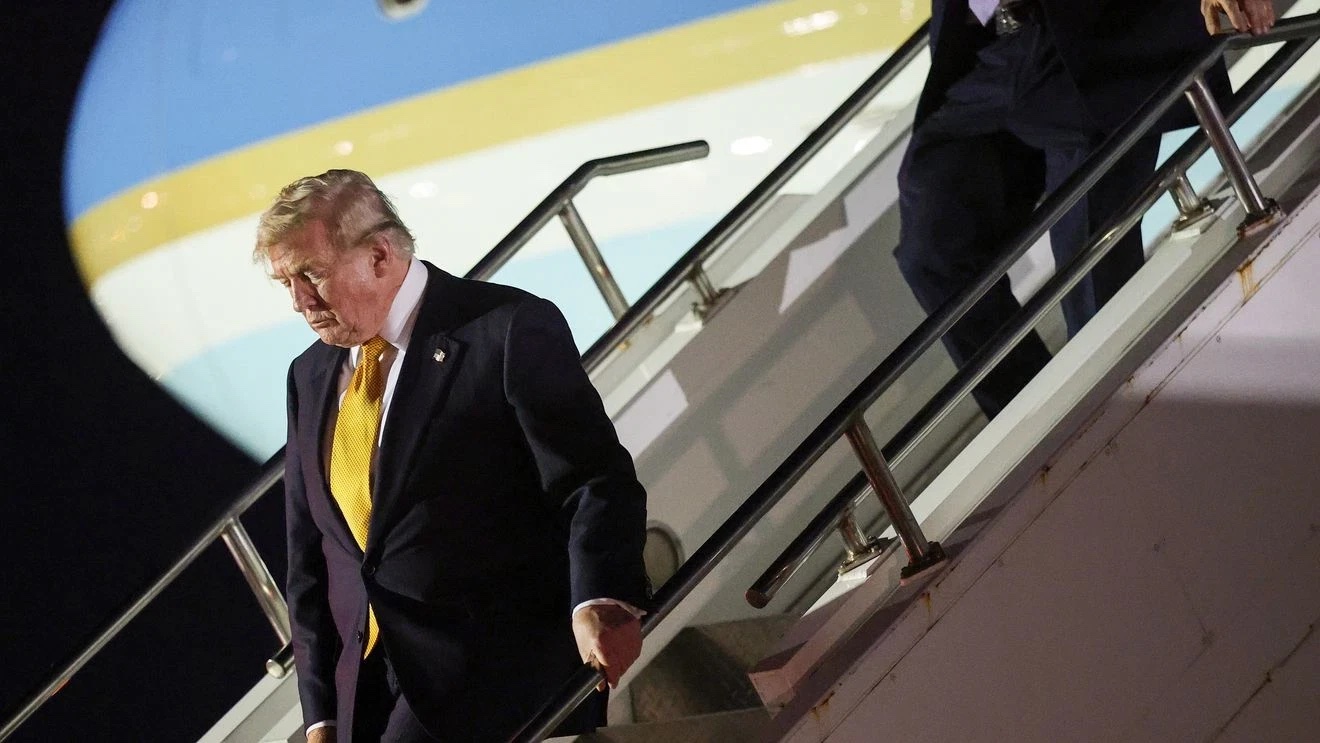
Israeli officials provided a briefing to the White House regarding intelligence suggesting that Iran may attempt to assassinate Trump during his travels on Air Force One. “One to the summit, potentially utilizing a shoulder-launched missile,” the officials indicated.
The US intelligence community has consistently evaluated that Iran seeks to respond to Trump’s assassination of Iranian military commander Qassem Soleimani in 2020.
However, officials stated that the Central Intelligence Agency has not been able to confirm some of the specific threats against Trump’s life that were shared by Israeli intelligence since early last year.
A Turkish official stated that the country’s intelligence agencies found no evidence to support the Israeli claim regarding a threat to Trump’s life in the NATO case. Turkey communicated that evaluation to US officials.
In light of the absence of verification, White House officials and the Secret Service implemented measures to mitigate potential risks as a precautionary approach.
That involved an unusual deception operation during Trump’s trip to Turkey, where he was transferred from Air Force One to a different aircraft for his departure from the country.
The episode underscores the impact of Israeli intelligence on the decision-making of the Trump administration regarding Iran, amid ongoing differences between US and Israeli intelligence evaluations of the threat presented by Tehran.
Earlier this year, US intelligence agencies evaluated that Iran was not currently engaged in the construction of a nuclear weapon, whereas Israel contended that Tehran represented an immediate threat.
In February, Trump decided to order strikes on Iran, despite the assessment US intelligence provided. e. Reuters previously reported that Trump also took into account Israeli intelligence suggesting that Tehran had attempted to assassinate him prior to initiating the military campaign.
An Israeli embassy spokesperson dismissed the notion that Israel was leveraging its intelligence to sway US policy regarding Iran.
“The individuals who assert that Israel is attempting to sway U.S. policy through supposed intelligence sharing would equally be the first to accuse Israel of withholding vital information if it served their own interests,” the spokesperson stated.
The White House and CIA chose not to provide any comments.
Secret Service spokesman Anthony Guglielmi refrained from commenting on specific intelligence issues but emphasized that the agency continued to prioritize Trump’s security in light of recent assassination attempts and a rise in threats against the president.
“The U.S. Secret Service consistently evaluates a diverse array of information to inform our protective operations in real time and at every location we safeguard,” he stated.
The United States has historically depended significantly on Israeli intelligence regarding Middle Eastern matters, especially those related to Iran.
The current and former officials indicated that Israeli intelligence regarding Iran generally reaches the CIA or National Security Agency via formal channels prior to analysis.
US intelligence agencies frequently find it challenging to confirm Israeli intelligence; however, they rely on additional information to evaluate its authenticity and accuracy, according to the officials.
During the two US military offensives in Iran, the CIA evaluated that it had “low confidence” in Israeli intelligence regarding threats posed by Iran, including purported plans to assassinate Trump, as stated by a former US official and another individual familiar with the situation.
It remains uncertain how broadly the administration has disseminated those assessments.
The NSA chose not to provide a comment.
Two former US officials informed Reuters that high-ranking Israeli officials and representatives reached out to the White House multiple times over the past year, including the Situation Room, to provide direct briefings to senior Trump officials regarding Iranian threats.
The direct engagement occurs amidst a decline in intelligence sharing within the Trump administration.
The former officials indicated that the CIA ceased collaboration on joint assessments with the National Intelligence Council last year following heightened tensions with the Office of the Director of National Intelligence.
The council serves as the primary analytical entity of the US intelligence community, under the supervision of ODNI. It generates evaluations designed to represent the overall perspective of the intelligence community, with the CIA being its primary contributor.
According to officials and another individual familiar with the situation, the reduced number of recent Iran assessments by the NIC has been partially attributed to layoffs at ODNI.