Iranian photojournalist Yalda Moaiery has been sentenced to 15 years in prison for her reporting
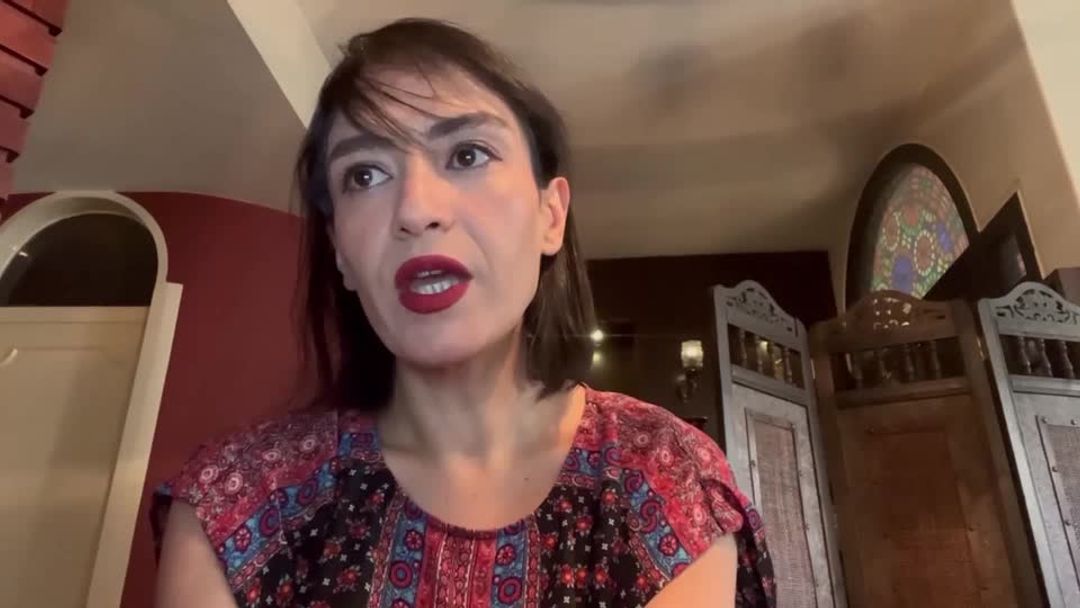
Iranian photojournalist Yalda Moaiery has received a 15-year prison sentence for her reporting and the photographs she shared with the media.
Renowned Iranian photojournalist Yalda Moaiery has received a 15-year prison sentence because she reports and photographs, as per documents examined by Reuters.
The sentence was issued under a law established following a 12-day conflict between Israel and Iran in 2025. Iranian officials state that the purpose of the legislation is to address espionage and collaboration with adversarial nations.
Moaiery learned of the sentence on Saturday, which coincided with Iran’s National Journalist Day.
Upon her arrival at Tehran’s Revolutionary Court, she stated that she had not received any formal case documents. Instead, a friend who accompanied her transcribed the details from a charge sheet by hand.
Rights organizations assert that these procedures demonstrate a deficiency in transparency within Iran’s judicial system.
Handwritten notes reviewed by Reuters indicate that Moaiery faces accusations of conducting interviews with media outlets considered hostile by the authorities and supplying photographs to organizations associated with the US and Israel. Reuters was unable to independently confirm the details of the charge sheet.
In a statement given to Reuters, Moaiery reported that the intelligence division of the Islamic Revolutionary Guard Corps conducted a raid on her home amid anti-government protests in January, seizing her phone, laptop, and various other electronic devices.
She stated that IRGC officers came back after the US conducted air strikes on Iran this year and once more confiscated her possessions.
“On this occasion, they took everything, including the cameras I had owned since childhood,” she said.
“I underwent multiple interrogations, and ultimately my case was forwarded to Branch 33 of the Security Prosecutor’s Office and later to the Revolutionary Court.”
The representative for Iran’s United Nations Mission in New York did not provide a response to a request for remark regarding her case.
Roya Boroumand, executive director of the US-based Abdorrahman Boroumand Center for Human Rights in Iran, stated that the withholding of case documents is an attempt by the Islamic Republic to “silence” defendants, demonstrating that the judiciary is “blatantly” functioning as a state agent.
The handwritten document submitted by Moaiery to Reuters outlines accusations such as “interviewing with networks hostile to the system” and transmitting photographs to organizations in the United States and Israel that are characterized as “hostile.”
Moaiery stated that she provided photographs depicting damage from air strikes in Iran to CNN and participated in an interview regarding her reporting in March 2026.
Under the 2025 espionage law, she has 10 days to appeal, which is half the time that previous legislation permitted.
Moaiery has been incarcerated in the past due to her efforts. She spent two years in Gharchak Prison, a location she had once captured through her lens.
In 2022, she was incarcerated for three months and subsequently received an eight-year prison sentence for her involvement in reporting on the “Woman, Life, Freedom” uprisings that followed the tragic death of young Iranian woman Mahsa Amini while in police custody.
An amnesty subsequently led to a reduction of the sentence; however, she stated that the case still subjected her to ongoing scrutiny by authorities.
According to Reporters Without Borders, Iranian authorities have detained 16 journalists this year.
Moaiery’s work has primarily centered on women. She captured some of the earliest documented detentions of women by morality police, including a 2007 image depicting two women seated in white police vans, tears streaming down their faces.
In 2017, she captured an image of a student demonstrating against economic conditions at Tehran University. The woman strides through the tear gas, her fist raised high in the air. The Trump administration later utilized the image in its remarks regarding human rights in Iran.
Moaiery expressed her dedication to her work, even in light of the possibility of additional imprisonment.
“None of these sentences, however, has ever led me to stray from my path, even for a moment. “I have persistently recorded and illustrated the truths of Iranian society,” she stated.
“I have nothing to lose.” The regime stripped away everything from me, leaving me with nothing but my truth and my honesty as an observer.