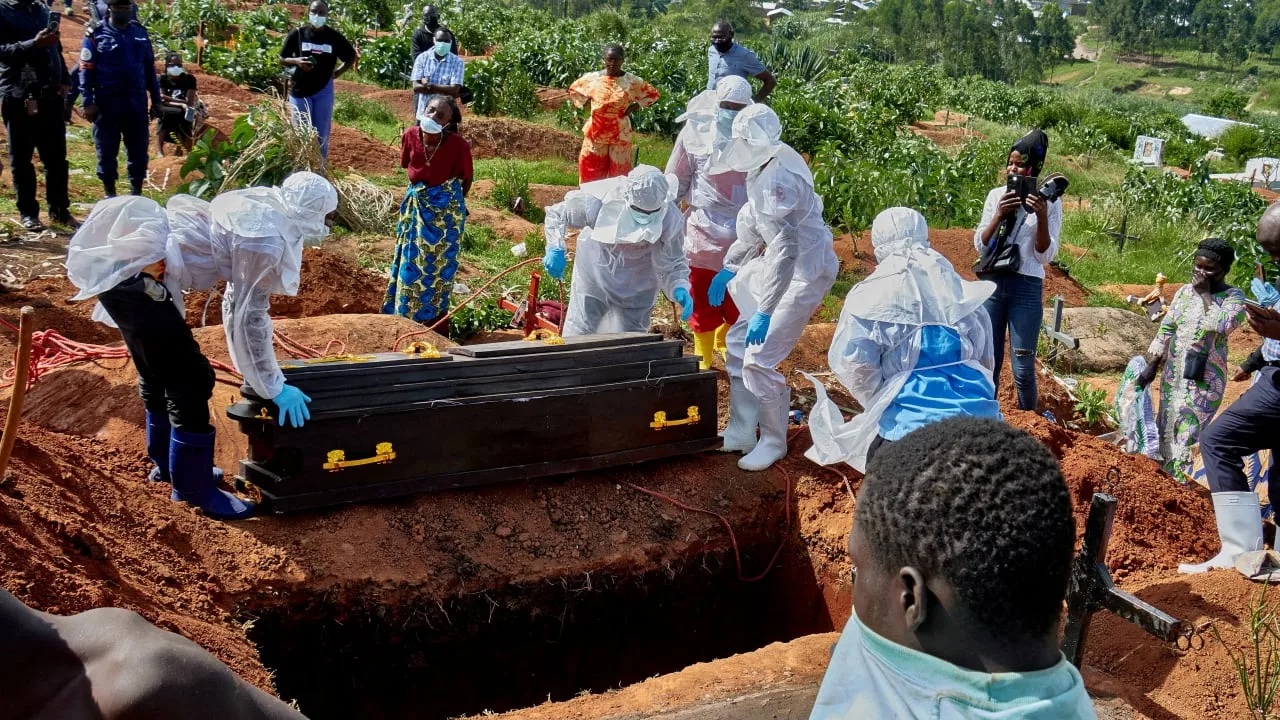
DR Congo’s Ebola outbreak has exceeded 4,000 confirmed cases, with 1,850 deaths reported across five provinces since May.
The current Ebola outbreak in the Democratic Republic of Congo has exceeded 4,000 confirmed cases, with the death toll rising to 1,850, as reported by the latest health data from the country.
The outbreak, which has affected five provinces, has emerged as the second-largest Ebola epidemic on record and is characterized by experts as one of the fastest-spreading outbreaks ever documented.
Data released by the nation’s public health institute indicated that the count of confirmed infections had increased to 4,053.
Reports have emerged from Ituri, North Kivu, South Kivu, Haut-Uele, and Tshopo provinces, underscoring the expanding geographical reach of the disease.
Researchers believe that Ebola had been circulating for several months prior to its official declaration on May 15, as health authorities only detected the outbreak at that time.
A study published in the journal Science last month indicated that transmission may have commenced in January, or possibly even earlier, in Ituri province.
Researchers identified over 500 suspected cases from mid-January until the official outbreak declaration in May.
Health experts have cautioned that the official figures might not accurately represent the complete extent of the outbreak, suggesting that the true number of infections could be significantly greater.
The response has been hindered by delayed detection, strained disease surveillance systems, and ongoing military conflict, all of which have complicated efforts for health authorities to identify cases and contain transmission.
The restricted supply of vaccines and treatments aimed at the strain causing the outbreak has added to the challenges of containment efforts.
The magnitude of the ongoing epidemic ranks it second only to the Ebola outbreak from 2014 to 2016 in West Africa, which documented over 28,000 cases in Guinea, Liberia, and Sierra Leone.
The most recent data highlights the increasing difficulty that health authorities encounter in their efforts to manage the virus and curb additional transmission within impacted communities.