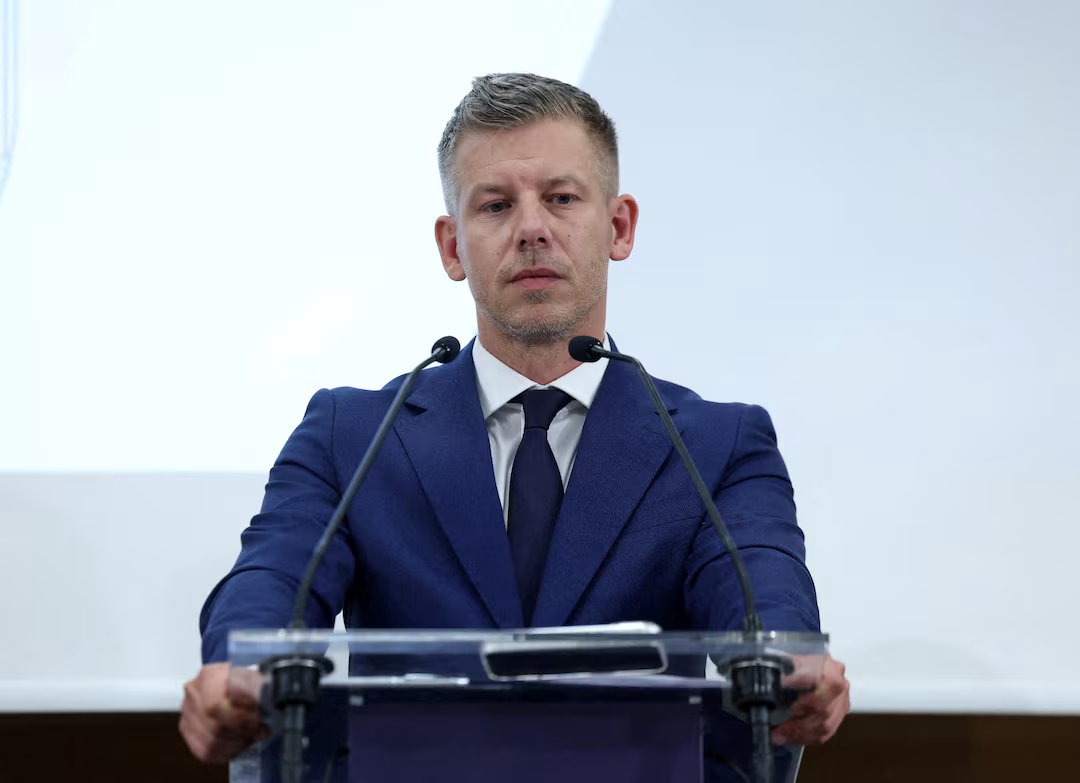
Hungary is entering a pivotal five-day period, Prime Minister Peter Magyar stated on Sunday, as the receding waters of the Danube compel the nation’s only nuclear power plant to close for the first time in more than forty years, with a new heatwave on the horizon.
Significant areas of Europe are experiencing extended heat and drought, resulting in decreased river levels and heightened worries regarding water supplies, river transport, and power generation.
Hungary’s 2 gigawatt Paks power plant, which operates four Russian-built reactors, was functioning at slightly above 10% of its total capacity on Sunday due to the Danube, the water source it relies on for cooling, reaching a record low.
The water authority projected that the river level, flowing from Germany to the Black Sea, would decline further in the upcoming days. “We are facing the most critical five days ahead,” Magyar stated in a Facebook video. Tomorrow, the Paks power plant will not be generating, while the hottest, 40-degree (Celsius, 104 Fahrenheit) days are ahead. “The power grid, our public services, and ourselves will all come under enormous strain,” said Magyar, who has warned that Paks could remain idle for weeks.
Decreases in water levels have also impacted shipping and tourism in Hungary, leading to water-use restrictions in over 100 cities and villages, including areas on the outskirts of Budapest, as reported by government records.
Magyar emphasized the importance of companies, public institutions, local governments, and households taking action to significantly reduce or reschedule electricity usage during the evening peak hours from 5 p.m. to 10 p.m. The government will determine on Sunday whether it will implement mandatory electricity use restrictions for large companies starting Monday, he stated.
The crisis could result in a financial impact of 100 billion to 200 billion forints ($315 million to $630 million) for Hungary, attributed to the rising costs of imported electricity, as stated by Mark Radnai, vice chairman of Magyar’s Tisza party, on Facebook.