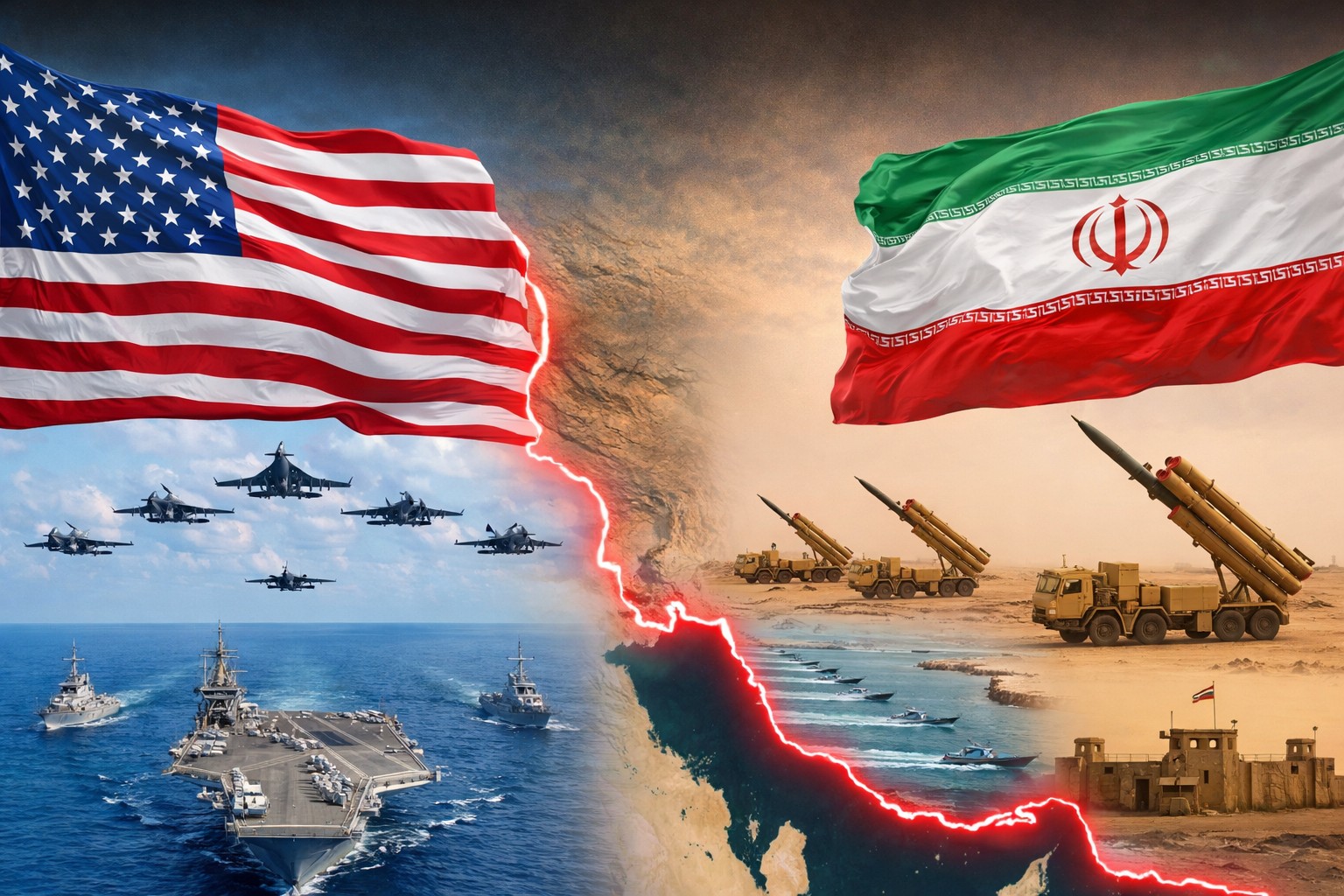
Iran proposes a mutual cessation of attacks as the US suspends airstrikes to facilitate diplomatic efforts
Iran has proposed to cease its attacks if the US continues its pause in bombing, sparking cautious optimism for the possibility of renewed diplomatic negotiations.
Iran has announced that it will halt its military attacks as long as the United States continues its pause in airstrikes, indicating a possible opportunity for diplomacy following nearly two weeks of escalating conflict.
A senior Iranian official informed Reuters on Sunday that Tehran’s stance continued to be one of reciprocity, emphasizing that Iran would stop its operations if the United States ended its attacks.
“Our stance continues to be one of reciprocal action: if the assaults cease, Iran will likewise suspend its activities.” “That message has already been conveyed to the United States,” the official stated, requesting to remain anonymous.
The development comes after the Pentagon’s decision to halt its bombing campaign against Iran late on Friday, following 13 consecutive nights of airstrikes. No attacks by the US were reported on Saturday or Sunday. Iran, which had consistently targeted neighboring countries with US military bases during the night, has similarly chosen not to initiate attacks during this timeframe.
The pause followed reports that advisers to President Donald Trump cautioned that the US military was exhausting its viable targets and raised concerns regarding the depletion of American munitions.
US Ambassador to the United Nations Mike Waltz confirmed on Sunday that Trump had chosen to pursue diplomatic efforts.
“He’s allowing talks some space; he’s providing them with a bit of room,” Waltz stated during appearances on Fox News Sunday and other US television programs.
US military officials, speaking on the condition of anonymity, indicated that the extensive bombing campaign—initiated in response to Iranian assaults on shipping in the Strait of Hormuz—had mostly depleted the roster of pre-selected targets.
While military officials said that starting large-scale combat again is still an option, Chairman of the Joint Chiefs of Staff General Dan Caine reportedly warned Trump that new strikes could be very risky, especially because there are fewer precision-guided munitions and interceptor missiles available for US air defense systems in the Middle East. t.
Caine’s office and US Central Command refrained from commenting on the reported discussions, adhering to the established military protocol of keeping private counsel to a sitting president confidential.
During an appearance on NBC’s Meet the Press, Waltz emphasized that the US military continues to possess the full capability to sustain operations.
“The military has everything that it needs,” he stated, noting that Defense Secretary Pete Hegseth took office under the Trump administration with a depleted stockpile.
Despite the pause, Tehran continues to doubt that Washington has fundamentally altered its approach.
Another senior Iranian source informed Reuters that officials in Tehran regarded the suspension of airstrikes with skepticism rather than optimism.
“There is greater doubt than hope regarding the cessation of attacks.” The common perspective is that the pause is strategic rather than sincere. Iran has gathered considerable experience regarding what it perceives as US deception,” the source stated.
Over the last fortnight, US forces have carried out nightly strikes on Iranian targets, stating that these operations are in retaliation for assaults on commercial shipping in the Strait of Hormuz. Iran responded by attacking water desalination plants in Gulf Arab countries, while claiming it would keep control over the important waterway that used to allow about one-fifth of the world’s oil supplies to pass through before the conflict escalated.
The renewed US military campaign effectively disrupted the interim agreement established last month, which aimed to end hostilities.
Multiple US media reports indicate that Trump’s decision came after a high-level meeting on Friday, where senior military and political advisers raised concerns about the effectiveness of the ongoing bombing campaign.
CNN reported that Vice President JD Vance voiced concerns regarding the continuation of the strikes, while Axios noted that Admiral Brad Cooper, commander of US forces in the Middle East, suggested pausing the campaign after determining it had reached its effectiveness limits.
At the same time, ordinary Iranians remain burdened by ongoing uncertainty.
Nader, a 49-year-old import-export business owner in Tehran, expressed that the temporary lull had done little to alleviate public anxiety.
“Everyone in the country is in a state of uncertainty,” he told Reuters by telephone. Trump is engaging in tactics with Iran. He neither brings the war to a close and departs from the region nor takes decisive action. It is quite draining.